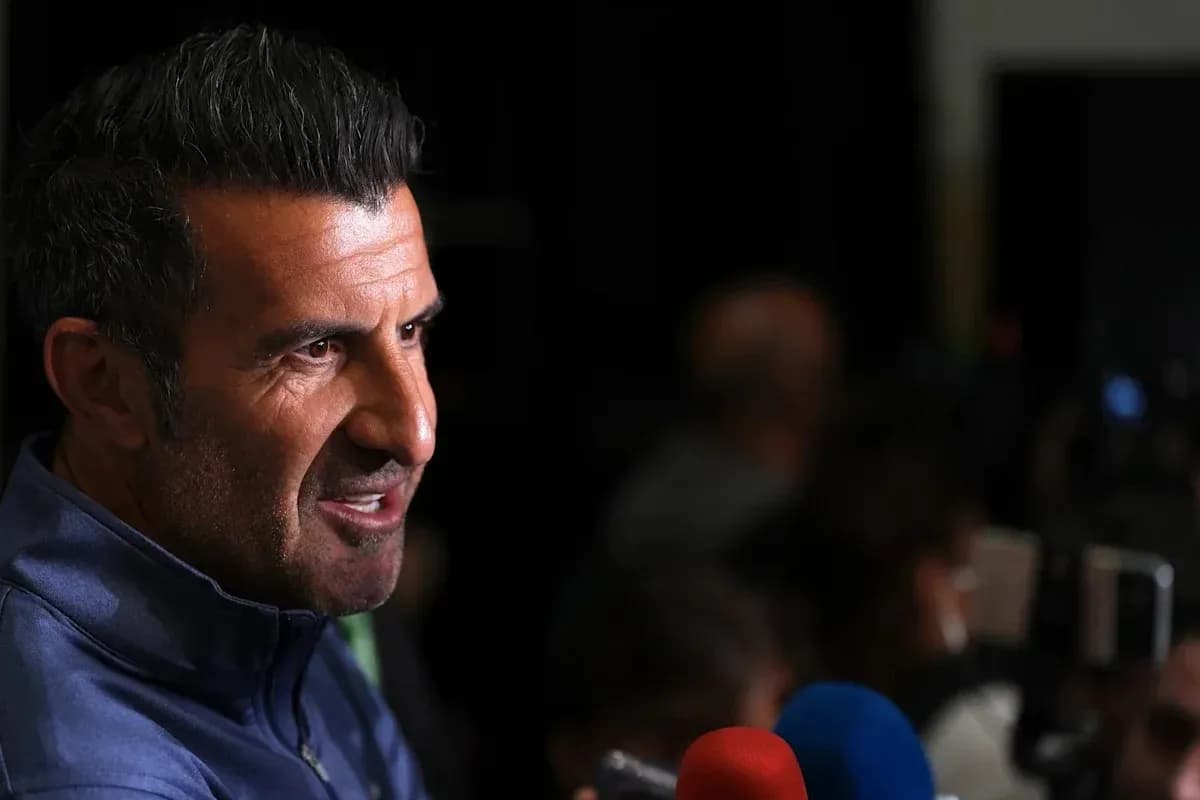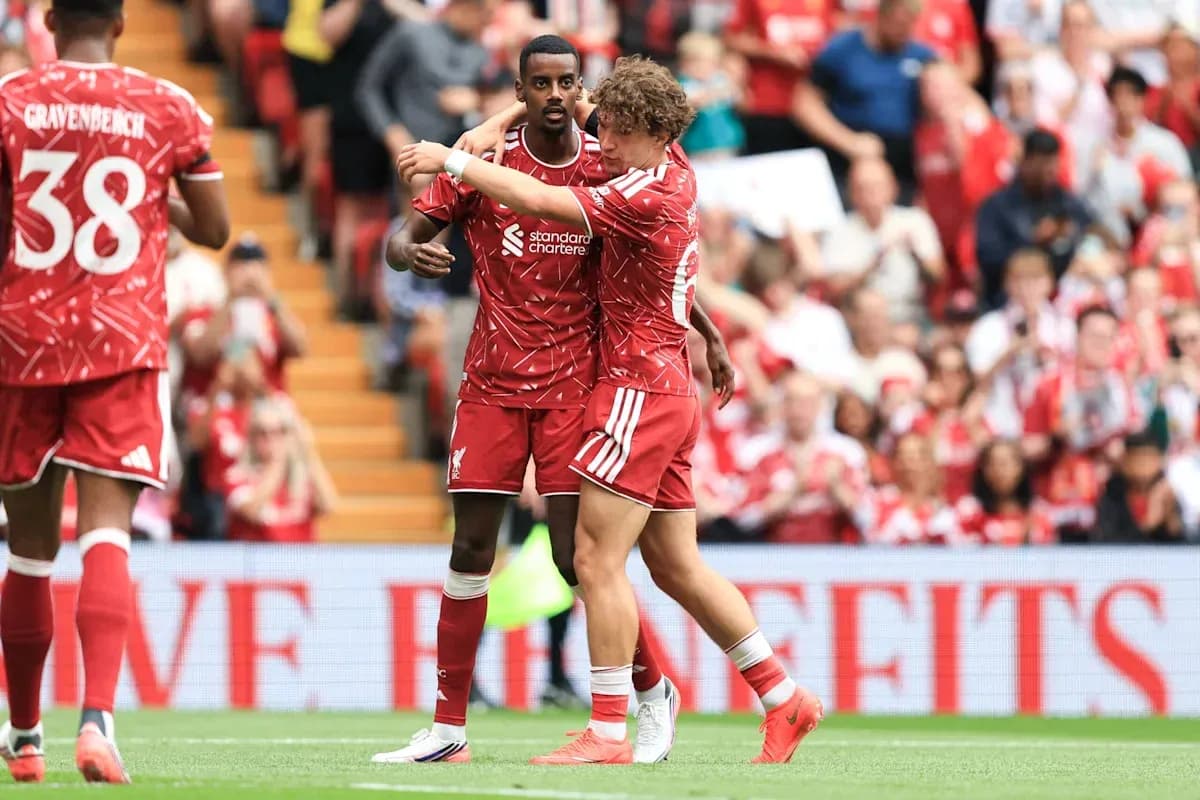
Alexander Isak does not dress it up. Leaving Newcastle United, he says, was an “easy decision.” The logic behind choosing Liverpool, in his mind, was even simpler.
His first year at Anfield has been anything but.
Liverpool smashed the British transfer record to land the Sweden striker for £125m in September 2025, a fee that instantly dragged him into the harshest of spotlights. The move was supposed to turn an already dangerous attack into something ruthless. Instead, injuries, frustration and stop-start form have defined his opening campaign.
Yet Isak’s conviction about the transfer has not wavered.
‘Everything about the club made it pretty clear’
Speaking to BBC Sport’s The Football Interview, Isak laid out the appeal of Anfield with the blunt clarity of someone who never really had doubts.
“[Liverpool] is a massive club, and everything about the club made it pretty clear,” he said.
The scale of the institution. The expectation of trophies. The feeling of being relentlessly pursued and truly wanted. Liverpool’s courtship, and their willingness to pay so heavily, told him exactly how they saw him: not just as another forward, but as a centrepiece.
That belief matters, because the reality of his first season has tested it.
A broken leg in December ripped four crucial months out of his year, ruling him out until April and shredding any hope of rhythm. He finished the Premier League campaign with just three goals. For a £125m striker, those numbers became the story, a stick to beat both player and club with.
The statistics, though, only tell you how often he scored. They also reveal how little continuity he actually had.
Why Liverpool bet big
Liverpool did not make their decision on a whim. Their gamble was rooted in what Isak had already done in England.
At Newcastle United, he scored 62 goals in 109 games after arriving from Real Sociedad in 2022, a record the Anfield club highlighted the moment they announced his signing. Across three seasons he proved he could handle the Premier League’s pace, physicality and scrutiny, while still producing regularly.
That body of work framed Liverpool’s thinking. They were not paying for a promising project. They were paying for a proven Premier League striker entering his peak years.
Of course, a huge fee does not shorten the adaptation process. It only intensifies the noise around it. New teammates must be understood. Combinations in the final third have to be learned. Fitness has to be rebuilt and then protected.
None of that becomes easier just because the price tag is enormous.
For Newcastle, those 62 goals explain the sporting wound his departure left behind. You do not simply replace that level of output by signing someone who stands in the same area of the pitch. You replace it by finding a player who can carry the same attacking weight, week after week.
Glimpses of the striker Liverpool thought they were buying
If Liverpool needed a reminder of why they pushed so hard for Isak, Ipswich Town provided it.
On 4 September, away from home and with Andoni Iraola still searching for his first win as head coach, Isak ripped through the evening in nine ruthless minutes. Two chances. Two finishes. Game almost done before Ipswich had time to feel their way into it.
Liverpool’s official match report recorded Cody Gakpo as the provider for both goals, a neat summary of what the club wants this attack to become: sharp movement, quick understanding, cold-blooded execution.
The impact went beyond the scoreline. Those early strikes changed everything. The tension dropped, the crowd quietened, and Liverpool were suddenly playing the match on their own terms. Iraola could manage the game rather than chase it; Isak and Gakpo had already done the heavy lifting.
This was the version of Isak Liverpool invested in – decisive, efficient, unflustered. One game does not equal a resurgence, but it does give something tangible to cling to. It shows there is still a clear line between the Newcastle finisher and the Liverpool number nine he is supposed to become.
Now comes the hard part: doing it again. And again. Against better opponents, in tighter contests, when the legs are heavy and the stakes are higher.
The judgement still to come
Isak can explain why he chose Liverpool in a single sentence. How that choice will be remembered will take years to define.
His Anfield legacy will not be settled by the transfer fee alone, no matter how often it is mentioned. It will be built on availability, goals, and how he shapes the attack around him. On whether he becomes a reference point in big games, or a luxury piece who never quite stitched himself into the fabric of the side.
His Newcastle record set the benchmark. The Ipswich performance hinted at a path back towards it in red.
The task now is to connect those two realities: the striker who terrorised defences in black and white, and the record signing expected to do the same at Anfield. If Isak can turn flickers into a sustained run of influence, the conversation will move away from the price and back to the football.
Then the “easy decision” he talks about will be judged not by what it cost Liverpool, but by how much it ends up defining them.