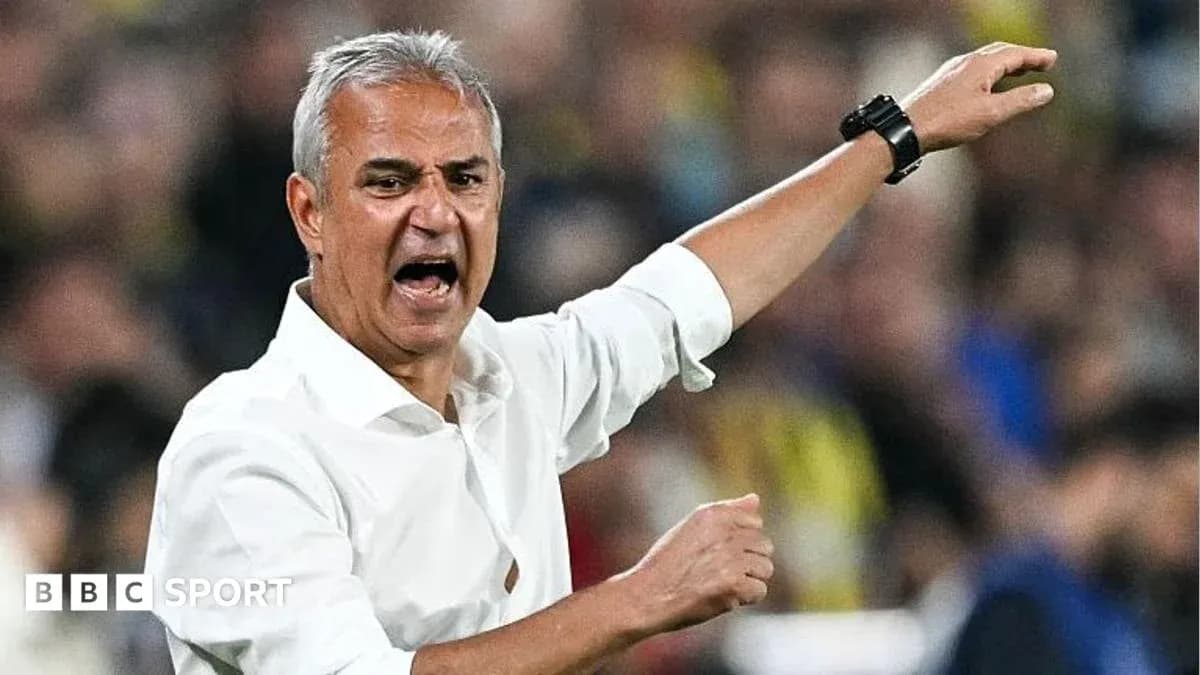
Ismail Kartal stays on as Fenerbahce head coach after a dramatic 24 hours in which he publicly announced his resignation – only for president Aziz Yildirim to refuse to let him walk away.
The 65-year-old, in his fourth spell in charge, told reporters after Thursday’s emotionally charged 1-1 draw with Roma in the Champions League that he would not return to the club he has served as player, assistant and now coach. It sounded final. It sounded like goodbye.
It was not.
Resignation refused
Within hours, Yildirim moved to shut the door on any exit. In a statement published on the club’s website, the Fenerbahce president confirmed he had spoken directly with Kartal and had not accepted the resignation.
By Friday, the club made the situation crystal clear. Kartal remains in charge and will lead training on Saturday at 11:30 as Fenerbahce prepare for Monday’s Turkish Super Lig fixture against Gaziantep FK.
“Our team will continue its preparations for the Gaziantep FK match with the training session to be held tomorrow (Saturday) at 11:30 under the direction of our technical director Ismail Kartal,” the statement read.
No caretaker. No search. Kartal stays.
Pressure, a bottle, and a breaking point
The coach’s outburst on Thursday did not come from nowhere. Fenerbahce have returned to the Champions League group stage for the first time in 18 years, expectations have soared, and the pressure around the club has tightened.
Kartal pointed to that strain when explaining his resignation to Yildirim, highlighting the weight of the role and a flashpoint during the Roma match, when he was struck by a bottle thrown from the stands. A night that should have been about European football and a hard-fought draw instead became a symbol of how volatile the environment around him has become.
The club responded swiftly off the pitch. In a social media post, Fenerbahce announced that the spectator involved in the bottle incident had been identified and banned from the stadium. The message was clear: the line had been crossed.
Yildirim did not hide his anger at the treatment of his coach. “You can't show support by throwing punches at him like this,” he said, condemning the aggression from the stands and moving to protect a man he repeatedly referred to as part of the Fenerbahce family.
“I said he’ll continue, and that’s it”
If Kartal tried to step away, Yildirim dragged him back into the technical area with a single, blunt declaration of authority.
“Ismail Kartal doesn't need to say he'll continue. I am his senior. I said he'll continue, and that's it. We're a family,” the president insisted.
It was an old-style intervention from an old-style president: the club comes first, the hierarchy is clear, and the coach’s future is not up for public debate.
For now, that future runs through a demanding schedule. Fenerbahce sit ninth in the Super Lig table, with six points from four matches, a position that hardly matches the ambition of a team back among Europe’s elite. Gaziantep FK arrive on Monday in what now feels like more than a routine league game: it is Kartal’s first appearance on the touchline since his aborted resignation, under a spotlight that has only grown harsher.
Beyond that lies another test of nerve and identity. On 14 October, Fenerbahce travel to Aston Villa for their next Champions League group fixture, a stage they have spent nearly two decades trying to reach again.
Kartal will be there. The question is how long this fragile truce between pressure, passion and power at Fenerbahce can hold.