
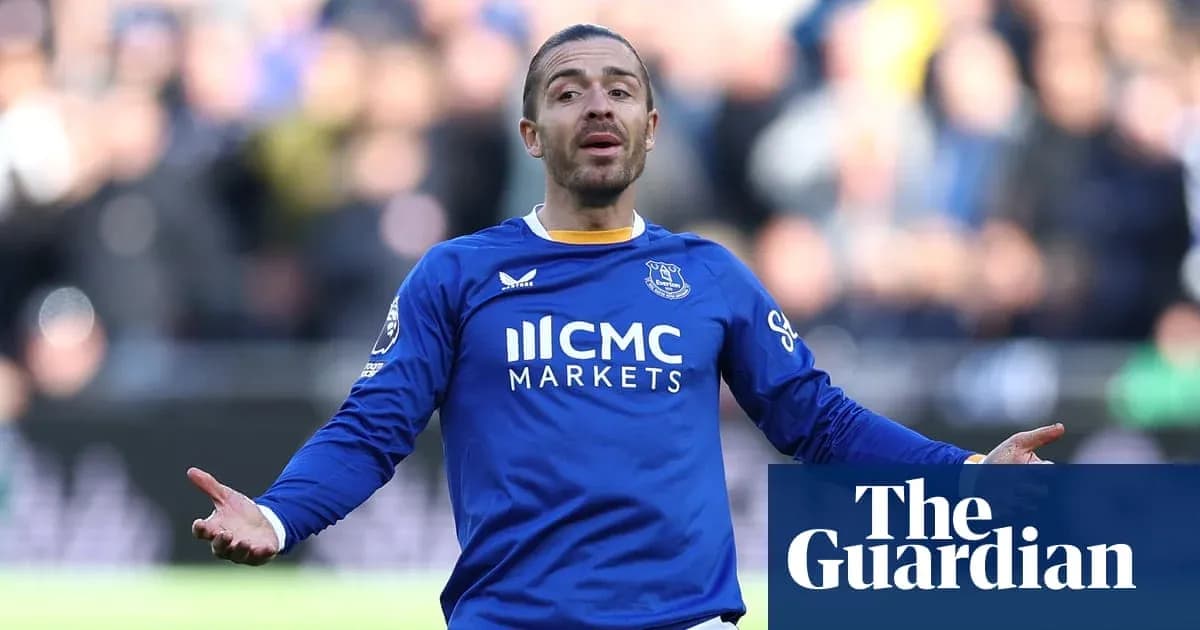
Three years ago in Istanbul, Jack Grealish was the face of Manchester City’s ambition. Pep Guardiola trusted him so completely that he started him in the club’s biggest game, the Champions League final against Inter, and left Phil Foden, Julián Álvarez and Riyad Mahrez on the bench. Grealish stayed on for the full 90 minutes that night. He was central, symbolic, untouchable.
Now, at 31, he is fighting not to become a footnote.
From centre stage to the margins
The trust that carried him through that European triumph did not last. Injuries bit, form wavered, and Grealish managed only 17 Premier League starts across the next two seasons under Guardiola. For a £100m signing, that is not a blip. It is a slide.
By the summer of 2025, City were ready to move him on. Everton stepped in, first with a loan, then by borrowing him again for this season. It looked like a lifeline, a chance to rebuild in a club that would indulge his need to feel important.
Six appearances into the current campaign, that story has stalled. On Thursday, Grealish was not just out of the Everton team for the Carabao Cup win over Newcastle – he was out of the squad entirely after missing training on Monday. The club did not hide behind vague phrases. They spoke of “a breach of club discipline.”
For a player with 39 England caps and the status of a senior professional, it felt depressingly familiar.
Old habits, older questions
Grealish’s career has always carried a second narrative, running alongside the football. Lockdown breaches. A driving ban. Viral photos of nights out that became memes before they became warnings. Each incident chipped away at the image of the player he could be.
Guardiola saw enough to act. In 2021 he dropped Grealish for a match against Newcastle after he and Foden turned up to training in no fit state to convince anyone they were ready to work. The message was sharp. The lesson did not fully land.
Grealish has never pretended to be something he is not. He spoke openly to Sky Sports last year about his lifestyle. “People go: ‘He likes to go out, he likes to party,’ and I do,” he said. “I want to be able to live my life and enjoy myself but obviously there’s a time and a place to do that. Sometimes, I’ll be honest with you, I probably haven’t picked the right times.”
Honesty is one thing. Discipline is another.
Everton’s reluctant gamble
When Everton first took him, the move carried a sense of opportunity for both sides. Grealish arrived as a marquee name for a club desperate for a new figurehead. By early December last season, he had already delivered: winners against Crystal Palace and Bournemouth, six assists in 20 league games, flashes of the old swagger.
Then came a foot injury in mid-January. Season over. Another campaign cut short. Another reminder that he has not played more than 28 league games in a season since 2019-20 at Aston Villa. For a player who relies so heavily on rhythm and confidence, that inconsistency in availability is no small concern.
There were doubts at Everton about bringing him back this summer. Yet when Iliman Ndiaye left for City, the logic hardened. They needed creativity, star quality, someone who could change the mood and the match in a moment. Grealish was the pragmatic solution.
He had completed pre-season under Enzo Maresca at City, even getting minutes in the Community Shield and on the opening day against Bournemouth. Maresca offered him a door back into the elite. The door closed quickly, but the Italian did not turn on him. “I still think that he’s a good boy, big heart,” Maresca said on Friday, a line that sounded as much like a farewell as a defence.
A talent running out of time
At his best, Grealish is still a joy. Socks rolled down, ball glued to his foot, he drifts past defenders, draws fouls, makes things happen. Stadiums rise when he runs. Team-mates play higher up the pitch because they trust him to carry them there.
Those moments, though, have become too rare. The gap between the reputation and the reality has widened. He is a treble winner, a £100m signing, but those labels belong to the past. The next seven months will say far more about his career than Istanbul ever will.
His City contract runs out at the end of the season. The incentive could not be clearer: prove he can still influence Premier League games, show he can drive Everton towards the cup success their fans crave, and he keeps himself in the conversation at the top level. Fail, and the market will treat him not as a fallen star to revive, but as a risk to avoid.
Right now, his career sits in limbo.
David Moyes’s stance has not helped his cause. The Everton manager was terse when asked about Grealish on Thursday, and nothing in his tone suggested a man pushing to keep the player beyond this loan. With a small squad and little room for error, losing a senior player to avoidable issues is the last thing he needs. Irritation feels inevitable.
Loved by the crowd, tested by the game
Grealish has never struggled with the public. In an era when players are often shielded, he remains unusually open. He lingers for autographs, leans into selfies, throws himself into charity work, and maintains a personal touch that others have long since outsourced.
At Hill Dickinson Stadium he is mobbed when he arrives and when he leaves. Kids shout his name. Adults too. He leans into the chaos, smiling, posing, giving away time and energy as if it costs nothing.
That generosity has not always extended to himself. The self-awareness he shows in interviews has yet to translate into the relentless professionalism that extends careers at the top. The game is not asking him to stop being Jack Grealish. It is asking him to choose his moments better.
“With me, I’m a big confidence player – I want to feel loved,” he once said.
The love from the stands will probably endure. The love from managers will not, unless he forces a change. And right now, without a drastic shift, he is running out of people willing to give him the one thing he needs most: another chance.





