
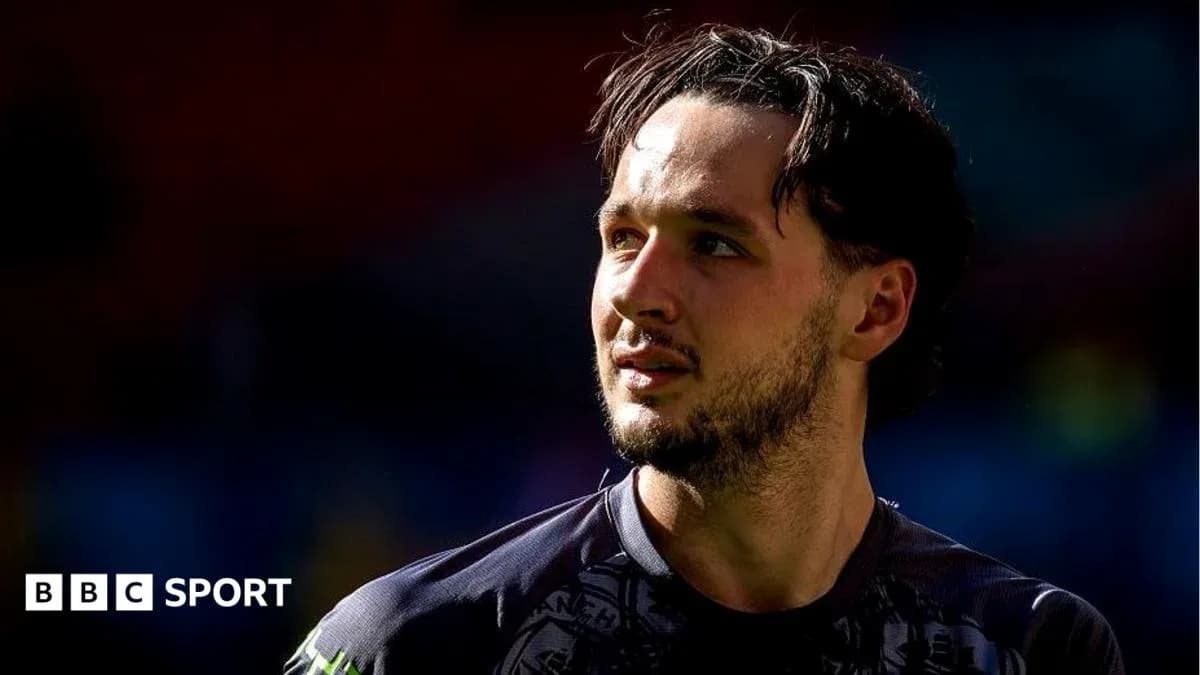
James Trafford does not sugar-coat it.
“What a horrendous, horrendous feeling. Not playing.”
For a goalkeeper brought back to Manchester City as the next one off the production line, last season became a study in frustration. Trafford had returned to the Etihad in July 2025, re-signed from Burnley two years after leaving City’s academy in search of games. This was supposed to be the homecoming. The step up. The moment.
Then Gianluigi Donnarumma walked through the door.
Six weeks after Trafford’s arrival, City landed the Italy international fresh from winning the Champions League with Paris St-Germain. A 27-year-old serial winner at the peak of his powers. He did not come to share minutes.
Donnarumma instantly claimed the No 1 shirt. Trafford, 24 and ambitious, suddenly found his pathway blocked again.
He had started City’s first three league matches of the campaign. After Donnarumma signed, he made just one more Premier League start in the next 35. From early-season optimism to months of watching in a bib. From the adrenaline of the tunnel to the stillness of the bench.
On Football Daily’s The Football Interview, Trafford laid bare how that felt.
“You are ringing a lot of people and just venting,” he said. “Like most people, you have a [bad] day at work and you ring someone up.
“I ring my dad, I ring my mum, I ring my missus, I ring my mates. I like ringing my mates and we can just have a good talk about it all. It’s quite funny.”
The humour sounds like a coping mechanism. Behind it sat long days at City’s training ground, long nights replaying decisions. Stay and fight? Push for a move? Wonder if he had misread the situation entirely?
Yet even in a season where he became a fringe figure in Pep Guardiola’s squad, Trafford still found a way to leave a mark on City’s history. When the knockout games came, Guardiola turned to him. Trafford started both domestic cup finals at Wembley and helped City win the League Cup and FA Cup.
He did not get the league campaign he had imagined. He did get two trophies and a front-row education.
“Going into any season, I always have the highest of hopes and always the belief that it will go the best way it could,” he said. “Unfortunately, we didn’t win all four trophies. It didn’t go how I expected it to go, but it happens.
“In the moment, I just tried to make the best of it as I could. Looking back, I don’t think it was a disappointing season in the end because I learned so much, I improved so much and I won two trophies in one year.
“There were moments when I was very down, regretting things and feeling disappointed, but looking back, I’m very thankful for the experience. What an incredible year.”
That mix of pain and perspective framed the biggest decision of his career. After the World Cup, Trafford chose to leave City again, this time for good. Leeds United came calling with a bid that underlined their intent: up to £45m, a record fee for a British goalkeeper.
If sitting behind Donnarumma felt like stalling, Elland Road has been the restart button.
At Leeds, Trafford is not the promising understudy or the cup specialist. He is the main act. Daniel Farke has written his name on every Premier League teamsheet so far this season, and Trafford has started all nine matches.
The numbers tell their own story. Three clean sheets. Only Brighton (seven) and Arsenal (five) have conceded fewer goals than Leeds’ eight. A newly assembled back line, anchored by a young goalkeeper with something to prove, has given the club a platform to breathe.
Leeds sit 12th before this weekend’s fixtures, just two points off the European spots. That is not a ceiling in Trafford’s mind. It feels like a starting point.
“I just think it’s an incredible club,” he said. “You look at the fanbase, everyone here – it’s an incredible place. It’s just somewhere that’s only going and getting better.
“We’d love to get back into Europe. I think every club you ask would like to get into Europe, so the main goal is just to keep on improving.”
From the loneliness of the bench at City to the roar of Elland Road, Trafford has swapped medals as a supporting act for responsibility at the heart of a project. The question now is not whether he plays. It is how far he can drag Leeds with him.





