
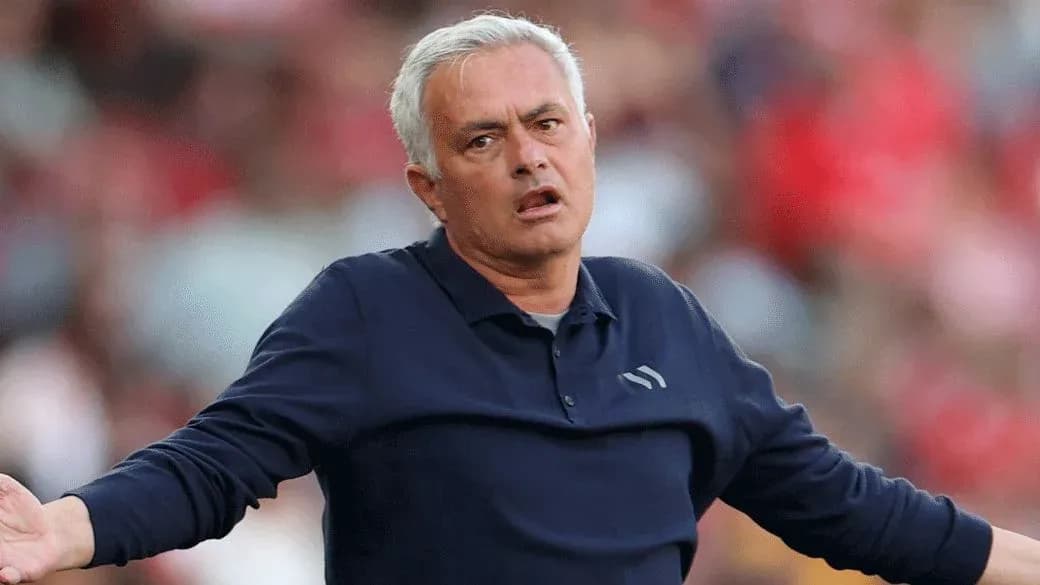
José Mourinho rarely wastes a marquee fixture. He bends it.
On the eve of Barcelona’s showdown with Atlético Madrid, the Real Madrid manager stepped in front of the microphones and, with the table delicately poised, delivered exactly the sort of line that keeps La Liga on edge.
Asked who he wanted to win Sunday’s clash at the top, he didn’t even blink.
“Barcelona or Atlético Madrid? I hope both teams lose, but that is not possible.”
Classic Mourinho: a jab wrapped in a joke, aimed squarely at both rivals and the headlines.
Mourinho’s perfect scenario
The context makes his wish crystal clear. Barcelona sit top on 30 points. Atlético trail them by two. Real Madrid lurk just behind on 27.
Something has to give.
“The matter is easy for me,” he said, spelling out the calculation. “Because we know that one of them, or both, will not take all the points during this round.”
A draw would suit him. So would a narrow win for either side, provided the damage is limited. What he cannot tolerate is one of them streaking away. By saying he wants both to lose, he underlined the pressure he intends to keep applying from third place.
While Spain looks towards Camp Nou, Mourinho’s eyes are fixed on something else entirely: Valencia away, and his own team’s evolution.
Performance over scorelines
When he turned to Real Madrid’s form, he didn’t lean on the table or the comeback narratives that usually dominate in the capital. Instead, he went back to a specific performance.
“The best thing is not coming back in the result,” he insisted, “but playing the way we performed against Racing Santander.”
That is where he drew the line. Not at the drama of a turnaround, but at the standard of football he wants as a baseline. For him, the comeback is a symptom, not the cure.
“Coming back in the result is a positive thing,” he admitted, “but it also means there are negative aspects.”
If you need to fight back, you were behind. If you were behind, something went wrong. That is the part that irritates him.
The cost of comebacks
Mourinho then broke down what a remontada really demands from a squad.
“A comeback requires belief in one's abilities, the cohesion of the group, friendship between the players, having a strong bench, motivating the group, and knowing the value of the shirt you wear,” he said.
It is a checklist of everything he tries to build inside a dressing room: mentality, unity, depth, identity. The emotional fuel that allows a team to drag itself out of trouble.
But he refused to romanticise it.
“It also carries a negative side,” he added, bringing the conversation back to the start of games, to the slow openings and lapses that have forced Real Madrid into those situations.
His conclusion was blunt, almost harsh, and very much on brand.
“We must work on this aspect, and find a greater degree of consistency when it comes to starting matches well. We still have a lot of work ahead of us.”
No self-congratulation, no basking in the glow of comebacks. Just a demand for control, for authority from the first whistle.
On Sunday, all eyes will drift to Barcelona against Atlético Madrid and the top of the table. Mourinho’s interest is obvious. But his message is just as clear: if Real Madrid fix their own flaws, they will not need anyone else to lose.





