
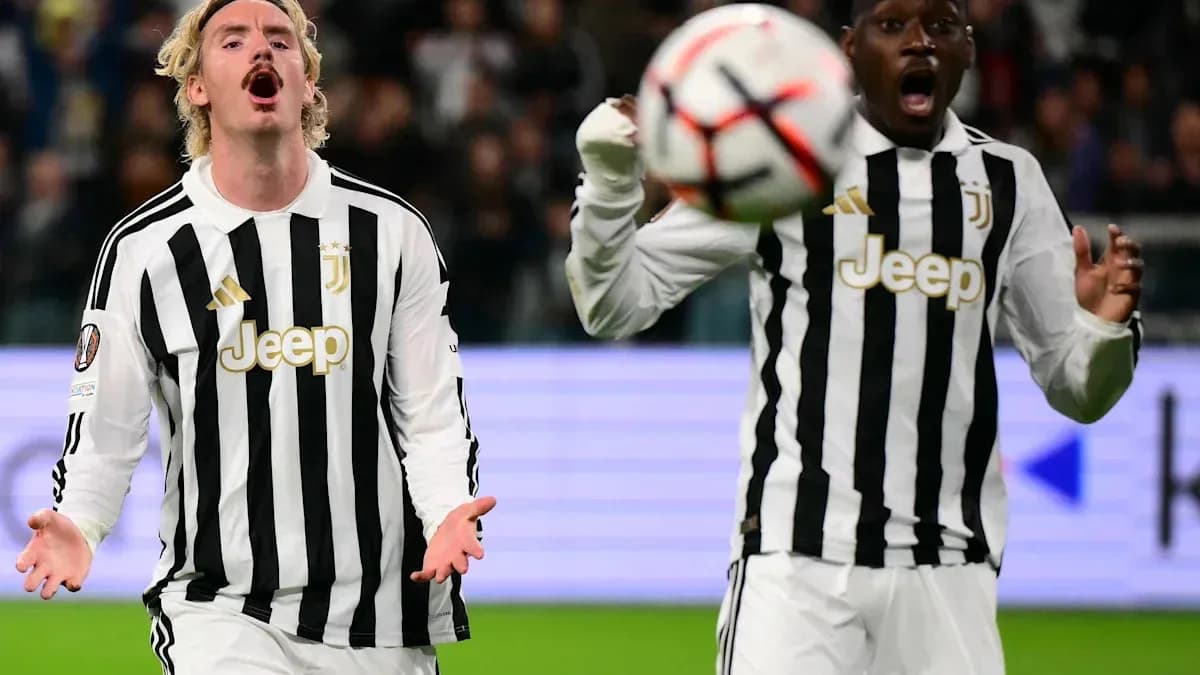
For Juventus supporters, the 3-0 home defeat to Lazio did not feel like a bad night at the office. It felt like the lights coming on at the end of the ride. No more illusions, no more flattering angles. Just a blunt view of where this team really stands.
Four days later, a different city and a different competition brought a 2-2 draw against Rennes. Not a disaster. Not a turning point. Certainly not enough to wash away the image of Lazio strolling out of Turin with three goals and three points.
Taken alone, neither game explains this Juventus. Together, they draw a sharper outline.
1. A brutal reminder of the gap
The most uncomfortable truth is also the clearest: Juventus are further from the top than many wanted to believe.
For years, the word “rebuilding” has been used like a blanket. It has softened expectations, excused awkward performances, and promised that something better sat just around the corner. This season feels different. This season looks like the one that will tell us if Juventus are actually approaching that corner or still wandering towards it.
The Lazio defeat was not about misfortune or refereeing. Lazio were simply superior. They were more organized, more drilled, more certain of what they were trying to do. They carried threat. Juventus carried the ball.
Juve had possession, but possession without purpose is theatre, not football. Lazio played like a side that sees itself among Serie A’s true contenders. Juventus played like a side trying to convince themselves they belong in the same conversation.
By full time, Juventus had lost the game, lost the crowd, and lost the argument.
2. An attack that still doesn’t know what it is
The attacking issues have drifted from a temporary slump into a deeper question of identity.
Too often, this team looks caught between ideas. Players wait on passes that never come. Runners dart into spaces nobody looks for. The ball moves from side to side, but the opposition penalty area never really feels under siege.
This is not only about missed chances. It is about a lack of consistent, repeatable ways to hurt teams.
Juventus rarely create regular overloads between the lines. Wide players receive the ball standing still, backs to goal, rather than sprinting into dangerous zones. Attacks fizzle out before defenders are forced to turn, sprint, or panic. There are flashes of quality, but flashes do not amount to a plan.
A lot of money has been spent to build this squad. Yet the question lingers: what kind of football is this team actually built to play?
Run. Pass. Cross. Repeat. That is honest work. It is not an attacking blueprint.
3. Absences matter – but not as much as structure
Injuries and suspensions shaped the lineup against Lazio. That matters. It always does.
What those absences do not explain is the loss of structure and conviction. They do not explain why a team with experienced internationals and big-price signings looked so disjointed in both games.
There was enough talent on the pitch to offer more than Juventus produced. Which is why the concerns feel less about who is missing and more about what is missing.
Returning players will raise the technical level. New signings might, too. But neither automatically fixes a team that is unsure of its own organization. Sides can survive injuries. They cannot survive a lack of clarity about who they are, how they recruit, and how they intend to play.
4. A defensive reputation under strain
A 3-0 home defeat is not a freak scoreline. It is a statement.
What stood out against Lazio was how fragile Juventus became whenever the tempo rose. The moment Lazio quickened the game, Juve’s defensive shape wobbled. Lines stretched. Gaps opened.
For a decade, Juventus built an identity on defensive certainty. Even when the squad dipped in quality, opponents knew they would need patience and precision to break them down. That aura has faded.
There are still good defenders in this group. There is enough raw material to build a solid unit. What no longer exists is the automatic assumption that Juventus will hold their shape when the pressure spikes. The best teams bend without breaking. At the moment, Juventus look at risk of snapping.
5. Rennes offered a different, more pragmatic face
The 2-2 draw with Rennes will not be framed as a classic European display. Juventus conceded twice and came away with a single point. The flaws were visible.
Yet it may have been one of the more revealing performances of the season.
Against Lazio, Juventus chased control through the ball. They had long stretches of possession but rarely converted that into territory or sustained pressure. The game was played at Lazio’s preferred rhythm.
Against Rennes, the approach shifted. Juventus did not try to own every phase. They picked their moments. They accepted longer spells without the ball, sat in a compact shape, and looked to spring forward when the chance appeared.
The effect was immediate. Without the ball, Juventus looked more at ease. Possession became a tool, not a target. The midfield held deeper positions for longer. The distances between defenders shrank. Fewer players were left stranded ahead of the ball when it was lost.
When opportunities came, Juventus attacked more directly and with clearer intent than they had shown against Lazio. Rennes had the ball for stretches, but they did not always have control of the game.
Top European sides have long understood this distinction. Control is not just about touches. It is about space, transitions, and risk. Juventus did not master any of those elements, but they showed the outline of a framework that fits this squad better than sterile domination.
The draw did not signal that the problems are solved. It did suggest that the staff may finally be identifying which problems are actually solvable with the players they have.
6. The mentality question will not leave
Above all of this sits the issue that refuses to move: mentality.
When Lazio scored the first goal, Juventus looked shaken. When the second arrived, they looked beaten. That is what alarms supporters.
Fans can live with defeat more easily than they can live with confusion. They can forgive a clear idea that fails. They struggle with a team that seems unsure what its idea is.
Against Lazio, that uncertainty seeped from the pitch into the stands. The mood shifted from irritation to resignation long before the final whistle.
Against Rennes, there was at least a response. There were spells of resistance, moments where Juventus looked like a team willing to fight their way through a difficult European night. It does not answer the mentality question, but it hints that the answer may still be somewhere inside this group.
A team caught between two visions
Put these two matches side by side and two different versions of Juventus emerge.
Against Lazio, they chased control and ended up with very little. Against Rennes, they sacrificed some control and looked more dangerous.
That contrast is not accidental. It edges towards an identity.
The great Spalletti Napoli side thrived on domination: possession, pressing, overloads, relentless technical quality. This Juventus is not that team, and pretending otherwise only increases the gap between expectation and reality.
The best coaches understand that domestic and European football reward different virtues. A league campaign is about controlling months. Europe is about controlling moments. Over 38 games, consistency and quality usually rise to the top. In knockout ties and tight groups, one lapse can end a season.
In Rennes, Juventus at least looked like a team capable of staying alive in those moments. They were flawed, but they were organized enough, compact enough, and competitive enough to give themselves a chance.
A different Juventus – for now
The truth after Lazio is harsh: Juventus are not at the level of Europe’s elite. Not close.
The truth after Rennes is more nuanced: that might not be the problem they need to fix today. The immediate task is simpler and more uncomfortable. This team has to decide what it wants to be with the tools it actually has.
Lazio Juventus looked stretched, uncertain and exposed. Rennes Juventus looked less expansive, less glamorous, but more coherent. It defended deeper, managed risk better, and did not treat the ball as a trophy to be polished.
Between those two versions lies the season. Which one turns up more often will decide not only where Juventus finish, but what kind of club they are becoming.





