Eddie Hearn strode to the microphone in Croke Park last June and admitted something he rarely does.
"It's not often I'm lost for words," he began, launching into a nine‑minute sermon about the Taylor–Pili fight and the scale of the occasion. Then he reached for history, and slipped.
"The last person to fight at this incredible stadium? Mohammad Ali."
A neat line. Also wrong.
Ali did fight at Croke Park, but he did not close the book on boxing there. What his night in Dublin did provide, though, was a warning from the past that Hearn might have done well to heed.
Ali’s Dublin detour
When Muhammad Ali came to Croke Park to face Al "Blue" Lewis in July 1972, Ireland treated him less like a visiting athlete and more like a head of state.
He was mobbed at Leinster House. He had a private audience with Taoiseach Jack Lynch. He sat down for a long, searching televised interview with Cathal O’Shannon. Eddie Keher took him out and showed him how to swing a hurl.
Ali, in turn, had his own priorities. He was determined to meet Bernadette Devlin. They had lunch on the day of the fight and talked politics, a subject on which the world heavyweight champion and the firebrand MP found themselves in perfect alignment.
The spectacle outside the ropes dwarfed what happened inside them. From a promoter’s point of view, that was the problem.
Only 18,000 people came through the turnstiles for the bout, a sizeable chunk of them for nothing. The event bled money for its promoter, Michael "Butty" Sugrue, the Killorglin publican and former "Ireland’s Strongest Man" from his days with Duffy’s Circus.
GAA director general Seán Ó Siocháin did not hide his irritation. He blamed Sugrue’s ticket prices. Dave Hannigan, in his book *The Big Fight: When Ali Conquered Ireland*, argued that Ali had simply been too visible, too available in Dublin in the days before the fight. The mystique evaporated. So did the queues.
The cautionary tale was there in the archives, if Hearn wanted it.
Rule 42 and the myths around it
Ali’s appearance at Croke Park came long before the GAA loosened Rule 42, the much‑misunderstood clause that has dominated so many bar‑stool arguments.
Contrary to the folklore, Rule 42 never explicitly banned "foreign sports" from GAA grounds. On paper, it barred horse racing, greyhound racing and "field games other than those sanctioned by Central Council."
In reality, that phrase did the heavy lifting. It kept out the rival British codes that needed no naming. Yet even under that regime, Croke Park still dabbled. Four American football games were staged there before the rule was softened, along with a couple of baseball outings in the late 1940s.
The decisive shift came at Congress in 2005. Delegates, staring at the redevelopment of Lansdowne Road and the grim prospect of Ireland’s home soccer matches being farmed out to Anfield, found enough ecumenical spirit to vote for a temporary relaxation. The dam cracked.
It had come close once before. In 2001, an attempt to bin Rule 42 missed the required two‑thirds majority by just two votes. President Seán McCague, no friend of radical change, brushed aside pleas for a recount. The old order survived by a whisker.
Not for long.
From fortress to festival ground
The Croke Park that greets Katie Taylor bears almost no resemblance to the stadium Ali walked into 54 years ago. The concrete bowl that once guarded the GAA’s soul has grown into a multi‑purpose entertainment machine.
At first, it opened its doors out of necessity. With Lansdowne Road under reconstruction, Croke Park became the stop‑gap, the emergency venue to spare Irish soccer and rugby the embarrassment of playing competitive "home" games abroad.
Now look at the fixture list.
This month, Manchester United and Leeds United turned up for a pre‑season friendly and promptly set a record: the best‑attended soccer match in the history of the island. A once‑unthinkable sentence now reads like a line from the accounts department.
GAA President Jarlath Burns, in the middle of a three‑year term that will reshape the association, took his seat in the stands and represented the GAA at the game. He admitted he had no emotional skin in the contest. He’s an Arsenal man. But he was there.
Compare that to John Downing in the late 1980s, who told a Sunday newspaper he wouldn’t be watching Ireland play England at Euro ’88 in Stuttgart because he planned to mow the lawn. Symbolism doesn’t come much starker.
By 2026, the United–Leeds spectacle riled League of Ireland ultras far more than it did GAA purists. There was some grumbling from the latter, but the real fury came from those who see English clubs cannibalising the domestic soccer game.
Within the GAA, the criticisms took a different form.
Pat Gilroy told the Irish Times he now calls Croke Park "Ceasar’s Palace because it’s just a revenue generator. And that’s not Peter McKenna’s fault. He’s doing a great job but he’s doing it with the hand he’s dealt, which is 'we need more money'.
McKenna, Croke Park’s commercial supremo, has leaned into that reality. He has spoken enthusiastically about hosting more Premier League pre‑season friendlies in the coming years. He has even floated the idea of Croke Park as a Champions League final venue.
You don’t need a forensic accountant to see why.
The money machine
The GAA’s own numbers tell the story. The association’s 2024 annual financial review recorded a 19% jump in overall revenue, driven largely by a packed summer at Croke Park.
Stadium income surged by 60% in 2024, even though match‑day attendances actually fell compared to the previous summer.
The difference? Gigs.
Croke Park staged seven concerts in 2024: Bruce Springsteen, AC/DC for two nights, and Coldplay over four. In 2023, there were none, unless you stretch the definition and count the Mary Wallopers as a warm‑up act on hurling final day.
Those who despise the split season like to point at that concert list and declare the case closed. For them, the calendar isn’t about club players or competitive balance. It’s about clearing August and early September for Springsteen, Coldplay and whoever else can sell 80,000 tickets.
It’s an easy target. Easier than grappling with the club player who just wants to know when his championship starts.
Yet when a compromise motion emerged recently to nudge the All‑Ireland finals into August, it didn’t come from the grassroots. It came from the GAA hierarchy. And by the eve of the vote, it was so obviously doomed that it was quietly withdrawn before delegates could formally shoot it down.
So the status quo holds. And Croke Park – or "Ceasar’s Palace", if you share Gilroy’s cynicism – remains free to pack in musical A‑listers, Premier League giants and boxing super‑shows through August and into early September.
Taylor’s demand: Croker or nothing
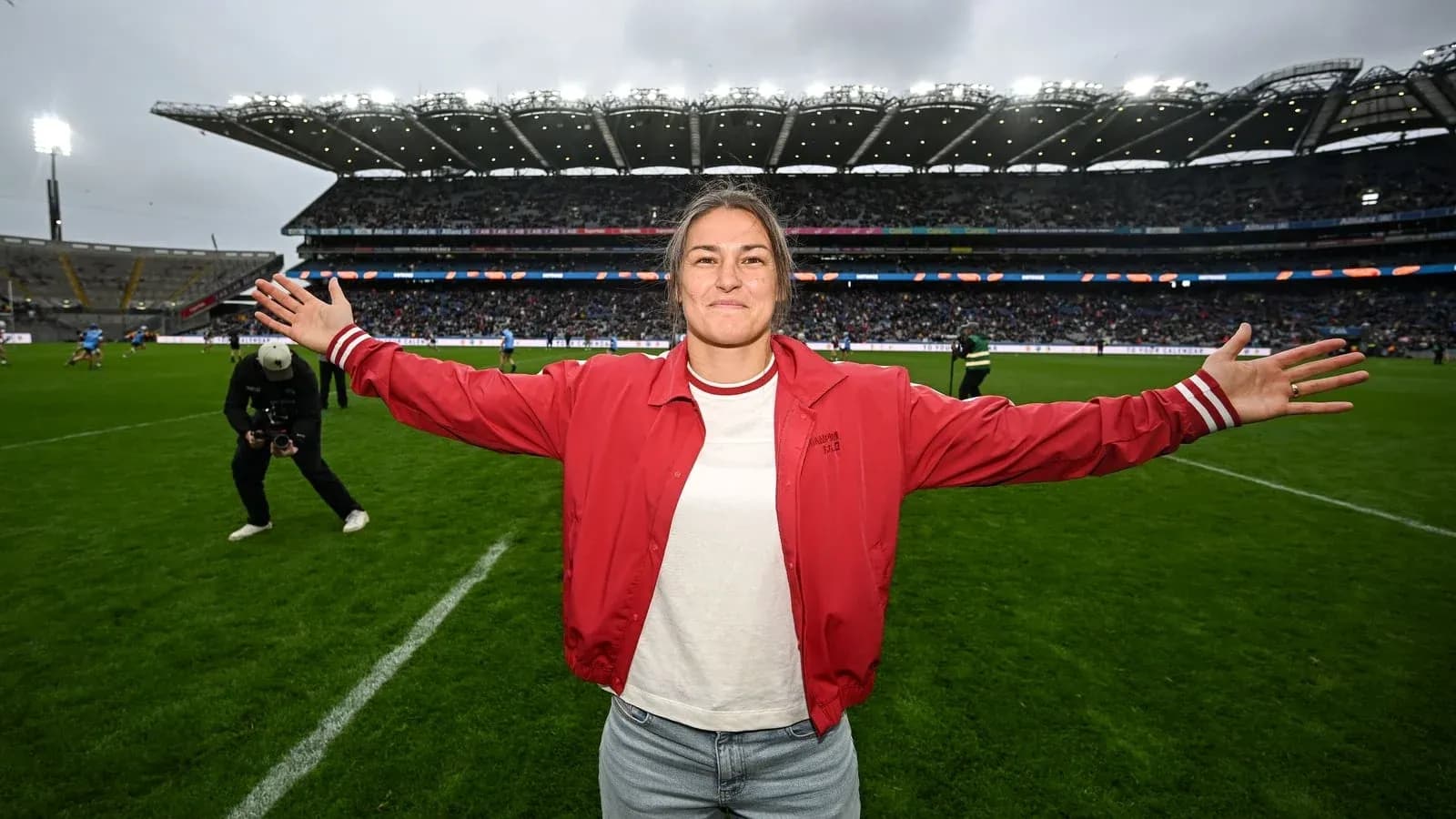
Into that charged space walks Katie Taylor.
Her long‑anticipated Croke Park fight lands on a weekend that used to belong, almost by divine right, to hurling. The first weekend of September was traditionally All‑Ireland hurling final weekend, with only a few breaks between 1997 and 2005 and again in 2012–13 when the decider slipped to the second Sunday.
From a traditionalist’s vantage point, this Saturday should be about Galway and Limerick supporters descending on Dublin, filling the pubs, swapping stories, and rehearsing old grievances. Daithí and Jacquí on the television, quizzing Joe Connolly and Joe McKenna about the 1980 final. Ritual, repeated.
Instead, the stadium belongs to Taylor.
Even the most dyed‑in‑the‑wool GAA loyalist will struggle to begrudge her that. She is not an interloper parachuting in for a payday. She is a product of Irish sport, of Irish sacrifice, of Irish pride. If anyone outside the GAA’s own codes can credibly claim a right to that stage, it is her.
And she has been crystal clear about what the venue means. Back in June, Taylor said a fight at the Aviva Stadium would never have satisfied her. If that was all that was on offer, she would have walked away.
It was Croke Park or nothing.