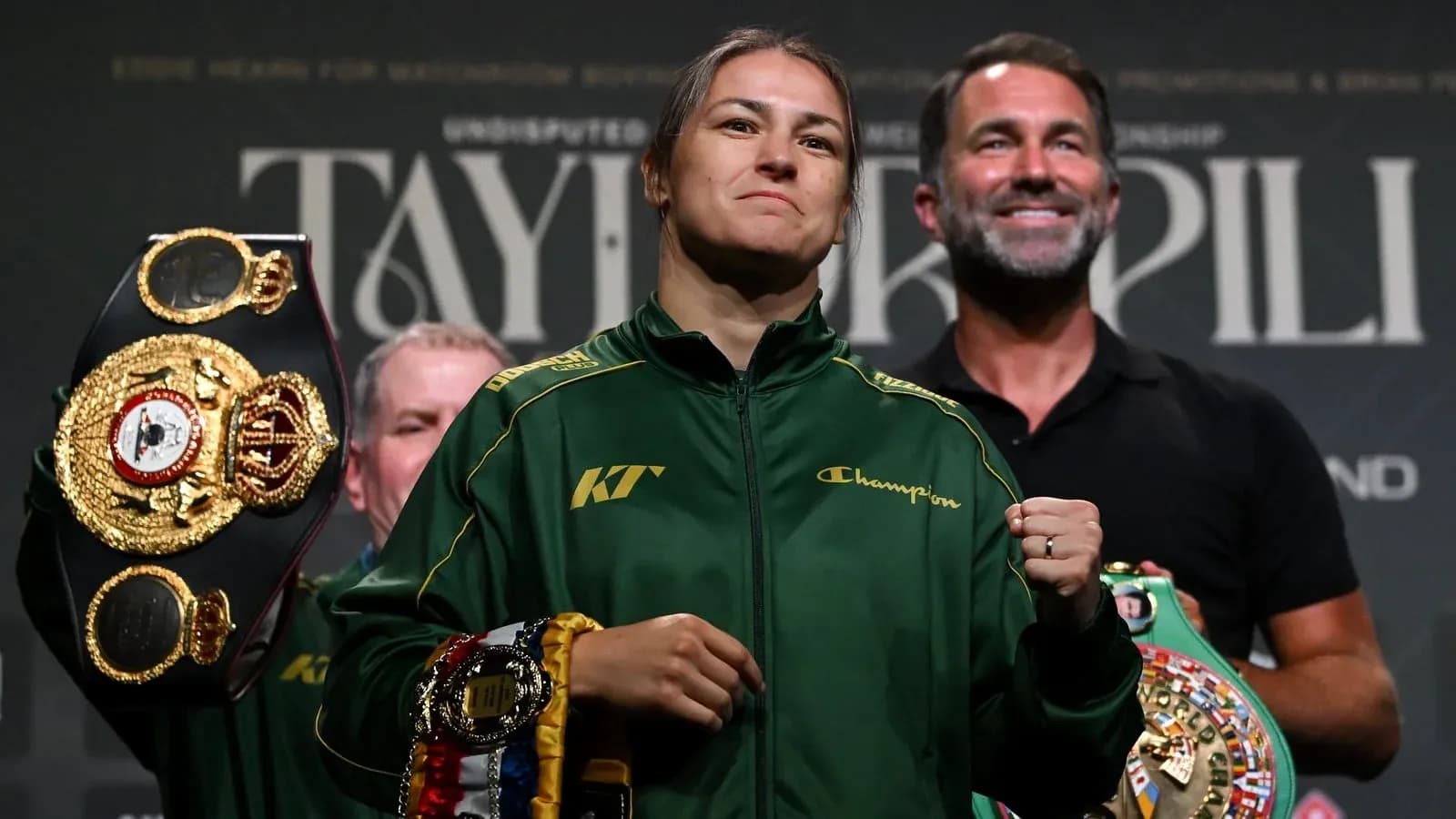
Four days out from Katie Taylor’s long goodbye at Croke Park, her camp is floating through Dublin in a kind of misty-eyed delirium. The hard work is done. The fight week machine has whirred into life. Now it’s about soaking in what they’ve built.
Tuesday’s press conference felt like a sequel rather than a fresh production. Same lines, same faces, just a different stage: the Helix Theatre in DCU instead of the Hogan Stand premium level. Outside, students drifted between lectures, barely glancing up. Katie Taylor, the woman about to headline one of the biggest nights in Irish sporting history, might as well have been on another continent.
Inside, it was a different world. GAA regulars, more used to All-Ireland semi-finals than title fights, shared space with Matchroom and DAZN staff, their London accents cutting through the room. Over the speakers, that familiar tin whistle instrumental from Croke Park played on an endless loop, as if someone had bottled the half-hour before throw-in and hit repeat.
This time, though, one thing had vanished: anxiety. In June, there were quiet questions about whether Croke Park could really be filled for a women’s fight, even one featuring Taylor. Those doubts are gone.
The numbers have done the talking. Taylor will become the first boxer to top a bill at Croke Park since Muhammad Ali in 1972. Back then, only around 18,000 turned up to see Ali face Al “Blue” Lewis, and the GAA hierarchy tore strips off the promoter for overpricing the tickets. This time, half of the 80,000 seats disappeared in pre-sale. The rest went in 17 frantic minutes on 28 July.
No one is getting a lecture about ticket pricing now.
Hearn’s regret and redemption
Before the live-streamed show began, 18 journalists were wedged into a tiny dressing room, waiting for Eddie Hearn to make his entrance. When he finally ducked in, he took one look around.
“Wow, blimey! This is small!” he said, half laughing, half incredulous.
The promoter has rarely been short of confidence, but even he admits the speed of the sell-out left him with a twinge of regret. They could have done this sooner, he believes. They should have.
He recalled the long, occasionally fraught dance with Croke Park officials. In June, he had greeted stadium director Peter McKenna with a breezy “Peter, me old mate, me old mucca!” but the relationship wasn’t always that chummy. The resistance he felt from the venue still irks him.
“People can sort of deflate your spirit, which is quite unusual for me,” Hearn said. “They did deflate my spirit a bit over the years. They made me question whether we could do it or whether it would actually work.
“I’m disappointed with myself that I allowed that to happen because maybe we could have done it earlier.
“If Croker had originally gone, ‘Yes, this is going to be massive!’, we would have done it.
“But they was like, ‘Hmm... I dunno’. And it was like, well blimey, if they’re not sure, do we really want to be gambling with these costs?
“Listen, they [Croke Park] helped out as well, they were fantastic in the end.”
The promoter’s patter is inherited. Hearn Jr carries all the showman’s instincts of his father, Barry, who fronted one of the most memorable nights in Irish boxing in 1995 when Chris Eubank fought Steve Collins in Millstreet. Back then, Barry was infamously assured the venue was “just around the corner” from Cork Airport, only to discover it was closer to an hour and a half away.
But while Barry embraced that chaos, he never initially saw Taylor as a commercial cornerstone.
“We decided to headline her in November [in 2016],” Eddie recalled. “I think we paid her – she’s still having a go at me about this – six grand for her debut. For a four rounder.
“Which at the time, in women’s boxing by the way, was a lot of money.
“I said to my Dad, I’m going to put Katie Taylor on last. And he’s like, ‘What? A women’s fight?’
“I was like, ‘yeah, dad, like she’s unbelievable. You’ve got to watch her.’
“He said, ‘No one’s interested in women’s boxing, son.’ It’s the same sort of thing Frank Warren would say – or anyone from that era. And he [Barry Hearn] watched her and went ‘oh my God!’”
That conversion story has become part of the Taylor mythology: the old-school sceptic floored by the force of what he’s seeing.
Business first, then the fight
Like so many modern mega-events in boxing, this week has the feel of a corporate victory lap. The narrative, at times, leans more towards “Art of the Deal” than “Rocky”. The achievement of staging a Taylor farewell in Croke Park is being celebrated almost as loudly as the fight itself.
At the top table, promoter Peter Aiken batted away praise for the sell-out, insisting Taylor was the one who had moved the tickets. Brian Peters, Taylor’s long-time manager, was in full flow again – less teary than in June, but no less fervent.
He crowned Taylor the greatest Irish sportsperson of all time, with a playful nod to Roy Keane as “a good second”. He pushed Barry Keoghan for an Oscar for his turn in the promotional video and even claimed to have cleared the skies with higher powers, promising “no rain after 5 o’clock” on fight night thanks to a word with “God almighty”.
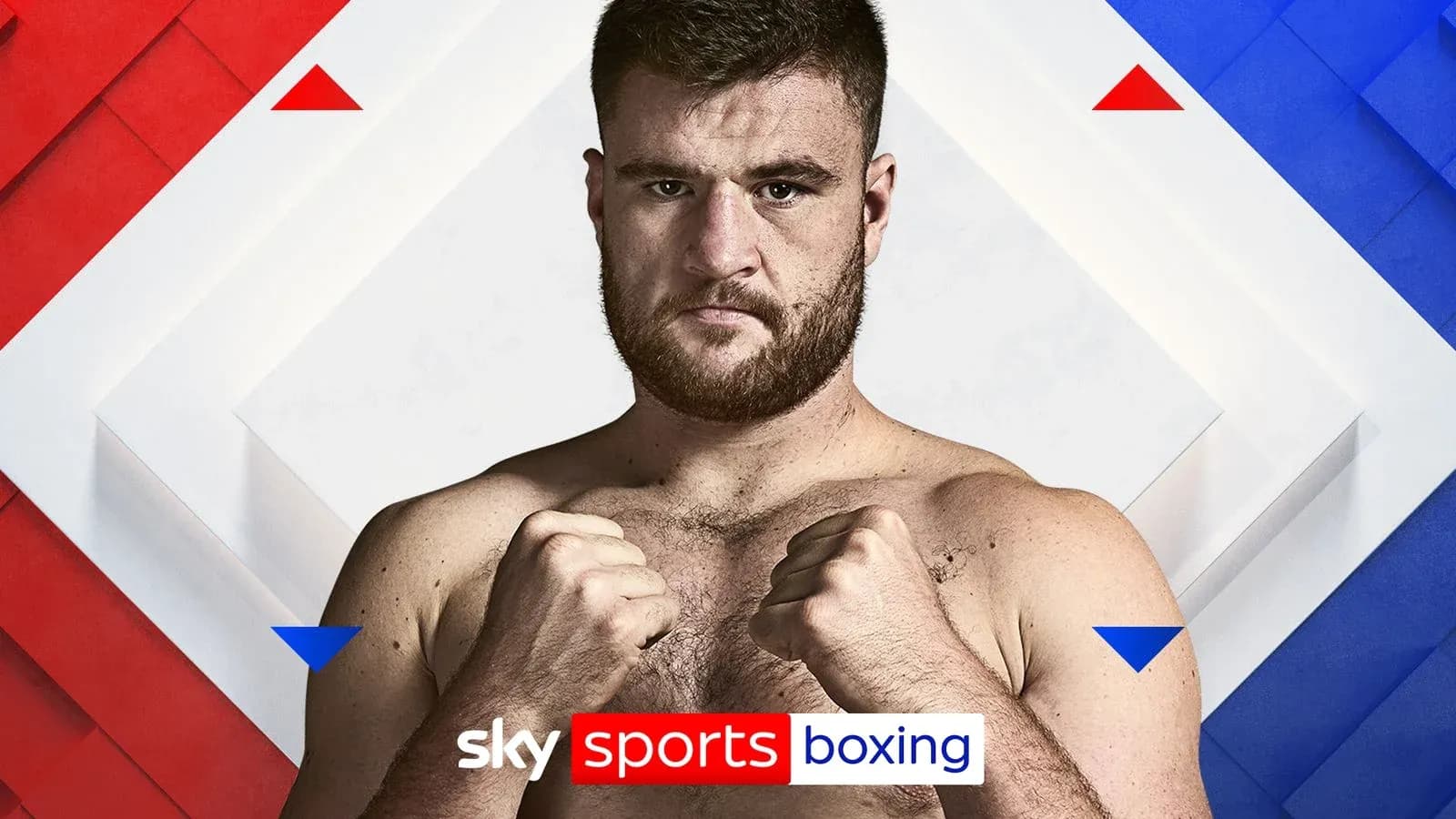
The challenger, Flora Pili, walked into this swirl of adulation with quiet composure. To the wider public, she might as well be listed on the undercard as “AN Other”, but she earned polite applause as she stepped onto the stage, dreadlocks painted in the French tricolour.
Dublin is not new to her. In 2017, she boxed at the National Stadium in a low-key international round-robin, losing to Kellie Harrington and then Italy’s Irma Testa. The stakes are very different now. Since turning professional, she has built a 12-0 record and arrives in Ireland as the IBO super lightweight champion, a belt Taylor vacated in late 2025.
Several times, as the mood in the room veered towards self-congratulation, Hearn and others felt the need to tap the brakes.
“This is a real fight,” they repeated. This is not just a farewell pageant.
The legacy in the ring and beyond it
Taylor herself did not sit down with the press pack, but she did address the crowd, once again circling back to the theme that has followed her throughout this final chapter: gratitude.
“I’m not sure there’s another country in the world where 80,000 people would turn up for a female athlete,” she said.
Her voice caught slightly when she revisited her early days, walking into gyms disguised as a boy just to be allowed to box.
“I was walking into some boxing gyms as a young girl, being sniggered at and laughed at. Who’s this girl trying to be a boxer? I had to earn people’s respect along the way.
“I’m so delighted that these young girls coming through now don’t have to go through the same struggles and adversity that I had to go through. The door is actually opened for them.
“You walk into every boxing gym now and it’s packed with female fighters. That to me is the greatest part about this legacy.”
That, ultimately, is the heart of this week. The ticket records, the stadium politics, the promotional theatre – all of it circles around a fighter who once had to hide who she was just to step through a gym door, and who now walks towards Croke Park as the main attraction.
On Saturday, the business will fade, the music will stop looping, and Taylor and Pili will be left alone under the lights. The question now is not whether she can sell out Croke Park.
It’s what kind of final act she can deliver in it.