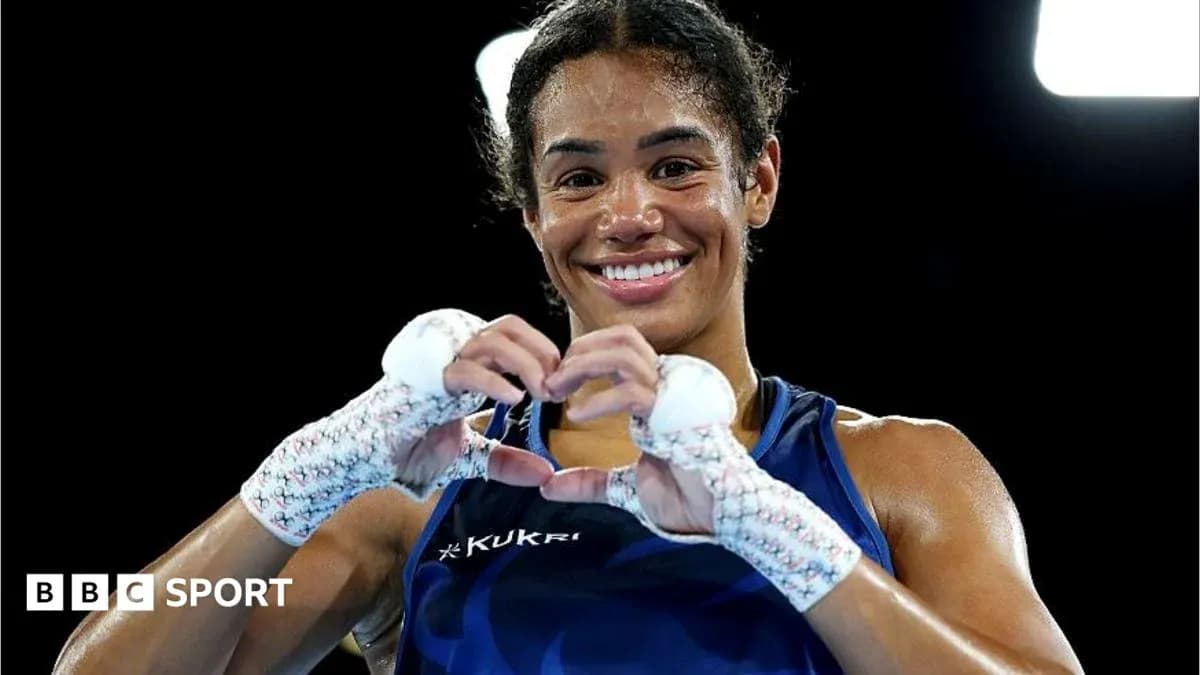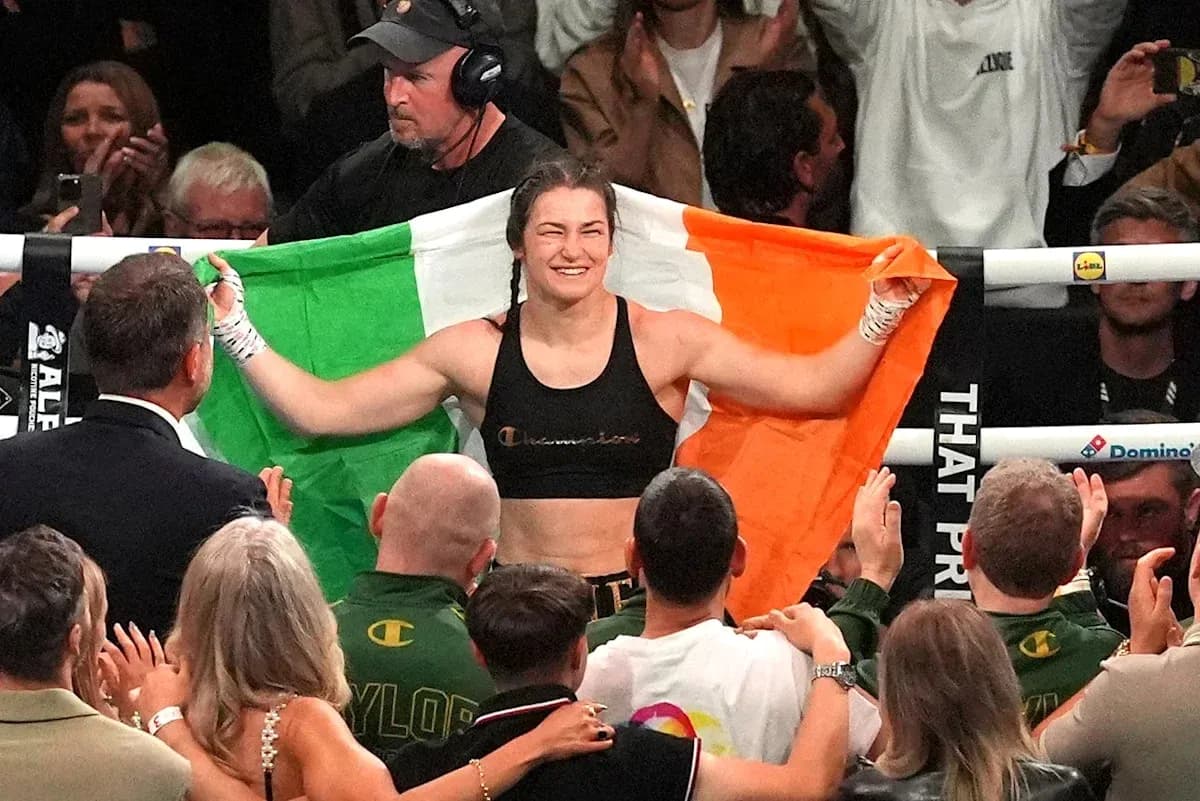
Katie Taylor walked away from boxing on her terms, in her city, in her stadium, with every belt that mattered strapped back around her waist.
Under the lights of a packed Croke Park, with more than 80,000 voices roaring her name, the 40-year-old outclassed France’s Flora Pili to reclaim the undisputed super-lightweight crown and close the book on one of the most significant careers the sport has ever seen.
The scorecards told the story of control and command: 100-90, 100-90, 98-91. A shut-out on two cards, a near shut-out on the third. Pili, 29 and unbeaten before this, arrived with ambition and a stubborn streak, but she left with her first professional defeat and a harsh education in what elite really looks like.
Taylor never allowed the occasion to overwhelm her. She had waited too long, pushed too hard, to let that happen here. This was the dream: Croke Park, sold out, her name at the top of the bill. The first fighter to headline the famous old ground since Muhammad Ali in 1972. The scale of it could have frozen a lesser champion.
Instead, Taylor boxed like someone who had decided long ago how this night would end.
She was light on her feet, sharp with her combinations, still snapping in and out of range with the timing that carried her through a generation of opponents. The legs that had done so many rounds, the hands that had thrown so many punches, still had one more performance in them. One more masterclass.
Pili tried to change the script late on. In the closing rounds she finally let her hands go, driving forward, trying to rough Taylor up and drag her into exchanges. The French fighter had her moments, a brief rally that hinted at danger, but never enough to tilt the fight. Taylor read it, adjusted, and went back to work, picking her off and piling up rounds.
When the final bell rang, there was no doubt. The vacant WBC super-lightweight belt was hers again, joining the IBF, WBA and WBO titles she already held. She also took the IBO strap from Pili, restoring total supremacy at 140lbs.
Undisputed. Again.
That word has followed Taylor across divisions and across eras. She first conquered the lightweight class, unifying all the major belts as a professional after a storied amateur career that changed the sport. She then stepped up to super-lightweight and, after suffering the lone defeat of her pro life on points to Chantelle Cameron, came back to avenge it and claim the belts.
Now she leaves as a three-time undisputed champion across two weights, a record that sits comfortably alongside any in boxing history, male or female.
But the numbers only scratch at what she has meant.
Before the belts, before the sold-out arenas, there was a girl who had to pretend to be a boy just to get through the gym door. There was a fighter who pushed and campaigned until women’s boxing finally took its place at the Olympics. London 2012 turned her into a national icon; the gold medal only confirmed what Ireland already believed.
From there, the journey never really slowed. Manchester, Boston, Brooklyn, Manhattan – wherever Taylor went, the Irish followed. They packed out venues, turned foreign arenas into home nights, and turned her fights into events. Croke Park, though, always felt like the missing piece.
On Saturday, she finally stepped into that ring.
“Croke Park, we did it; we brought boxing back to Croke Park,” she told the crowd afterwards, her voice riding the noise of a stadium that had waited decades for a night like this. She reminded them that they had been with her before London 2012, through the heartbreak of Rio 2016, through the early days of her pro career and the nights on the road.
“I don't know any other country that could sell out 80,000 tickets for a female athlete. I'm convinced that Ireland's the only country,” she said, pausing to drink it all in, to look around at the tiers of green and noise and memory.
This was not just a farewell. It was a statement about what she had built.
The woman who once had to disguise herself to fight now leaves as arguably the greatest female boxer of all time – and as an all-time great, full stop. She exits with every major super-lightweight belt, her legacy already secure long before she laced up for this last walk.
When the speeches ended, Taylor turned back to the ring one final time. The crowd stayed. Nobody moved for the exits. They watched as she left her gloves there, in the place she had always dreamed of, in front of the people who had carried her from small halls to the sport’s grandest stages.
The belts will be passed on. New champions will emerge. But the image of Katie Taylor, gloves resting on the canvas at Croke Park, will linger long after the lights go out on this era.