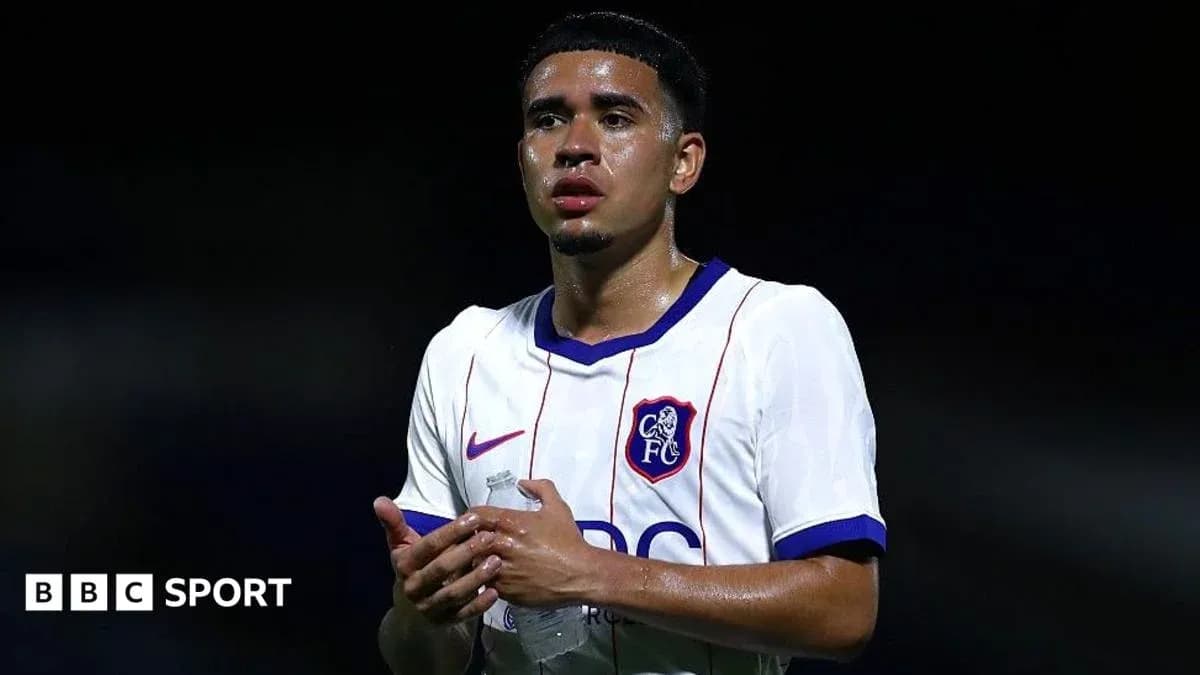
Kendry Paez finally wore Chelsea blue at the weekend. Not under the Stamford Bridge lights, not with TV cameras tracking his every touch, but as a 12th‑minute substitute for Cobham Next Gen – the club’s rebranded Under‑21s – in a 4-1 win away at Arsenal.
For a player once billed as South America’s next great attacking prodigy, it felt both low-key and quietly significant. Three years after Chelsea agreed a £17.27m deal for him as a 16-year-old at Independiente del Valle, the long wait for his first appearance in club colours is over. The question now is what, exactly, is left of the hype.
From record breaker to reality check
Paez’s story began at a sprint. At 15, he became the youngest debutant and goalscorer in Ecuador’s top flight. That same season he stepped into the Copa Libertadores, South America’s answer to the Champions League, and looked like he belonged.
The rise didn’t stop there. By 16 years and 131 days, he had made his second appearance for Ecuador and become the second-youngest South American to play in a World Cup qualifier, behind only Diego Maradona. A month later, he went one better: the youngest South American ever to score in a World Cup qualifier, away to Bolivia in a 2-1 win.
Chelsea saw all that and moved quickly. When they struck the deal in 2023, Paez already had 18 caps and two international goals. The club believed they were paying early for a player who would soon be out of reach.
They brought him into the first-team environment at Cobham whenever possible, even before his 18th birthday made the move official. They also went beyond football. As violence flared in Ecuador in early 2024, Chelsea arranged security for Paez, his family, and the family of international team-mate Moises Caicedo.
The investment was financial, emotional, and logistical. The return so far has been complicated.
Loans, criticism and a stalled ascent
The first big test came in Europe. Paez joined Strasbourg, part of the same ownership group as Chelsea, and started well enough to be named Ligue 1’s Young Player of the Month in September.
The glow faded quickly.
Former manager Liam Rosenior, speaking later in the season, stripped away the excuses. “We expect more, clearly,” he said. “I’m tired of using the excuse of the player’s youth.” One goal in 21 appearances told its own story. The loan ended early.
The next stop was River Plate, a club where pressure is relentless and patience short. On paper, it looked like a perfect proving ground for a gifted No 10. On the pitch, it never quite clicked.
Sources in Argentina questioned his attitude and pointed to a flat performance in the Superclasico – a 1-0 defeat to Boca Juniors at the Monumental in April – as emblematic of the problem. Soon after, club president Stefano Di Carlo named Paez among 15 players training away from the first team. Others around the club felt he had been harshly judged and deserved more chances, but the verdict was clear enough: one goal in 14 games, 461 minutes, and another loan cut short by mutual consent.
All of this came against the backdrop of a player still trying to find his footing off the pitch. During an international window, Paez was filmed in a New York strip club. Back home, a country that had anointed him as the next great hope began to worry.
Michel Deller, owner of Independiente del Valle and one of the people who knows him best, voiced the concern publicly.
“He’s like a son to us. We care about him deeply,” Deller told Hincha Amarillo. “He’s a good kid who’s had a tough time and has made decisions that have complicated his life. We are always hopeful he’ll show his exceptional talent once again but right now, it’s up to him to decide what to do with his life.”
Alonso draws a line
When Xabi Alonso arrived at Chelsea, he did not pretend. Asked about Paez, the new manager was blunt: the midfielder was “not in my plans”. On the club website, Paez appeared not as a first-team prospect but as an academy player.
Chelsea had explored another loan in English football, but ran into a hard rule. Fifa regulations meant the club had already used all six of their available international loan slots. They could not send him abroad again.
So the next chapter would not be at River, Strasbourg or anywhere else on the continent. It would be at Cobham, in front of a few hundred fans, not tens of thousands.
For some, that might look like a demotion. For Chelsea, it is a reset.
A quiet night, a late reminder
On a cool evening in the EFL Trophy at Wycombe, Paez cut a slightly isolated figure before kick-off. Spanish-speaking, newly returned, he stood apart from most of the other academy players. He joined the warm-up, but mostly kept to himself.
When he came on in the 62nd minute, playing as a right-sided No 10 in a shape mirroring Alonso’s back three, he struggled to influence the game. Chelsea lost, and for long spells Paez drifted on the fringes.
Then, at the death, a glimpse.
From a short corner, he whipped in an outswinging cross that Harrison Bettoni turned in during added time. Moments later, another delivery caused chaos in the Wycombe box as Chelsea chased an equaliser in front of just 778 fans.
It wasn’t a statement performance. It was something smaller but still important: proof that the left foot and vision that seduced scouts across continents are still there, waiting to be sharpened.
Days later came that first Under-21 outing at Arsenal, and with it the simple, overdue image of Kendry Paez in a Chelsea shirt.
Between hype and hope
Behind the scenes, the noise around his attitude has not been ignored by Chelsea or those close to Paez. They do not dismiss the criticism outright. They also argue it has been inflated, that a 19-year-old with more than 100 senior matches and 27 caps for Ecuador deserves time to grow, make mistakes and correct them.
This is not a teenager short on experience. Before setting foot in Cobham as an official Chelsea player, he had already played 70 times for Independiente del Valle. He has been fast-tracked, exposed to pressure, and told for years that he is special.
Now comes the less glamorous part of a career: rebuilding.
Chelsea see value in having him back under their own roof, training daily in a controlled, elite environment. Family members were in the stands at Wycombe. There is structure around him again, a support system rather than a revolving door of coaches and cultures.
Academy games at Cobham draw scouts from across the English Football League and beyond. Perform well, and doors open quickly. There is genuine optimism around Paez that a strong few months could earn him a first loan in England in January. If one of the six international loan slots frees up, an overseas move could also be back on the table.
For now, the stage is smaller, the spotlight dimmer, the expectations more measured. But the opportunity is real.
Chelsea once bet heavily that Kendry Paez would become one of the defining attacking talents of his generation. The talent that justified that gamble has not vanished. It has just been buried beneath a whirlwind of early fame, tough loans and hard lessons.
The next act starts in front of a few hundred people on academy pitches. Whether it ends under the Stamford Bridge lights is now down to him.