At Monza, faith is painted red. The grandstands drip in Ferrari scarlet, the flags, the caps, the chants. Yet the driver carrying Italy’s title hopes this season sits in a silver car.
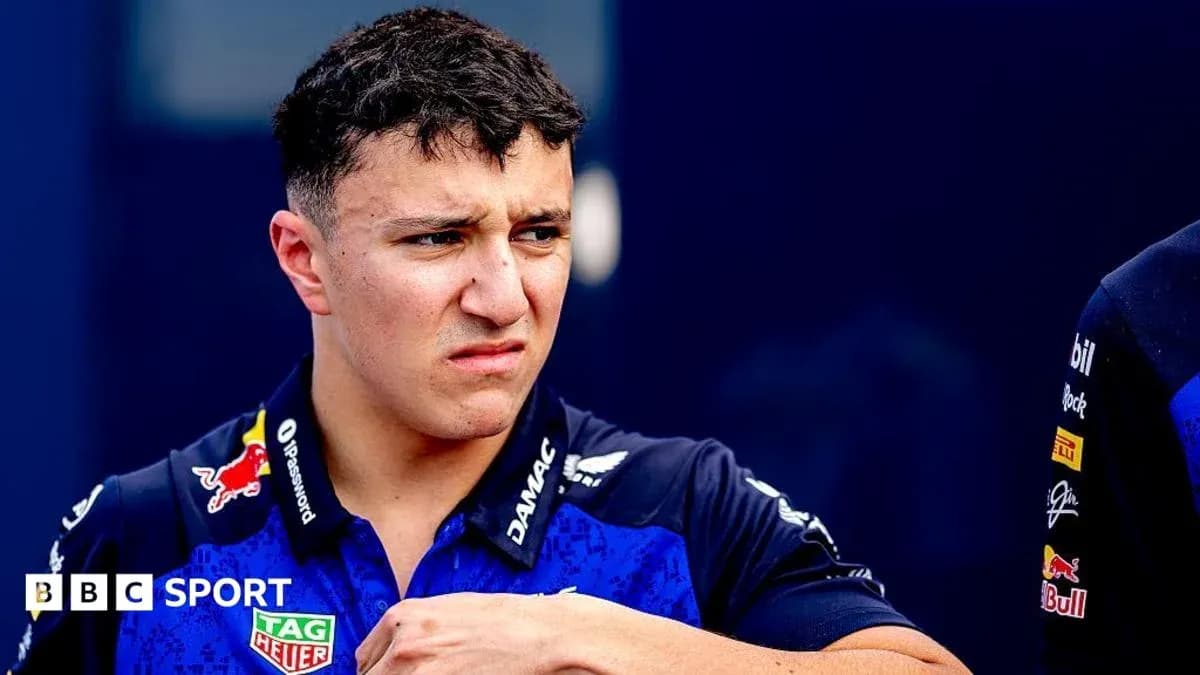
Kimi Antonelli, 19 years old and already leading the Formula 1 world championship, arrives at the Italian Grand Prix with a 59-point cushion and the weight of a nation on his shoulders – even if that nation is conflicted about how loudly it should cheer.
Ferrari country, Mercedes hero
“Ferrari is my heart,” says Thomas, born and raised in Monza, standing a stone’s throw from the circuit that has defined his weekends since childhood. Next to him, Emanuele, here with his daughter Matilde, doesn’t hesitate: “It’s a religion. In Italy, we do support other teams and other sports, but there is only one Ferrari.”
In this country, Ferrari is not a team. It is an institution. People joke that the identity of the Scuderia’s team principal matters as much as the identity of the Pope. When a Ferrari driver wins the title, Maranello becomes a pilgrimage site.
“It’s like the second coming effectively; everyone’s in the streets singing, dancing, church bells are ringing. It’s a party in the streets,” says Adrian Hussain, half-Italian and a member of the Scuderia Ferrari Club Silverstone.
Those bells have not rung for a Ferrari world champion since 2007, when Kimi Raikkonen snatched the title by a single point. Italy has not produced a world champion driver since Alberto Ascari’s back-to-back crowns in 1952 and 1953. For decades, an Italian draped in il Tricolore on the top step has been a romantic notion, not a realistic expectation.
Antonelli has changed that overnight.
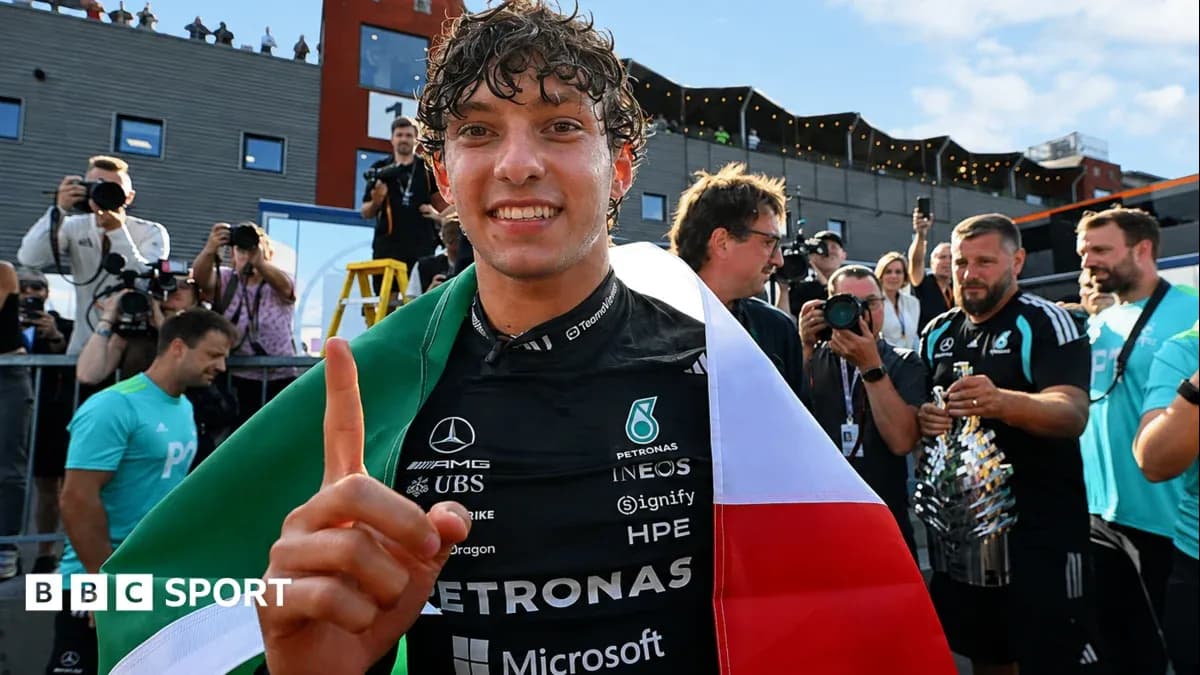
In March, he became the youngest championship leader in F1 history with victory in Japan at 19 years, seven months and four days. He has stayed on top ever since, stacking up six wins, rewriting records, and dragging Italy into a new era – from the cockpit of a Mercedes.
A divided house at the Temple of Speed
Walk through the Monza fanzone and you see the fault line running through Italian fandom.
Alessandro is covered head to toe in Ferrari red. His girlfriend Emma stands beside him in Mercedes silver. The contrast is almost theatrical.
“Of course, I am a little bit of a Ferrarista because I’m Italian. But honestly, I love Kimi, I support him,” she says, perfectly capturing the generational tug-of-war.
If Antonelli seals the title this year – with the finale potentially at Imola, just 25 miles from his hometown of Bologna – both agree on one thing: it would mean “Italy is back on top”.
Across the country, old loyalties are being tested.
“Antonelli is disrupting the traditional rules of fandom in Italy,” says Giulia Toninelli of La Gazzetta dello Sport. His “strong personality” has gripped the public, particularly younger fans. “And the fact that he is racing for Mercedes matters very little to them.”
For the tifosi raised on Ferrari mythology, that is a jarring shift. For those who have grown up in an era of globalised fandom and social media, it feels natural. The badge on the nose matters less than the flag on the podium.
Living the Italian dream – in silver
Few understand the emotional conflict better than former racers Marco Melandri and Davide Valsecchi, who dissect F1 and MotoGP on their Chiacchiere da Box (Paddock Chatter) podcast.
“I think Kimi is living the dream, even of the Italian fans,” says Melandri. “But in Italy, a lot of people are very close to Ferrari, they are pushing for Ferrari. So sometimes they are fighting themselves to understand, to choose who is their favourite driver. But I think Kimi is doing something amazing.”
Valsecchi is just as effusive. “We are loving it. It’s a big surprise for everyone, knowing that an Italian driver, so young, is leading the championship, is driving so well, and is mentally so strong. So, at the moment, everything is perfect for us.”
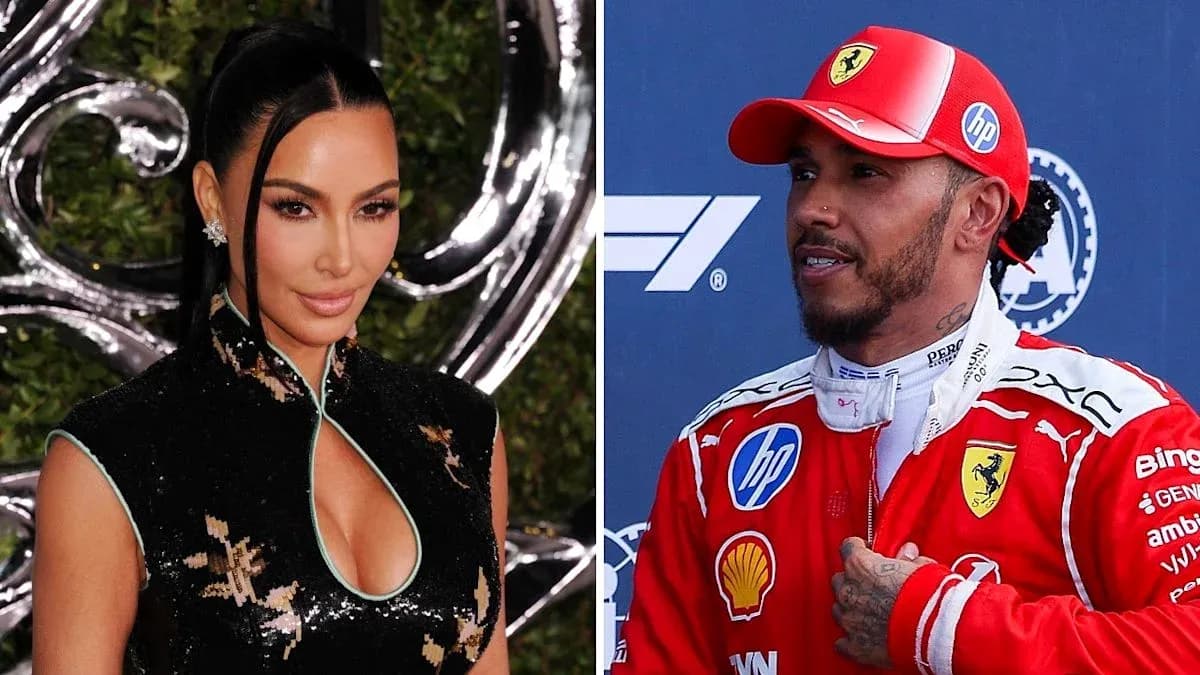
Antonelli’s rise has not been an accident. Mercedes signed him to their junior programme at 11. After just one season in Formula 2, Toto Wolff promoted him into the seat vacated by seven-time world champion Lewis Hamilton for 2025, after Hamilton stunned the sport by agreeing to join Ferrari.
The apprenticeship was harsh. Antonelli’s first F1 campaign last year brought a bruising European stretch: four retirements, only three points, and a final position of seventh in the standings. Yet Mercedes insulated him from the storm.
When he crashed in his very first practice session at Monza two years ago, still only 18, Wolff went straight on the radio: “All good, Kimi. All good.” Five words, but a clear message – this is a project, not a fling.
“I think Kimi is in the right place at the moment,” says Toninelli. “Mercedes is a family he has known for a long time, one that has nurtured him as a driver and given him a level of protection that would be impossible for him to have at Ferrari right now.”
Valsecchi agrees that distance from the Italian pressure cooker has helped.
“Sometimes in Italy, we lack a bit of patience,” he says. “We just push for you when you are strong and then underline with red pen every time as soon as you make little mistakes.
“For this reason, as a rookie, it is better to be away and to be on another side, and then come to Ferrari only when you are a big man with already a championship and a complete driver.”
Chasing Vettel, carrying a nation
If Antonelli does convert this title push, he will rip another page out of the record book. Sebastian Vettel was 23 years and 134 days old when he won his first world championship in 2010. Antonelli would be three years younger.
The numbers are staggering, but the emotions in Italy are complicated.
Daniele, at Monza with his sons Tommaso and Demis, shrugs when asked how they would feel about an Antonelli title. “So-so,” he says.
“We support Hamilton and Leclerc – we support Ferrari,” he adds, making the hierarchy clear. Demis, the youngest, leans in and whispers that Antonelli is “really good”. The Scuderia still comes first, but the silver car is no longer the enemy.
“I’m happy for Kimi, of course. But I’m not supporting him like Ferrari, because Ferrari is up there,” Thomas says, lifting his hand high above his head.
On track, Antonelli has already justified the hype. He became the youngest driver ever to take pole position, then turned it into his first win in China in March. He followed it up with victory in Monaco, the race every driver wants on their CV.
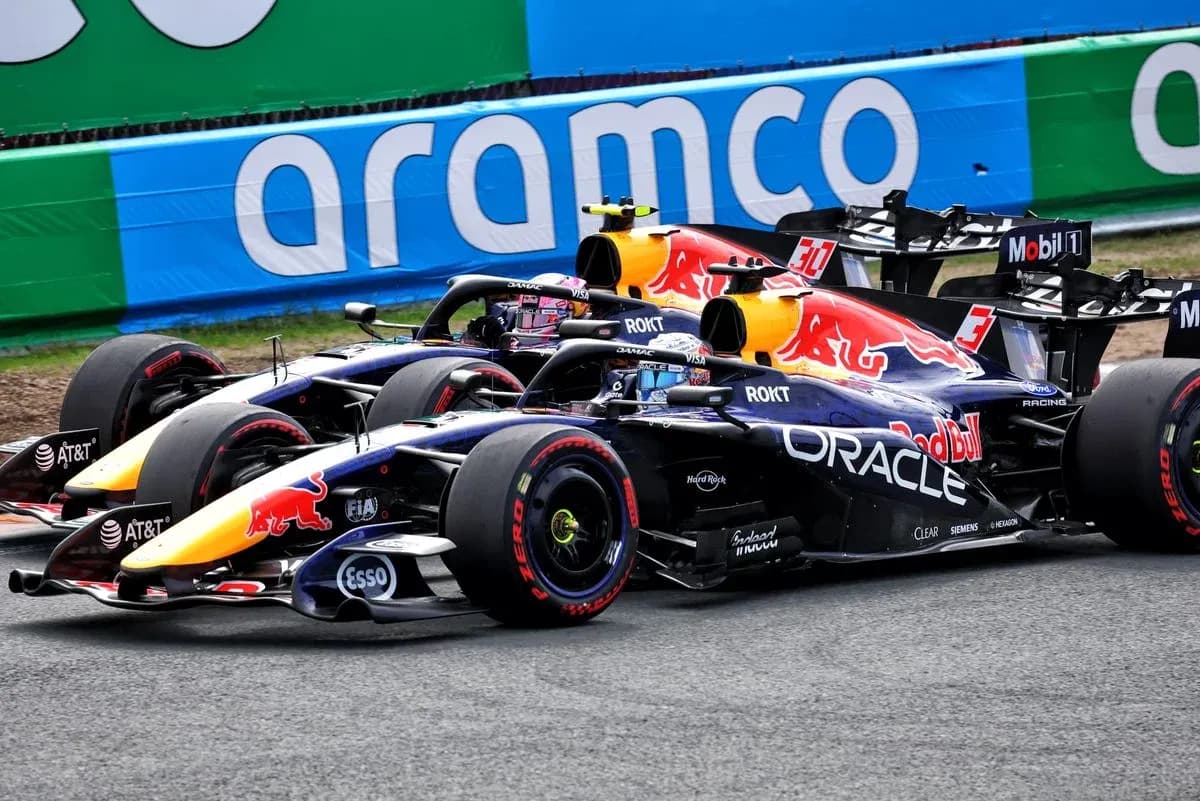
Only an engine failure in Barcelona and a lowly 15th at Silverstone have significantly blemished his season. A win in Belgium and podiums in Hungary and Zandvoort rebuilt his advantage over team-mate George Russell and Hamilton, who sit tied on 183 points behind him.
This weekend brings a new test. A grid penalty for a fresh power unit drops Antonelli to the back for Sunday’s race. The title leader, the home favourite, starting from the wrong end of the Temple of Speed.
Ferrari’s chosen son under new scrutiny
While Antonelli climbs, Ferrari’s anointed hero faces questions he has not heard before.
At the Belgian Grand Prix in July, Antonelli shared a press conference with tennis star Jannik Sinner, a five-time Grand Slam champion and fellow Italian sporting icon. When asked who is more famous in Italy, Antonelli did not point to Sinner. He pointed to the man sitting next to him in red.
“It’s Charles,” he said, nodding at Charles Leclerc. “He’s probably the most famous man in Italy right now.”
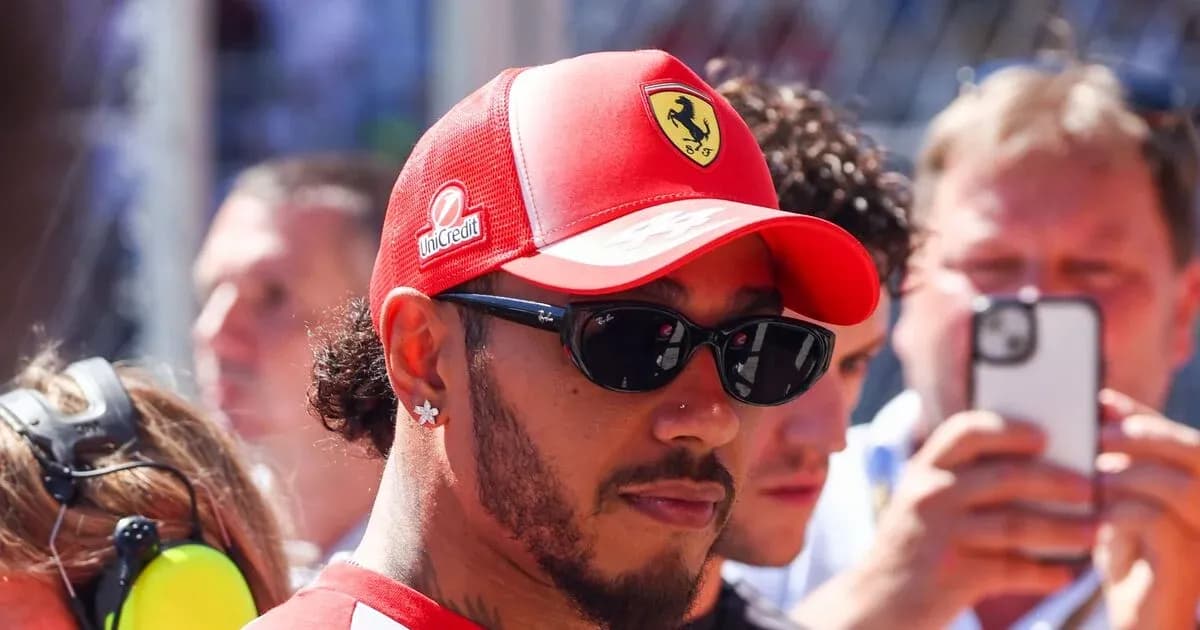
Leclerc has been Ferrari’s surrogate son since 2019. Fluent in Italian, steeped in the culture of Maranello, he has carried tifosi expectations for eight seasons. He has twice won at Monza and recently signed a new long-term deal, insisting that bringing the title back to Ferrari is what drives him.
But the numbers bite. Nine wins in 162 grands prix for the team. Flashes of brilliance, yes, but not the sustained dominance many expected.
“I start to see, after many years, for the first time, some fans start to say, maybe he’s not as strong as we think before, because Hamilton is doing better than him, and Antonelli is doing much better with another car,” says Melandri.
The contrast is stark. Leclerc in Ferrari red, still chasing his first world title. Antonelli in Mercedes silver, on the brink of one before his 20th birthday.
A future painted red?
For some, the ideal solution is obvious: put the Italian prodigy in the Italian car.
“It would be very nice to have an Italian driver in Italian colours winning races and championships,” says Hussain. Within his Ferrari club chats, he insists there is “no animosity” towards Antonelli. The dream scenario? A future where the Tricolore on the podium and the Prancing Horse on the nose belong to the same man.
Melandri sees that possibility too. “It should be a dream to see Antonelli get a victory in Ferrari in the future. That’s for sure,” he says.
For now, though, the realities of 2024 are sharper. Ferrari have the advantage this weekend, with Antonelli marooned at the back by his penalty. A Scuderia one-two in front of their own fans is on the cards. The intrigue lies in what happens behind them.
If Antonelli scythes through the field and reaches the podium, could a Ferrari one-two with the Italian in third be the perfect compromise? Red on top, silver hero alongside, a nation allowed to cheer both?
“Of course, sharing the podium with a Ferrari would make it even more special, but regardless of that, he will have the full support of his fans,” says Toninelli. “Part of the Italian audience may indeed favour Ferrari over Kimi, while another section may feel the opposite, but that won’t stop the Italian celebration at Monza, which will bring both fanbases together.”
The bells in Maranello have been silent for 17 years. The last Italian world champion belongs to black-and-white photographs and history books. Now a teenager from Bologna, racing in silver, is dragging those memories into the present.
If he finishes this job, Italy will have to decide: is the colour of the car more important than the flag on the podium?