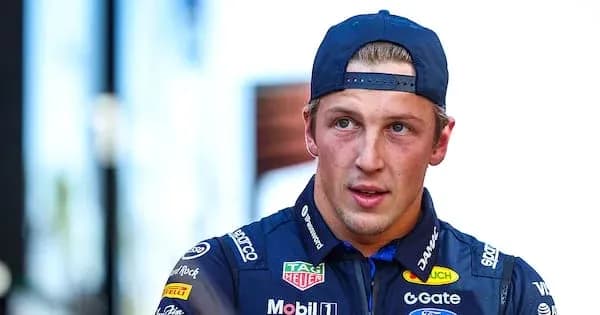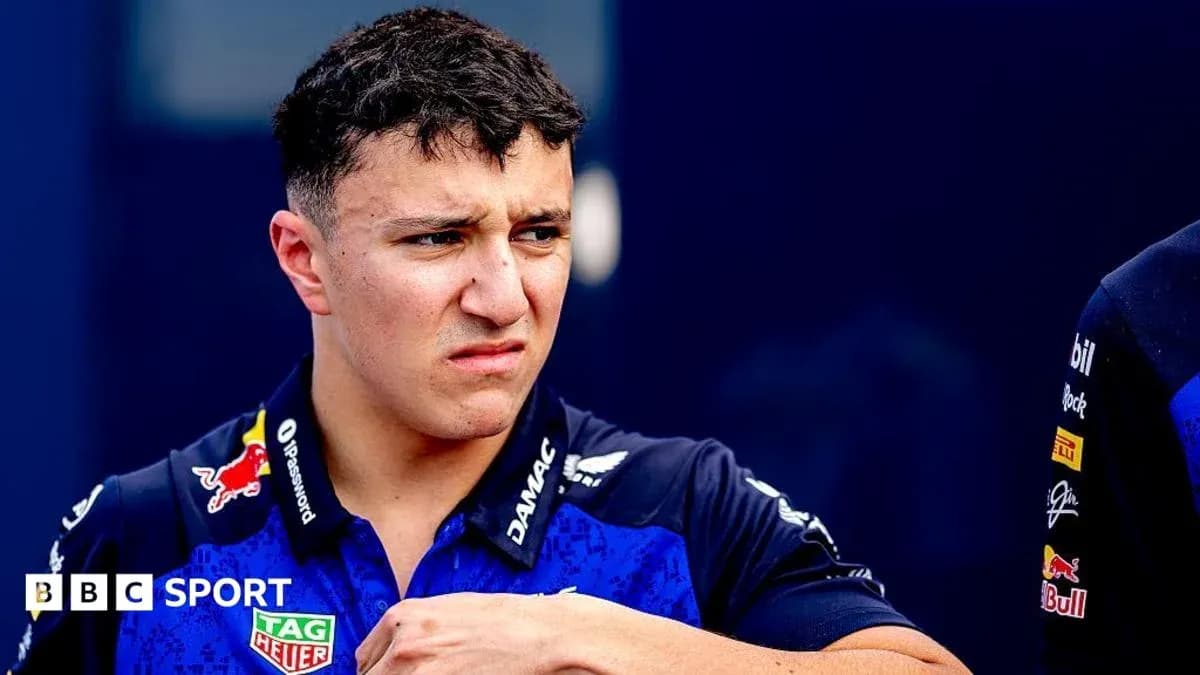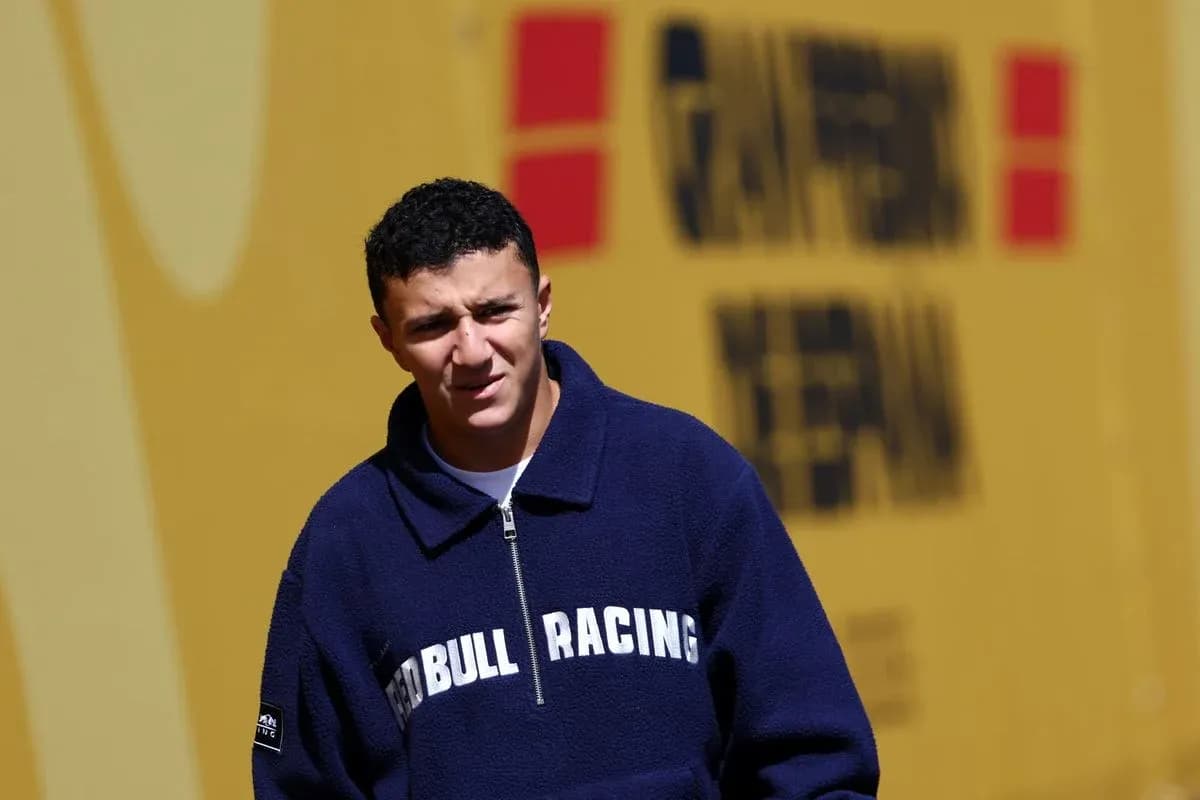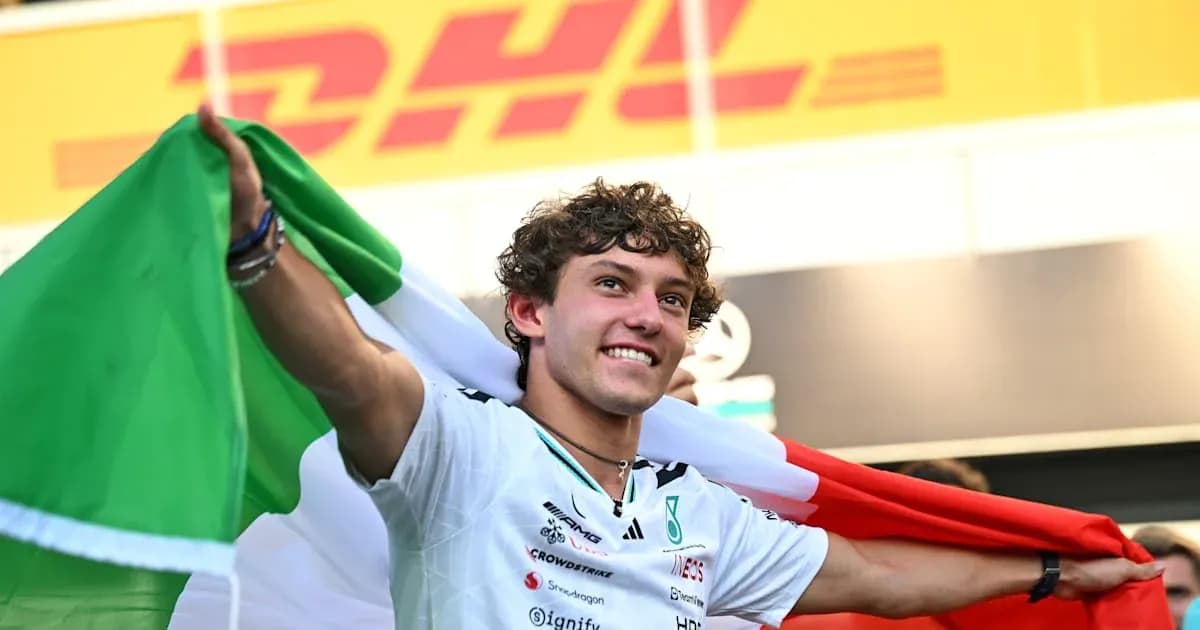
Kimi Antonelli arrived at Monza with an engine penalty, 19th on the grid and a mountain in front of him. He left with his seventh win of the season, a home crowd in raptures and a World Championship lead that now looks almost untouchable.
Sixty-six points clear of team-mate George Russell, the 20-year-old didn’t just win his home Grand Prix. He dismantled it.
From 19th to untouchable
On paper, the race should have been awkward. Mercedes committed Antonelli to a one-stop strategy on the hard tyre, banking on his ability to slice through the field while others juggled softer compounds.
“We had to go for a one-stop strategy on the hard tyres. And we knew he’d fight his way through the field,” Mercedes team principal Toto Wolff explained afterwards.
Then came the early chaos. Charles Leclerc’s crash on lap 3 brought out the red flag and ripped up the opening stint. Antonelli, heavy on fuel and already on the hard compound, suddenly looked out of sequence.
“The race was interrupted by the red flag, and suddenly he fell behind on the medium tyres. And that turned out to be the right strategy,” Wolff said. What initially looked like a strategic blow became the turning point.
The restart flipped the race. Freed from the obligation to run the hards long in the opening phase, Antonelli could lean on the mediums and his raw pace. The software in the Mercedes garage had suggested the one-stop would still edge it, with the two-stop only threatening late on without quite closing the gap.
“At that point, the system indicated that the one-stop strategy would have the edge. The two-stop strategy would catch up towards the end, but wouldn’t quite be able to close the gap. That’s what the software said,” Wolff revealed.
The numbers offered one story. Antonelli wrote another.
Fighting through the chaos
For Wolff, the real difference wasn’t the tyre choice or the algorithm. It was what his young driver did in the mess of traffic that followed.
“The decisive factor was the ability to fight through the traffic,” Wolff said. “And we’ve seen that before with other greats like Lewis, who’s managed to do that in a few races. And that’s exactly what he showed today. There’s simply no stopping him now. When driver and car are one, nothing can hold them back.”
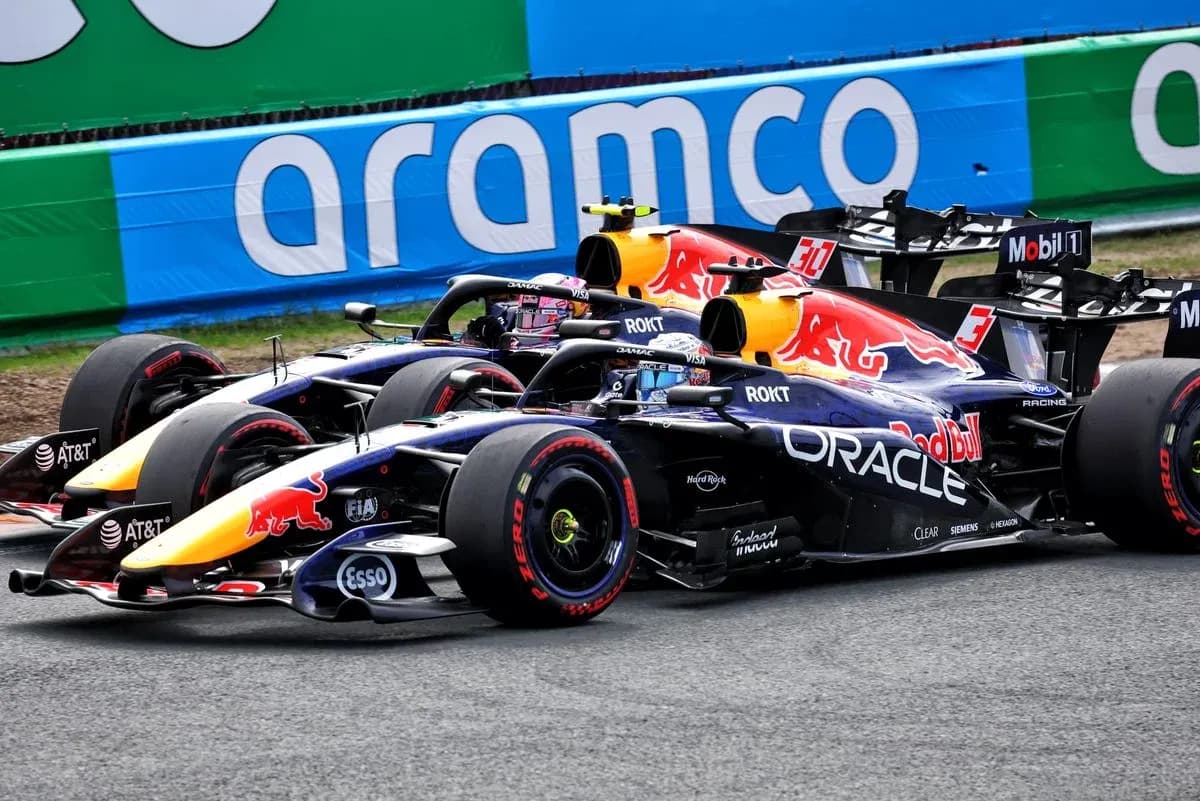
Monza has always rewarded the brave under braking and the ruthless in wheel-to-wheel combat. Antonelli looked like he’d grown up on those curbs and chicanes. Lap after lap he picked cars off, never lingering behind slower rivals, never losing his rhythm.
The Italian crowd roared every move. It felt less like a comeback drive and more like an inevitability unfolding.
A weekend that felt “different”
Inside the Mercedes camp, the sense that something special was brewing had started long before lights out.
“Before the race, I thought one of the two would win. Either George or Kimi, because he’d be flying here at Monza. I could sense that yesterday,” Wolff admitted.
He wasn’t the only one. Wolff spoke to Antonelli’s father on Saturday, and the family read the same signs.
“I spoke to his father yesterday. His father saw it coming too. These are the moments when, as the sessions unfold, you can sense how a weekend is developing and that a special moment might be on the cards. But it’s still a technical sport, so things can change quickly,” Wolff said.
This time, nothing derailed it. Not the penalty, not the red flag, not the traffic. Just a 20-year-old driving with the conviction of a champion and the composure of a veteran.
So complete was the performance that Wolff’s post-race media duties turned into an extended ode to his young star. Russell, solid as ever in the sister car, barely figured in the conversation. All eyes were on the driver who had just turned Monza into his personal stage.
From “deer in the headlights” to title favourite
None of this was guaranteed. Not even close.
After stepping into Formula 1 with enormous expectation, Antonelli’s debut year had lurched between flashes of brilliance and long, barren stretches.
“Last year went according to plan. I said there would be brilliant moments, but also more difficult ones,” Wolff reflected. “And I think that’s how he started the season – back then he was like a deer in the headlights.”
The raw speed was never the issue. The problem was sustaining it.
“In the car, he was in the right frame of mind and was already putting in exceptional performances, but not consistently. And then he had that run of nine races without scoring any points. I remember that Spa was awful for him and he was really down,” Wolff recalled.
Monza, ironically, had been the scene of a different kind of conversation back then.
“Monza was the point where I said to him for the first time: ‘Listen, you need to wake up.’ But I never doubted him. That’s why we gave him the chance,” Wolff said.
That faith now looks inspired rather than optimistic.
The “AI agent” in a racing car
The turning point came after the 2025 season, when Antonelli returned from the winter break transformed.
“And then he came back after the winter break and got off to a start that nobody had expected,” Wolff said. The spotlight intensified, the media pressure grew, and instead of shrinking, the Italian seemed to absorb it.
“He felt the pressure from the media, the attention he was getting. In a way, the system processed and stored that. And that’s why we saw those results afterwards,” Wolff explained.
The way he talks about Antonelli now borders on the futuristic.
“To me, he’s like an AI agent who’s constantly improving himself and learning. That’s the speed. And his age is certainly an advantage here too – the ability to keep getting better cognitively and intellectually,” Wolff said.
It’s a striking comparison: a 20-year-old driver described not just as talented, but as a self-learning system, upgrading in real time.
On days like Monza, it feels accurate. Every setback – a penalty, a red flag, a bad restart – becomes data. Every lap, an update. By the time the chequered flag falls, the version of Antonelli crossing the line looks sharper than the one that started the race.
He now leads the World Championship by 66 points, has seven wins on the board, and has just delivered one of the great modern drives at the Temple of Speed.
If this is what he looks like at 20, the real question is no longer whether he can close out this title. It’s how long the rest of the grid can keep up with his rate of evolution.