Knicks Face $118 Million Decision on Karl-Anthony Towns' Future
The champagne has barely dried on the Knicks’ first championship banner in generations, and already the franchise is staring at the kind of decision that can snap a dynasty before it starts.
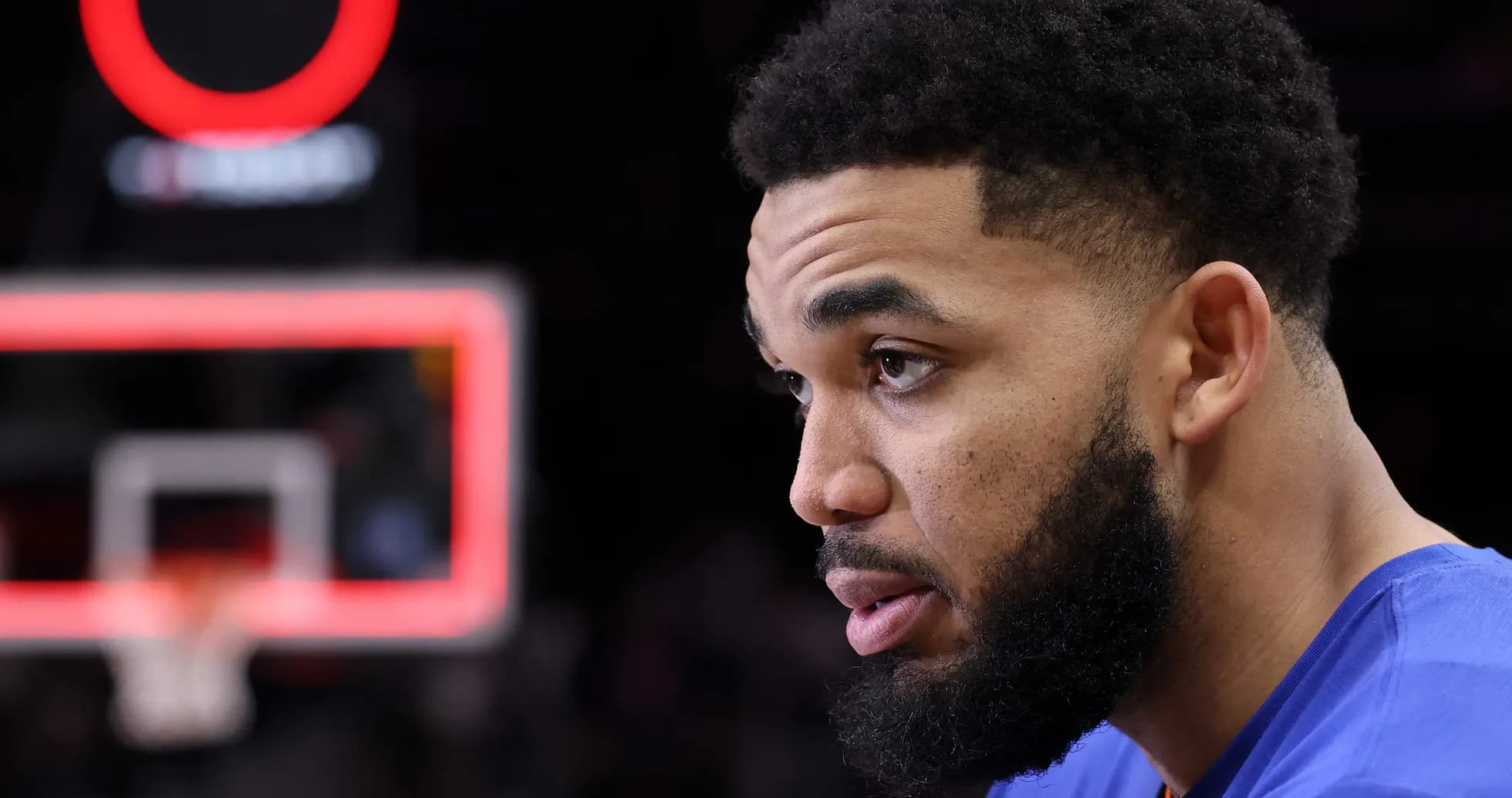
Karl-Anthony Towns, the centerpiece of their title-winning frontcourt, is about to get very, very expensive.
Next season, Towns is on the books for $57 million. Waiting on the other side of that is a $61 million player option for 2027-28. Between those two numbers sits the real issue: do the Knicks lock him up now on a long-term extension, or gamble that they can keep their star center out of the jaws of free agency?
Right now, the leverage game looks simple on paper and complicated everywhere else.
Towns’ Stance: New York First
Brian Windhorst laid out the core of it on The Hoop Collective. Towns, he said, wants to be here.
“His preference is to extend in New York, but he can be a free agent,” Windhorst told listeners. “I don’t want to go into a long explanation or discussion about it, but that’s just the case.”
That’s the headline inside Madison Square Garden: the 30-year-old, fresh off a title run, is not angling to bolt. He’s not floating mystery destinations or leaking dissatisfaction. He wants to stay. He wants to extend.
But preference doesn’t sign contracts. Numbers do.
The Knicks are widely expected to put an extension on the table. The question is not if they’ll offer one, but how far they’re willing to go, and whether that figure matches how Towns views his own place in the league’s hierarchy.
A Top-Heavy Champion Faces the Bill
This is the bill coming due for how New York built its champion.
The Knicks didn’t slow-cook a homegrown core. They went shopping. They traded for stars, signed proven names, and assembled a roster that could win immediately. It worked. It delivered a title in 2026 and restored the franchise to the center of the basketball universe.
Now comes the hard part.
They are a top-heavy team, built around high-salary, high-usage players. When you win this way, everyone’s price goes up. Agents point to rings, to All-Star nods, to All-NBA lines on a résumé, and the negotiation starts at the ceiling.
Keeping “everybody on board for the long haul” becomes less a slogan and more a cap sheet puzzle. Every max-level decision tightens the screws on the rest of the roster. One big deal for Towns might mean painful choices elsewhere.
But if New York hesitates, someone else won’t.
Is Karl-Anthony Towns a Max-Level Lock?
Strip away the noise, and the market reality is blunt: if the Knicks don’t offer Karl-Anthony Towns the max, another team will.
The résumé is loaded. Former No. 1 overall pick. Six-time All-Star. Three All-NBA selections. At 30, he’s not a fading name living off past hype; he just anchored a championship frontcourt while averaging 22.8 points, 11.1 rebounds, 1.1 blocks, and 3.1 assists per game.
Those are not empty numbers on a lottery team. They’re title-season numbers.
A 7-footer who can score at all three levels, rebound at a high rate, and facilitate out of the post and the perimeter is exactly the archetype front offices pay for, even at eye-watering figures. Max money has become the going rate for players who can tilt a playoff series. Towns just helped tilt an entire postseason.
So the debate inside the Knicks’ offices isn’t really, “Is he worth the max compared to an idealized superstar?” It’s, “Can we afford not to pay him the max when the rest of the league is lining up to do it?”
The Clock Is Ticking
What makes this situation so delicate is the timeline.
Towns holds the player option. That gives him control. He can lock in the $61 million for 2027-28 or decline it and walk into free agency. The Knicks, in turn, have a window—this coming stretch—to put an extension in front of him that reflects both his production and his role in their title run.
Right now, the only clear thing is his stated preference: he wants to stay in New York for an extended period. He wants to be part of what comes next, not just a one-ring cameo in franchise history.
But preference can shift quickly if a player feels underappreciated when the numbers hit the table. One lowball offer, one sign that the franchise sees him as replaceable rather than foundational, and the conversation changes.
The Knicks chased known talent to climb back to the top. Now they have to decide if they’re willing to pay championship prices to keep it.
Because if they blink, Karl-Anthony Towns won’t be short on suitors—and the defending champions could suddenly find themselves trying to repeat without the center who helped get them there.