
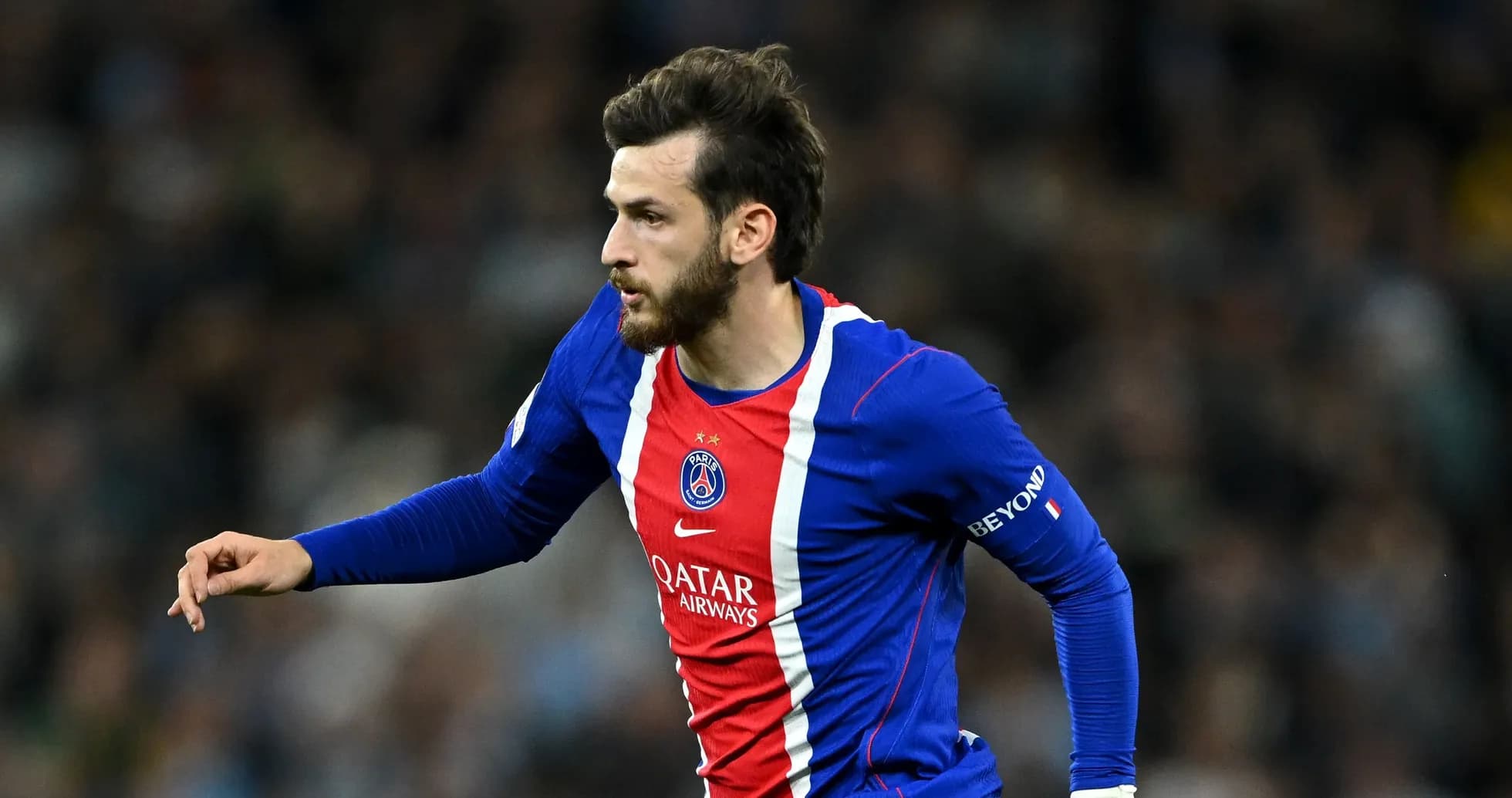
Khvicha Kvaratskhelia’s season has almost certainly ended in a single, cruel twist of his right knee against Barcelona. The diagnosis is brutal: a torn anterior cruciate ligament. For Paris Saint-Germain, the loss of their marquee left-sided threat rips a hole in Luis Enrique’s attacking blueprint just as the campaign begins to bite.
The timing could hardly be worse. The Georgian had become a central pillar of PSG’s forward line, a winger who could bend games to his will from the left. Now, barring a medical miracle, he will not be seen again this season.
A rich attack suddenly looks incomplete
On paper, Luis Enrique is not short of forwards. Ousmane Dembélé – himself injured in the same clash with Barcelona – Ferran Torres, Mika Godts, Désiré Doué, Akliouche and Quentin Ndjantou give the coach a range of profiles and ideas in the final third. There is pace, flair, youth, versatility.
But Kvaratskhelia is different. He stretches defences, he carries the ball under pressure, he forces teams to tilt towards him. Losing that kind of outlet does not just remove a name from the teamsheet; it changes the geometry of the attack.
PSG knew the risk. According to French reports relayed by Sport, the club had already mapped out a plan to enter the winter transfer market for a left winger even before the full extent of Kvaratskhelia’s injury became clear. Now that plan moves from option to obligation.
A war chest ready to be used
The financial context is clear. PSG worked the summer window with rare discipline and a sharp eye for value. The reward was a staggering 333.4 million euros banked from player sales.
Bradley Barcola’s move to Liverpool did the heaviest lifting, bringing in 125 million euros alone and giving the Parisian hierarchy the kind of flexibility most European giants would envy.
That cushion matters now. It gives PSG the freedom to strike decisively when the right profile appears, rather than scramble around the bargain bin. As L’Équipe put it, the club is already combing the market for “a new player to strengthen the wing positions during the winter transfer period, provided he is a young player with great potential.”
Young. High ceiling. Wide player. The brief is clear, and it opens the door to a long, ambitious shortlist.
Nico Williams and a growing list of targets
Some names are already circling around the Parc des Princes. Eurosport point to Nico Williams as a serious candidate. The Spanish international has been on PSG’s radar for several years, a winger with direct running, end product and the temperament to handle big nights.
He fits the age profile. He fits the position. He will not be cheap.
Elsewhere, fichajes highlight Ibrahim Maza, one of Bayer Leverkusen’s brightest emerging talents, as another player inside PSG’s circle of interest. The Algerian’s rise in Germany has not gone unnoticed in Paris.
Sky, for their part, lean towards Matías Albert, one of the most promising youngsters coming through at Borussia Dortmund. Again, the same pattern: youth, upside, and the kind of technical quality that can be polished at the highest level.
None of these pursuits will be simple. All three are valued by their current clubs, all three are on the radar of Europe’s elite. Yet PSG’s financial muscle and clear need on the left give them leverage – and urgency.
The “joker” on the table
There is another card PSG could play. France’s unique “joker” rule, introduced at the start of the millennium, allows clubs to sign one player from another side in Ligue 1 or Ligue 2 outside the normal transfer window.
Kvaratskhelia’s serious injury makes PSG eligible to use that exception. They could move now, dip into the domestic market and plug the gap before January even opens.
The option is real, but it comes with its own limitations. The pool is restricted to the French first and second divisions, and the club’s recent recruitment strategy has leaned heavily towards long-term, high-upside profiles from across Europe rather than quick domestic patches.
All signs suggest the decisive move will wait until the winter window, when the full continental market opens and the bigger names become accessible.
So the picture is stark. PSG have lost a star, but they have money, time and a clear plan. The question is no longer whether they will act, but who they will trust to step into the space Kvaratskhelia leaves behind – and whether that choice shapes this season, or the next decade.





