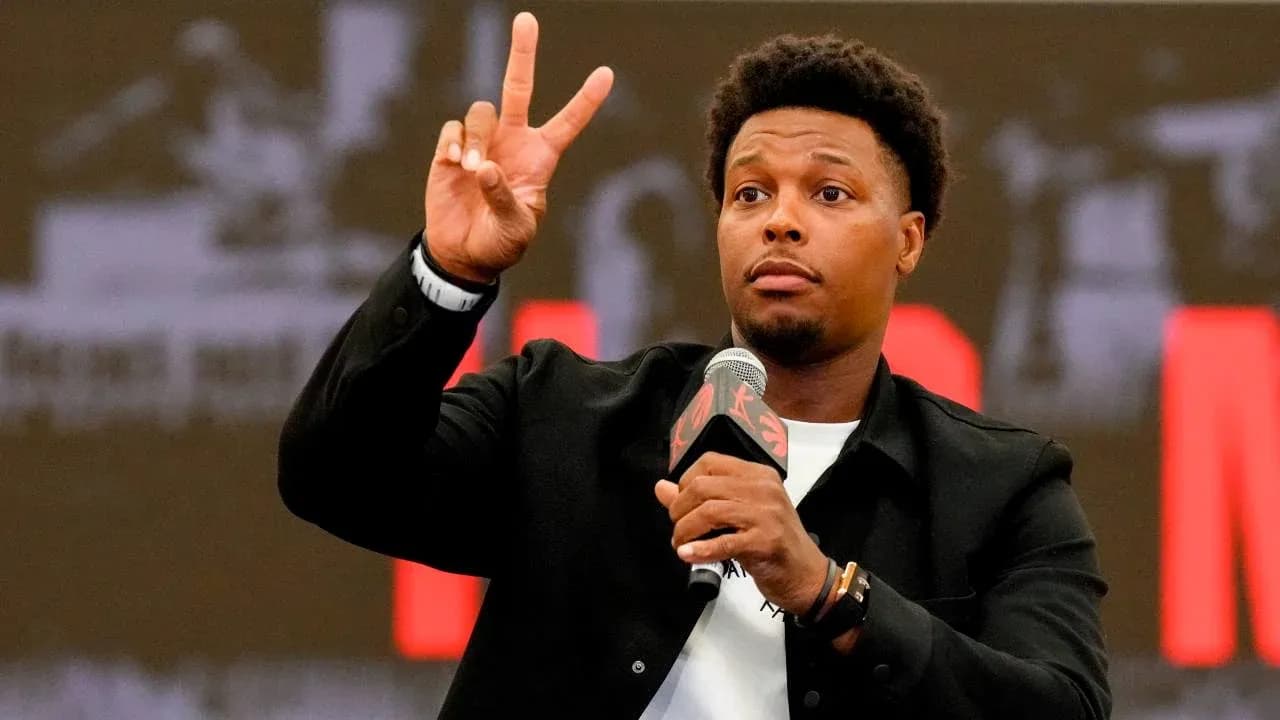
Kyle Lowry's Jersey Retirement: A Celebration of Legacy
CALEDON, Ont. — Some jersey retirements are debates. Kyle Lowry’s was a layup.
From the moment he turned a hockey city into a basketball stronghold, the idea of his No. 7 hanging in the rafters felt inevitable. The only question was when the Raptors would make it official — not if.
The answer: Jan. 10, when Toronto hosts LeBron James and Lowry’s hometown Philadelphia 76ers at Scotiabank Arena. On that night, Lowry’s number will rise to the top of the building, right beside Vince Carter’s No. 15, the first two jerseys retired in the franchise’s 32-year history.
The symmetry is neat. The paths could not have been more different.
Two legends, two very different journeys
Carter soared. Lowry scraped.
Carter turned Toronto into a global highlight reel, a one-man marketing campaign for a fledgling franchise. His dunks were appointment viewing, his nickname — “Air Canada” — a brand in itself. Yet getting his number retired became a long, complicated saga marked by bitterness, hurt feelings and a decade-long thaw.
Lowry’s game was the opposite of airborne. He took charges, barked at referees, ground out possessions and slowly, relentlessly bent games to his will. His journey to the rafters has mirrored his style: deliberate, calculated, tough-minded and ultimately successful.
Carter’s departure in the mid-2000s left scars. He was accused of quitting on the franchise. He could have countered, with some justification, that the organization failed to build properly around him. The split was messy. The boos were loud. It took years for the relationship to heal.
Lowry left on entirely different terms. By the time he departed, he was the architect of the 2019 championship, the franchise leader in assists, steals, three-pointers, wins and playoff wins, and the emotional centre of the greatest era the Raptors have ever known. There was no rupture, only respect and the understanding that he would one day come back to retire a Raptor.
He said as much during the 2020-21 season, when the team was exiled to Tampa due to the pandemic and his name headlined every trade rumour. Wherever he finished his playing days, he promised, his last contract would be signed in Toronto.
He kept that promise on July 7, signing a ceremonial one-day deal to officially end his 20-year NBA career where it truly blossomed. That was Stage 1.
Stage 2 is unfolding this weekend.
A 36-hour love letter to No. 7
Lowry has dropped back into the Toronto orbit for a whirlwind 36 hours, and the franchise has built a full-scale celebration around him — very much on his terms.
It starts not with a red carpet, but a fairway.
On Friday, Lowry hosted the KLOW Invitational at TPC Toronto at Osprey Valley, a charity golf tournament raising money for the MLSE Foundation. It’s classic Lowry: competitive, community-driven, and full of familiar faces.
The guest list spoke volumes. Fred VanVleet, DeMar DeRozan, Serge Ibaka, CJ Miles, Danny Green and former head coach Nick Nurse all showed up to play. Teammates from different eras, bound by the same shared history.
“It’s something I didn’t expect and I appreciate it,” Lowry said. “Words can’t describe how I feel about what they’ve done.”
The festivities roll into Saturday with Kyle’s Block Party, a free fan event in Jurassic Park outside Scotiabank Arena, the same concrete stage that became the heartbeat of the 2019 title run. When the sun goes down, the focus shifts inside to “A Night For Seven,” a gala dinner again benefitting the MLSE Foundation.
This is not a one-off banner-raising. It’s a carefully curated weekend, a reminder of how much the Raptors have grown up as an organization — and how much they’ve learned from the Carter years.
Lessons from Vince
When Carter’s jersey finally went up in November 2024, it felt like a franchise exhale. A full-circle moment that recognized not just what he did for basketball in Canada, but how long it took to properly say thank you.
“The organization was in a far different place when Vince was here,” one insider said. “Kyle benefitted from the lessons learned from that.”
Back then, the Raptors were a young team in a hockey town, still figuring out what it meant to be a serious NBA operation. Today, they’re a franchise intent on building tradition, on telling their own stories, on making sure their greatest players feel seen and valued.
Nick Nurse, now coaching the 76ers but still very much a part of Raptors lore, has watched that evolution up close.
“I think the organization’s just maturing as the years go by,” Nurse said. “So you have these occasions and this success to celebrate, right? It’s still a relatively new organization in the grand scheme of things. I was in our practice facility (in Philadelphia) and we have Moses (Malone) and Dr. J up there, and now the Raptors get to start telling some of their stories too.”
They’re not just telling them. They’re staging them.
Carter’s celebration included the resurfacing of a basketball court his foundation originally built during his prime, and even a signature jet from Air Canada in his honour. Lowry’s weekend mixes golf, fans, gala and, eventually, that night in January when his jersey joins Carter’s above the floor he once commanded.
There’s a strategy behind the sentiment. The Raptors want to cultivate a culture where icons stay connected, where former stars drop by practice, show up at playoff games, and remind the next generation what the standard looks like.
“Players talk, agents talk,” another source said. “They notice things like that.”
The message is clear: Toronto takes care of its own.
Who’s next in line?
Once Carter and Lowry are in place, the obvious question hangs over the arena: whose number goes up next?
DeMar DeRozan has the strongest résumé. He’s still the franchise’s all-time leader in points and games played and remains one of the most beloved figures in team history. Now entering his 18th season, this time with the Denver Nuggets, his bond with Toronto hasn’t faded.
“I hope so,” DeRozan said when asked about the prospect of his No. 10 being retired. “This will always be home for me.”
Lowry didn’t hesitate.
“Oh, No. 10 should definitely go up there. Without a doubt.”
Pascal Siakam has a compelling case of his own. Two All-NBA selections as a Raptor, a starter on the 2019 title team, and arguably the best development story the franchise has produced, rising from late first-round pick to cornerstone. Now with the Indiana Pacers, he, like DeRozan, didn’t choose to leave. There were hard feelings when both were moved, and some of that sting may linger.
But Carter’s journey shows that time softens edges. If the franchise could reconcile with its first superstar, it can surely find a way to properly honour two players who gave so much and never asked out.
Then there’s the wild card: Kawhi Leonard.
On merit, his one season in Toronto is unmatched. He delivered the Raptors’ lone championship, authored some of the most iconic moments in Canadian sports history and reshaped the way the franchise is viewed around the league. But one year, no matter how brilliant, has never been the traditional standard for jersey retirement.
The conversation changes if Leonard finishes his career as a Raptor. If the next three seasons bring multiple playoff runs and at least one deep push, the argument becomes impossible to ignore. Sources suggest one of the reasons he chose to return to Toronto is the chance to make it a permanent basketball home, an opportunity that may not have existed after the way things ended in San Antonio and with the Los Angeles Clippers.
If he stays, if he wins, the debate will be fierce.
And then, looming just beyond all of them, is Scottie Barnes.
The future watching from courtside
Barnes is only heading into his sixth season, but his fingerprints are already all over the Raptors’ record book. He’s eighth in points, eighth in rebounds, sixth in assists, seventh in blocks and on pace to crack the top 10 in steals before Christmas. He’s already a two-time all-star with a second-team All-NBA nod on his résumé.
Too early to talk about jersey retirement? Of course. But that’s the point. The Raptors finally have a living, growing history, one that stretches from Carter’s acrobatics to Lowry’s grit to whatever Barnes becomes.
He was in the building when Carter’s number went up. He’ll be there again when Lowry’s is raised in January. He’s watching how the organization treats its legends, how it honours its past while trying to build its future around him and, potentially, Leonard.
The Raptors once struggled with this part of the job. They stumbled through their first superstar era, took years to mend fences, and only recently started to look like a franchise comfortable in its own skin.
Now, with Carter and Lowry anchoring the rafters and a new generation eyeing those spots, they look like a club that understands something simple and powerful:
If you want players to build a legacy in your city, you’d better show them what legacy looks like.