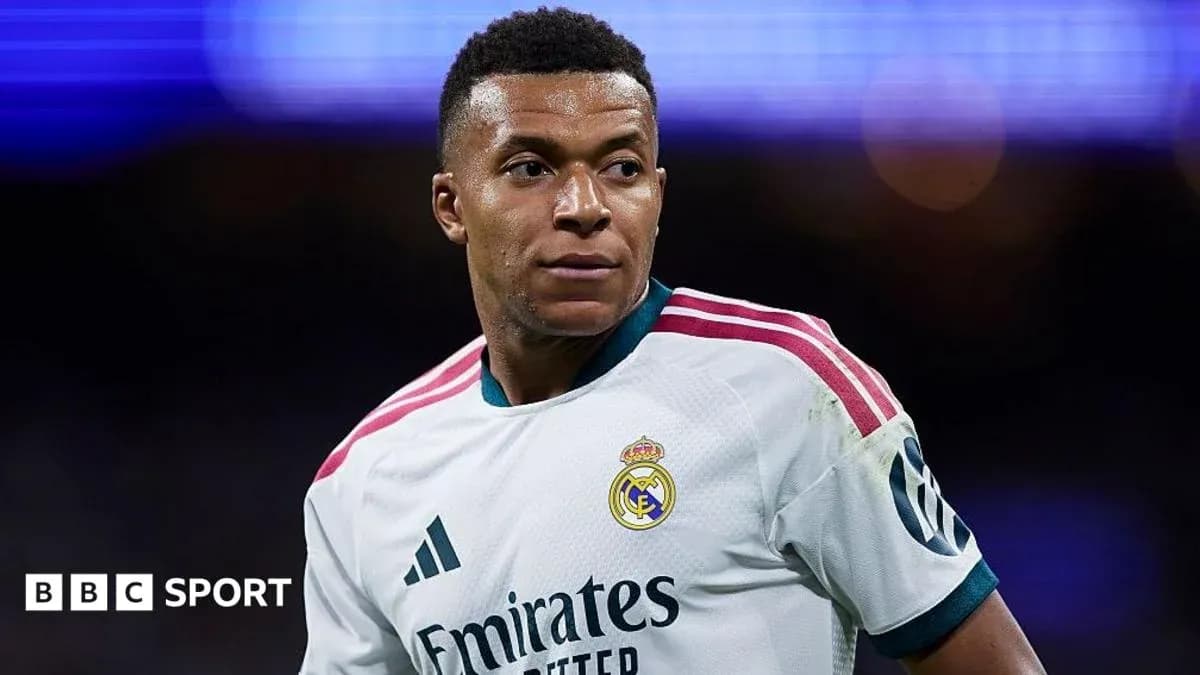
Kylian Mbappé is used to seeing his face everywhere. Billboards, boots, giant screens, goal montages. But one viral image has pushed him to draw a clear line.
The Real Madrid and France forward has condemned an AI-generated meme that pastes his face onto the body of a dictator, calling it “a lack of political and human awareness” and warning that the joke strays into dangerous territory.
The meme, which circulates widely on social media, is often shared by fans as a tongue‑in‑cheek way of showing how Mbappé “rules” matches or exerts influence at his clubs. The tone is meant to be playful. The imagery is anything but.
Speaking to France Football, Mbappé acknowledged that split.
“There’s a funny side to it because you can sense that, for some people, it’s good natured,” he said. The idea of him as an all‑powerful figure on the pitch, or a dominant voice in the dressing room, is something he knows feeds into the modern football narrative around superstar players.
Then he cut through the humour.
“Then there’s a side that’s a bit less funny, because we know the damage people like that have caused throughout history.
“Being compared to people who murder others, or who have made millions upon millions of people miserable... I don’t think I’ve done that in my life.
“On one hand, I know it’s done lightheartedly and doesn’t go that far, but it sometimes reveals a lack of political and human awareness among people.”
In an era where footballers are routinely turned into memes, gifs and AI mash‑ups within seconds of a final whistle, Mbappé’s words land as a reminder that the digital caricature has real‑world weight. Dictatorships are not a punchline to decorate a goals reel.
The France captain also addressed a related nickname that surfaced during the 2026 World Cup, when team‑mate Ousmane Dembélé jokingly called him “Mobut” — a reference lifted from social media and drawn from Mobutu Sese Seko, the longtime dictator of what is now the Democratic Republic of Congo.
Mobutu ruled the country, then known as Zaire, for three decades. His regime became synonymous with corruption, repression and excess. The echo is not accidental, even if the intent among players was.
“Ousmane, that’s a different thing. He took that from social media. He’s just having a laugh,” Mbappé said, separating the dressing‑room banter from the broader cultural trend that spawned it.
The distinction matters to him. Inside a squad, jokes are framed by relationships, shared history, and an understanding of boundaries. Online, those same jokes can be stripped of context, amplified, distorted and repurposed by people with none of that nuance — or by those who genuinely trivialise the horrors tied to those names.
Mbappé has never shied away from speaking about social and political issues around the game. This time, the subject is himself, or at least the digital version of him: the AI composite, the meme, the “dictator” of football.
He dominates matches. He bends seasons to his will. That much is true.
But as his image continues to be weaponised for laughs, he’s made one thing equally clear: there are lines even the sport’s biggest stars are no longer willing to see crossed.