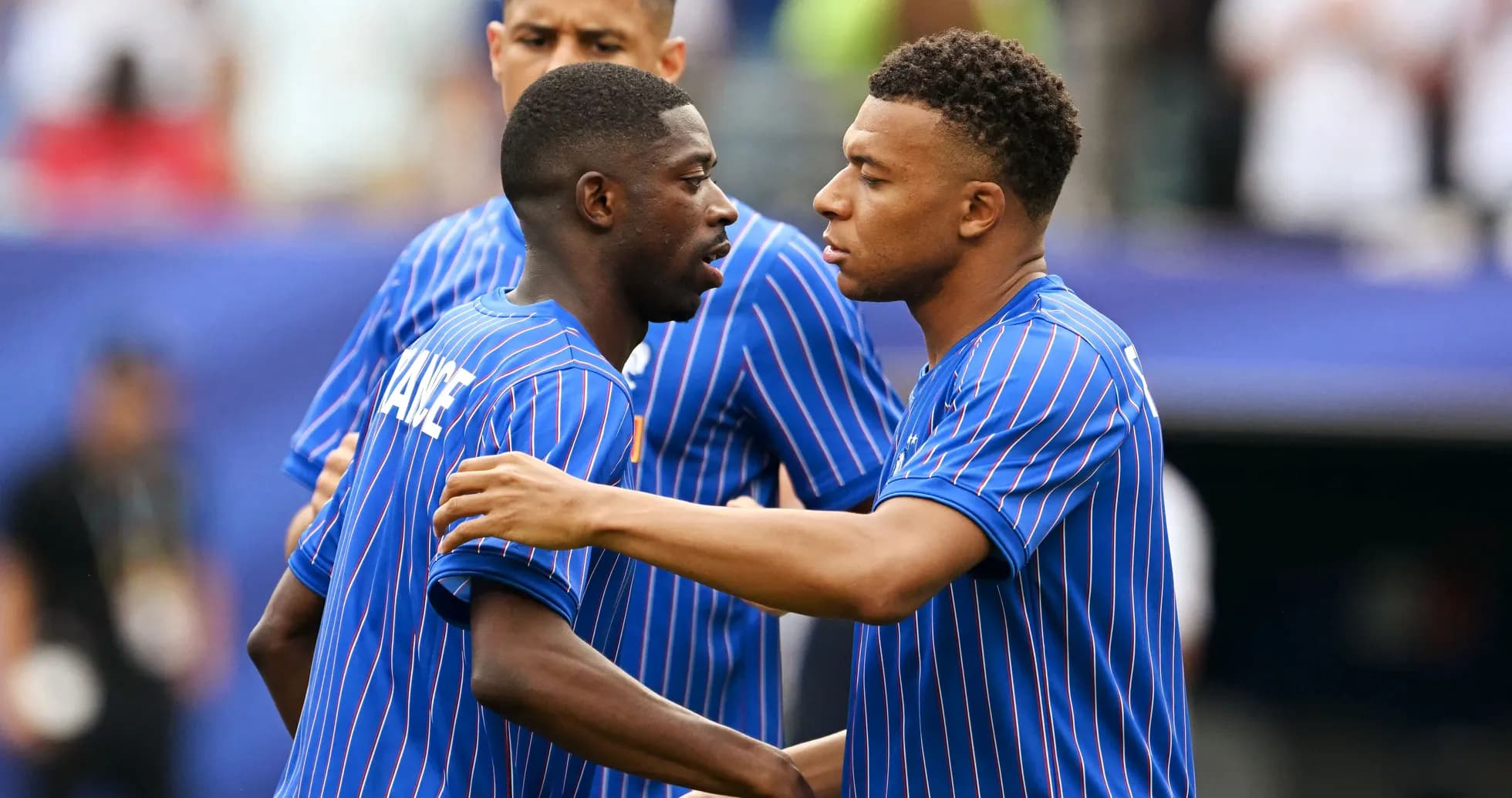
Kylian Mbappé’s latest interview was supposed to be another step in the coronation of France’s captain. Instead, one phrase – “the chosen one” – has thrown petrol on a fire that never seems to go out around him.
In France, the fallout has been immediate and fierce. According to L’Équipe, Ousmane Dembélé and those close to him did not appreciate the way Mbappé spoke about himself. The issue is not that Mbappé is seen as a Ballon d’Or contender; that has been his reality for years. The problem, for some in Dembélé’s camp, is the tone. The self-anointment. The sense that the spotlight belongs to one man.
That perception has split opinion across French media.
Rothen cries “betrayal”
On RMC Sport, Jérôme Rothen did not hold back. He spoke of a kind of “betrayal” from Mbappé, hinting that the captain’s words had deepened a rift inside the France dressing room. In Rothen’s eyes, this was more than just a clumsy turn of phrase. It was a sign of a squad divided into camps, with Mbappé’s ego at the center.
The idea was explosive: a France team split into two groups, with Dembélé on one side, Mbappé on the other.
Dugarry hits back
Christophe Dugarry, sitting alongside him on the same show, was having none of it. He went straight for Rothen’s argument.
“Jérôme, regarding what you are saying, I want names,” he demanded. If there really are two groups, he said, then say who is in them. Dugarry dismissed the notion of a fractured camp as “nonsense” and turned the spotlight back on Dembélé’s supposed grievance.
“What is bothering you, Ousmane?” he asked, before launching into a pointed comparison. He reminded viewers that Mbappé has already won the Champions League twice and lifted the Ballon d’Or. In other words: this is a player whose words carry the weight of his achievements, whether people like the style or not.
For Dugarry, the idea that a friendship stretching back to the age of 15 could be shaken by one interview is absurd. Mbappé, he argued, spent the interview talking about himself, yes – but did not insult Dembélé.
Two stars, two worlds
Dugarry’s defence went beyond loyalty to the current France captain. He framed the controversy as a clash of personalities, not a civil war.
“What Kylian said is the truth,” he insisted, before drawing a sharp contrast between the two men. He recalled Dembélé’s time at Barcelona, when stories emerged of the winger missing morning training sessions because he had been up all night playing PlayStation. That, in Dugarry’s eyes, summed up Dembélé’s nature.
Dembélé, he said, is “the anti-star”. A player who shines precisely because he does not behave like a traditional superstar. A man who prefers the shadows to the spotlight, who has built a career on being reserved, shy, introverted, and relentlessly team-focused.
Mbappé is the opposite. Front and center. Comfortable with fame. Comfortable with the idea that he is different.
“These are two visions of football,” Dugarry argued. Two footballing styles. Two personalities that do not mirror each other, but collide and coexist.
A difference, he stressed, is not a crisis. It is simply the reality of a modern national team full of big characters and bigger expectations.
“What shocks Dembélé?”
Dugarry struggled to see why Dembélé, of all people, should feel slighted.
“I don’t understand what shocks Ousmane Dembélé,” he said. The Paris Saint-Germain winger has always presented himself as a quiet figure, someone who shuns the limelight, who leans on collective values and a high sense of team spirit. He has won titles living that way and understands that philosophy of football.
Mbappé, Dugarry pointed out, stands at the other end of the spectrum. If a friendship cannot survive that difference, he concluded, then maybe it was never truly strong.
That does not mean Dugarry is blind to Mbappé’s flaws. Even as he defended him, he admitted that certain aspects of the captain’s discourse grate on him.
He highlighted Mbappé’s “excessive confidence” and the way he speaks at length in the first person. For Dugarry, it jars in a sport defined by collective effort, especially when Mbappé, despite his status, still has “a lot to win” at the very highest level.
A captain who answers only to himself
Yet the reality of modern France is clear. Mbappé sits at the center of everything. He is the face of the national team, the star of Paris Saint-Germain, and a permanent fixture in the Ballon d’Or debate. With that comes power – and the freedom to shape his own narrative.
“Right now,” Dugarry concluded, “Mbappé is his own source of strength today.”
That is the crux of the matter. France’s captain no longer needs external validation. He speaks like a man who believes his career justifies every word.
The question for France is simple: can a squad built around such a forceful personality absorb the shockwaves of his self-belief, or will the “chosen one” find that even his closest allies have limits?