
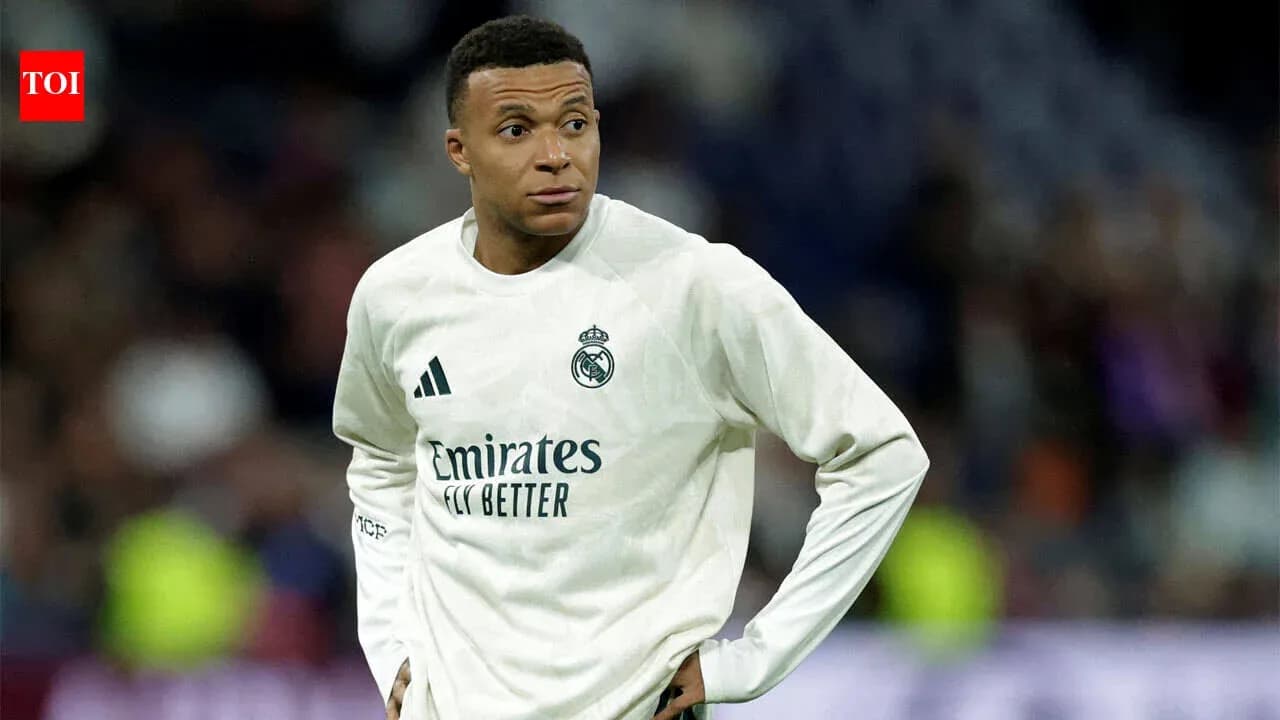
Kylian Mbappé walked into a light-hearted podcast segment and stepped out in the middle of a geopolitical storm.
What began as a throwaway line about a meme has now dragged Real Madrid, LaLiga and some of Spain’s biggest football institutions into a tense stand-off with one of the world’s most powerful markets. The fallout is no longer just about an ill-judged joke. It is about national pride, political sensitivity and the hard edge of global football economics.
A Meme, a Dictator and a Diplomatic Flashpoint
The spark came on The Bridge, a French football podcast. In a now-removed video clip, Mbappé was shown an internet meme that superimposed his face onto an image of Mao Zedong.
The gag was familiar to online football culture. Fans have long portrayed the France captain as a “dictator” in jest, editing his face onto military and political leaders to mock his perceived influence over decisions at club level.
Mbappé tried to explain the image. Instead, he lit the fuse.
Looking at the picture, he described the figure as “some guy, I think he’s a Chinese dictator.” He did not say Mao’s name. He didn’t need to. The implication was obvious to millions who saw the clip as it spread across Chinese and global social media.
Reuters noted it could not independently authenticate the video, but that did little to slow its circulation. Within hours, a meme that once lived in the niche corners of football Twitter had morphed into an international incident.
The reason lies in who Mao is to China. Mao Zedong, who ruled from 1949 until his death in 1976, remains one of the most sensitive figures in the country’s modern history. He is revered by many as the founding father of the People’s Republic, yet his rule is also bound up with political campaigns that caused immense suffering and millions of deaths.
Jokes, satire or perceived disrespect around Mao and the country’s leadership can trigger a fierce reaction. This one did.
What looked like a casual, off-the-cuff remark from a superstar forward suddenly collided with the red lines of Chinese political and cultural memory.
Mbappé Apologises, Real Madrid and LaLiga Follow
The backlash built quickly. Chinese fans voiced anger. Brands began to move. The pressure became impossible to ignore.
On October 27, Mbappé responded.
In a statement published in French, Mandarin and English on social media, the Real Madrid forward accepted that his words had crossed a line.
“During a recent interview, I reacted to an image of myself. My comment was ill-judged, and I now understand that it hurt many people in China and in Chinese communities around the world,” he said.
“I apologise to everyone my words have upset. This was absolutely not my intention. I have deep respect for the Chinese people and their history, and I am sincerely sorry.”
Real Madrid stepped in with their own apology to the Chinese people for any discomfort caused by their player’s remarks. LaLiga did the same, stressing that Mbappé was speaking in a personal capacity and that his words did not reflect the league’s stance.
China’s Foreign Ministry took note. Spokesman Guo Jiakun said Beijing “take[s] seriously the apology the individual concerned has made.”
The words were measured. The anger was not gone.
Commercial Fallout: Brands Walk Away, Screens Go Dark
The response from Chinese companies was sharp and immediate.
Dongpeng Beverage Group, Mengniu Dairy and Shanghai Milkground Food Tech all ended their partnerships with Mbappé. For a player whose global image is as carefully managed as his finishing, those decisions cut deep into both reputation and revenue.
The damage did not stop at the player.
CCTV, China’s state broadcaster, suspended its coverage of LaLiga matches. Adverts featuring Mbappé disappeared from screens. His accounts on Chinese platforms Weibo and Xiaohongshu faced restrictions.
Streaming platform Migu went a step further. It dropped Real Madrid’s match against Racing Santander from its schedule last weekend, even as it continued to show other Spanish league fixtures.
A meme had become a financial risk. For Mbappé. For Real Madrid. For LaLiga.
The episode laid bare the fragility of football’s commercial presence in China. For years, Europe’s elite clubs have treated the country as a vital frontier: a vast, football-hungry audience, a booming sponsorship market, and a key plank in their global growth strategies.
Now that market is reminding them who sets the terms.
LaLiga’s relationship with China suddenly looks vulnerable. The league has a broadcasting deal with Migu running until the end of the 2029-30 season. According to LaLiga president Javier Tebas, current contracts with CCTV and Migu are worth around €10 million a year, a fraction of the roughly €100 million they once commanded at their peak.
Even at that reduced level, it is still money and exposure the league does not want to lose.
Beijing Calls, Madrid Listens
As the controversy rumbled on, diplomacy moved in behind the scenes.
On November 6, China’s ambassador to Spain, Yao Jing, confirmed that Beijing is in contact with Real Madrid and LaLiga. The message: this is not being brushed aside.
“There are no negotiations, but there is communication, based on mutual understanding,” Yao told Spanish news agency EFE before attending a forum at the University of Salamanca.
“This unfortunate incident hurt the feelings of many people in China, who now have to come to terms with the current situation,” he added.
The nuance matters. China is talking, not yet bargaining. It wants its hurt acknowledged, its public anger understood, and its leverage recognised.
Tebas had already met Yao the previous week as Spanish football scrambled to contain the damage. The LaLiga chief later said the league was maintaining dialogue with Chinese authorities and “working to resolve it.”
The Chinese embassy in Spain underlined that any solution would not be instant. Attaché Xie Tianyu, quoted by EFE, said the apology alone would not immediately close the issue.
“There is not enough time, the Chinese people need time to digest this, it is not an easy issue for the Chinese people, and it is a club that has had many followers and much love in China,” Xie said.
China Media Group, which oversees CCTV, has indicated it would listen to Mbappé’s apology but stressed that, “more importantly”, it would watch what he does from here.
Words, in other words, are only the first step. Behaviour will be judged over time.
As of November 6, CCTV’s suspension of LaLiga coverage remains in place. The broadcaster has acknowledged Real Madrid’s apology but has given no hint of when, or if, Spanish football will return to its screens.
A Warning Shot to Global Football
For Mbappé, this is a jarring lesson in the reach and weight of his voice. For Real Madrid and LaLiga, it is a stark reminder that global expansion comes with political fault lines that can crack without warning.
China has not slammed the door shut. It has left it half open, waiting to see what follows.
The question now is simple: in a sport that sells itself as borderless, how many more missteps like this can European football afford in a market that holds the remote control?





