Lando Norris is not waiting for retirement to shape the next generation. He is doing it now, at full speed.
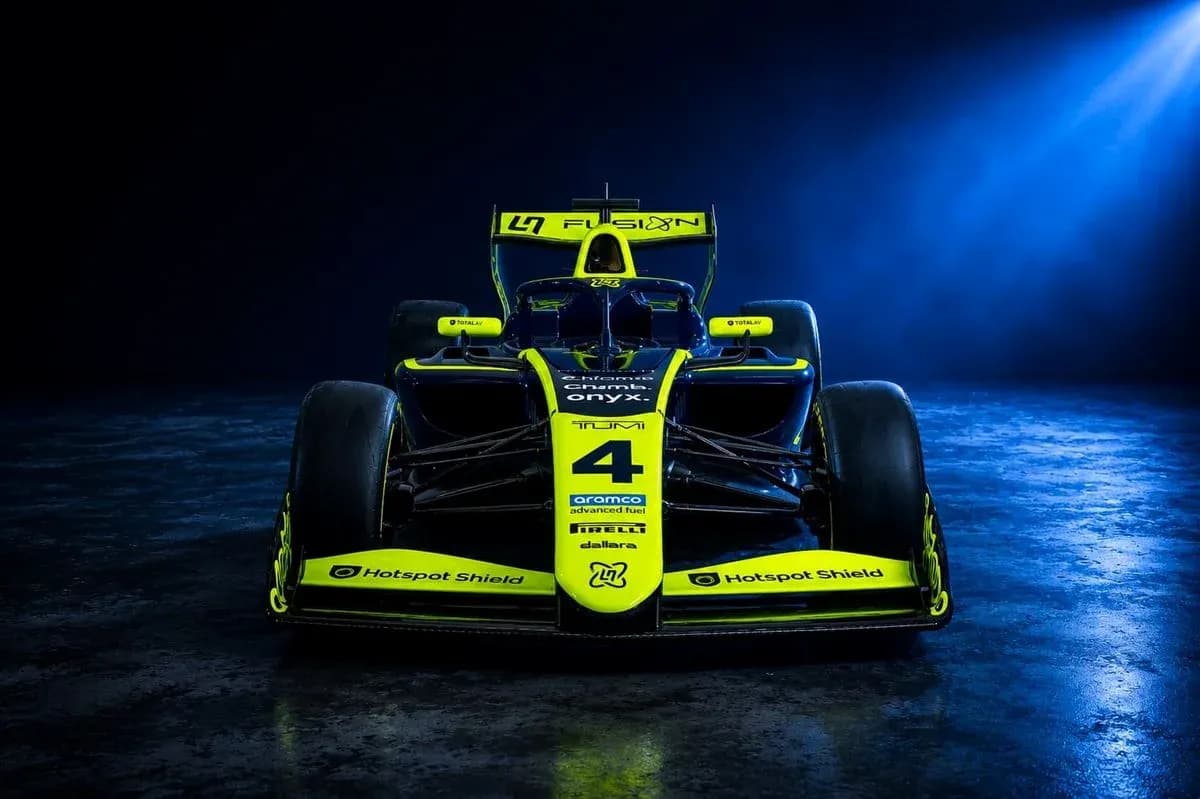
The McLaren star has launched LN4 Fusion, a new junior racing outfit, and paired it with a fully funded driver development scheme, the LN4 Legacy Programme – a twin-track project aimed squarely at getting more talent to the gates of Formula 1, and giving them the tools to walk through.
Building a ladder, not just a logo
LN4 Fusion will hit the ground running. The team will line up next season in Italian F4, the FIA Formula Regional European Championship and F3, immediately placing itself in the heart of the single-seater talent pyramid. The ambition is clear: F2 next, and a presence in British F4 already in motion through an active testing programme as it seeks entry to the series.
This is not a vanity project with a name on the door and little behind it. Norris has surrounded himself with people who know how to win.
Italian mastermind Rene Rosin, one of the most successful figures in junior categories, steps in as team principal. His record – more than 40 junior championships at various levels – speaks to a career spent turning potential into polished contenders. After his unexpected departure from Prema earlier this year, the paddock had been waiting to see where he would land. Now we know.
He is not alone. Long-time Prema engineer Guillaume Capietto also joins LN4 Fusion, bringing with him a deep understanding of what it takes to run front-running cars in highly competitive fields.
The operation will be split across two motorsport heartlands. A new European headquarters is under construction in Veneto in northern Italy, while a British base in Cambridgeshire will be led by Dan Hazlewood, the man behind Fusion Motorsport’s haul of national and international karting titles. From karting to F3 and beyond, the structure has been built to feel like a continuous pathway, not a patchwork.
Backing all of this is an investment group led by CEO Dan Richards. LN4 Fusion has already acquired selected assets from AIX Racing, which holds an F3 licence until the end of 2027, and has started the formal process of joining F2. The intention is obvious: arrive properly, stay for the long term, and compete with the established giants rather than simply exist alongside them.
"It has taken an enormous collective effort to bring the different elements together, but the objective from the beginning has been to build this properly and for the long term," Richards said, underlining the scale of the project.
Legacy with real teeth
If LN4 Fusion is the hardware, the LN4 Legacy Programme is the software that will run on it.
Led by former Alpine sporting director Julian Rouse, the Legacy scheme is a fully funded young driver programme designed to tackle one of motorsport’s harshest truths: raw speed is rarely enough. The right funding, the right timing, the right guidance – without those, talent too often disappears before it reaches F1’s radar.
Norris knows that story well. His own rise through the ranks was underpinned first by family support and then by McLaren’s backing. He has lived the reality that many gifted youngsters never get.
“I’ve been really lucky to have some amazing people around me throughout my career, and I know that getting to Formula 1 takes so much more than just talent,” he said. “You need the right people around you, the right support and the right opportunities at the right time. That’s what these two projects are all about.”
He frames LN4 Fusion as a place where drivers can grow in a high-performance environment, and the Legacy Programme as the safety net and springboard for those who might otherwise be priced out or passed over.
“The LN4 Legacy Programme is about helping talented young drivers get opportunities they might not otherwise have,” Norris added. The intention is not simply to sponsor a name or two, but to build a structure that can repeatedly identify, support and graduate drivers through the junior ranks.
F1’s ladder gets another pillar
The timing of Norris’s move is no accident. Formula 1’s boom has pushed unprecedented attention onto the junior categories, and the health of F3 and F2 has never mattered more. With more eyes comes more pressure – and more need for credible, well-funded teams that can match the expectations.
F1 CEO Stefano Domenicali has already thrown his weight behind the project, framing it as a powerful endorsement of the sport’s development ladder.
“Seeing Lando Norris involved in this new project is an incredible statement on how much the pyramid of Formula 3 and Formula 2 is crucial to the future of Formula 1,” he said. For Domenicali, this is about more than one driver’s side project; it is a signal that current F1 stars see the value in reinforcing the base of the pyramid they once climbed.
“Through Lando’s investment and experience, we can build a future, with new drivers, engineers, mechanics, and a tradition that will be followed by motorsport lovers.”
That is the real scope here. LN4 Fusion is not just about putting cars on the grid. It is about building a culture – engineers shaped in pressure-cooker championships, mechanics blooded in the grind of European campaigns, drivers hardened by title fights, not just social media hype.
Norris has spoken about wanting to “create opportunities for the next generation, both on and off the track, and hopefully make a real difference to young drivers coming through the sport.” With Rosin on the pit wall, Rouse running the development arm, and serious investment behind the infrastructure, this is a statement that carries weight.
The junior paddock has grown used to seeing Norris as a benchmark in the cockpit. Soon it will see his imprint on the timing screens from F4 to F3 – and, if the plan holds, on the F2 grid as well.
The question now is simple: how many future F1 drivers will have LN4 stitched into the story of how they got there?