The rain came and went, the grip disappeared, tempers frayed and strategies unraveled. Through it all at Interlagos, one constant remained: Lando Norris at the front.
For the second year running, Norris turned Brazilian Grand Prix pole into victory, guiding his McLaren through a treacherous, stop‑start race to deliver the team’s first win since August. This wasn’t a cruise; it was survival with style. In conditions that exposed every weakness and punished every misstep, Norris looked like the calmest man in São Paulo.
Behind him, the story was anything but calm.
Verstappen’s charge from the shadows
Max Verstappen started 21st. On a day when simply keeping the car pointing the right way was an achievement, the Red Bull driver turned the race into a personal highlight reel.
He fluffed the start by his own admission, holding the clutch wrong and reacting slowly off the line. The opening corners were a traffic jam, with cars blocking his every attempt to slice through. Lewis Hamilton made the early headway instead, darting past rivals while Verstappen sat boxed in.
Then the Red Bull found clean air – and grip. Within a couple of laps he was carving past the midfield, picking off cars almost every corner. The simulations back at Milton Keynes had suggested progress, but not this. Team principal Laurent Mekies admitted no model in the world would have predicted a leap from P21 to P2, or 14 places in five laps. Verstappen did both, again outstripping the numbers and ending the day as driver of the day.
He never quite got close enough to seriously threaten Norris, but from last to second in those conditions? It felt like a victory of its own.
Isack Hadjar backed up Red Bull’s recovery with third place, completing the podium on a day when the world champions’ race pace again outstripped their expectations.
Mercedes grind their way to the crown
The champagne for the Constructors’ Championship belonged to Mercedes. It just took a while for anyone in silver to relax enough to enjoy it.
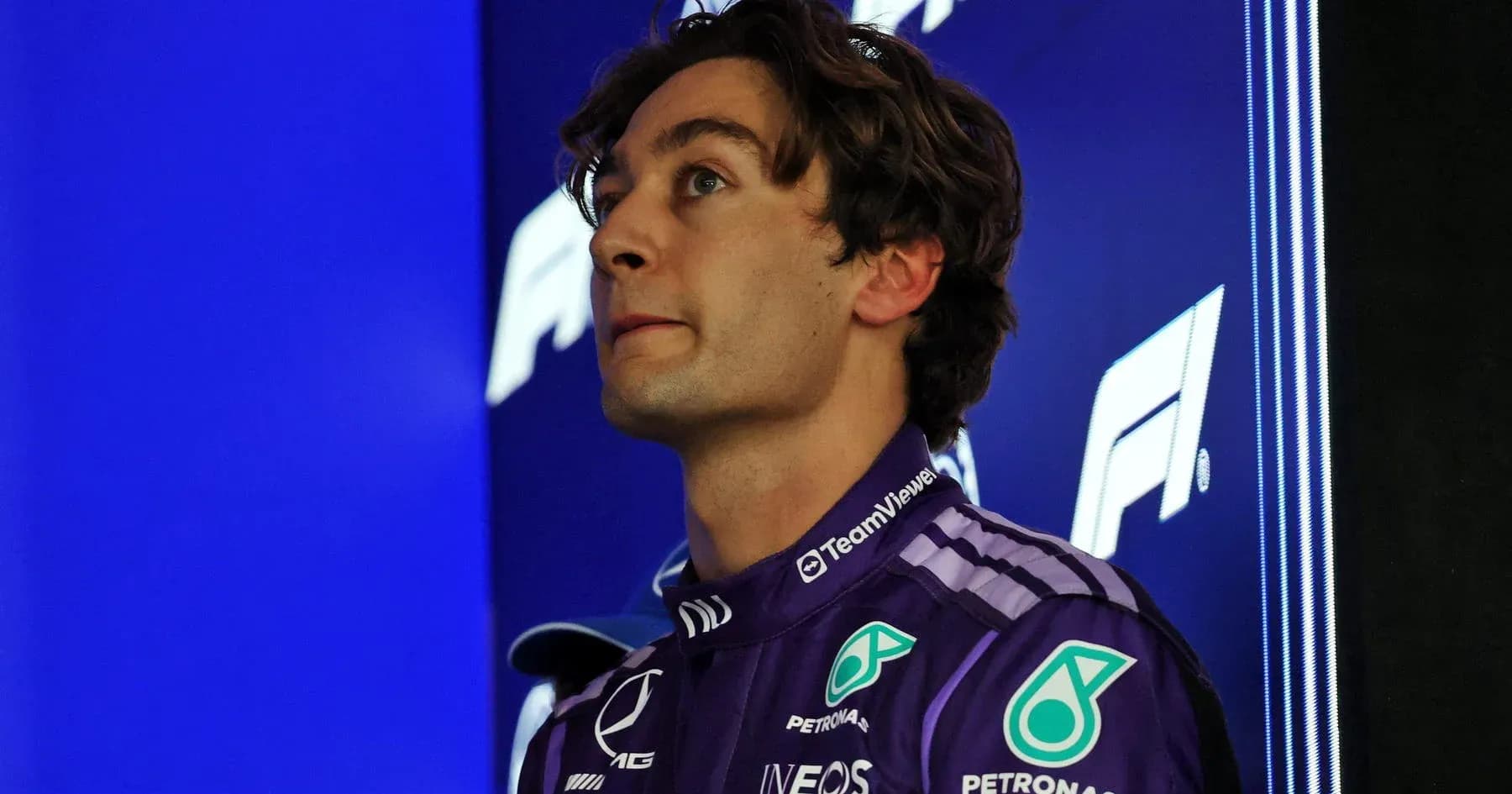
George Russell and Kimi Antonelli finished fifth and sixth on the road, enough to slam the door on Ferrari’s faint title hopes and hand Mercedes their first constructors’ crown since 2021. It was not a dominant, processional clincher; it was a slog.
Russell’s race summed up Mercedes’ season. He looked in control at times, then suddenly on the edge. A wild spin exiting the pit lane left him bewildered. He admitted afterwards he had “no idea” what happened, conceding he may simply have pushed too hard in a moment when he sensed a shot at the win. Ironically, that mistake kept him from pitting again for slicks and dropped him back into roughly the same position he’d held before the spin.
Antonelli had drama of his own. After switching to slicks, he radioed in with rising panic about the car’s behaviour, insisting something was fundamentally wrong. He complained of the car steering itself, unable to turn properly into left-handers, pointing to a suspension issue rather than cold tyres. The expletives over team radio told their own story. Yet he wrestled the car home in sixth, later hit with a five‑second penalty for an unsafe release into the path of Franco Colapinto – a sanction that, crucially, didn’t cost him the position.
Toto Wolff, though, was in no mood to pick holes. The Austrian made a point of singling out Russell’s contribution to the title, calling this “George’s championship today” and insisting the Brit’s tougher moments form part of the making of a top‑level driver. With three races left, Wolff promised Mercedes would go “full blast” from here.
The celebrations started early, too. Wolff revealed that Russell and Hamilton joined him on the overnight flight back to the UK, with at least one “constructor’s drink” planned somewhere over the Atlantic.
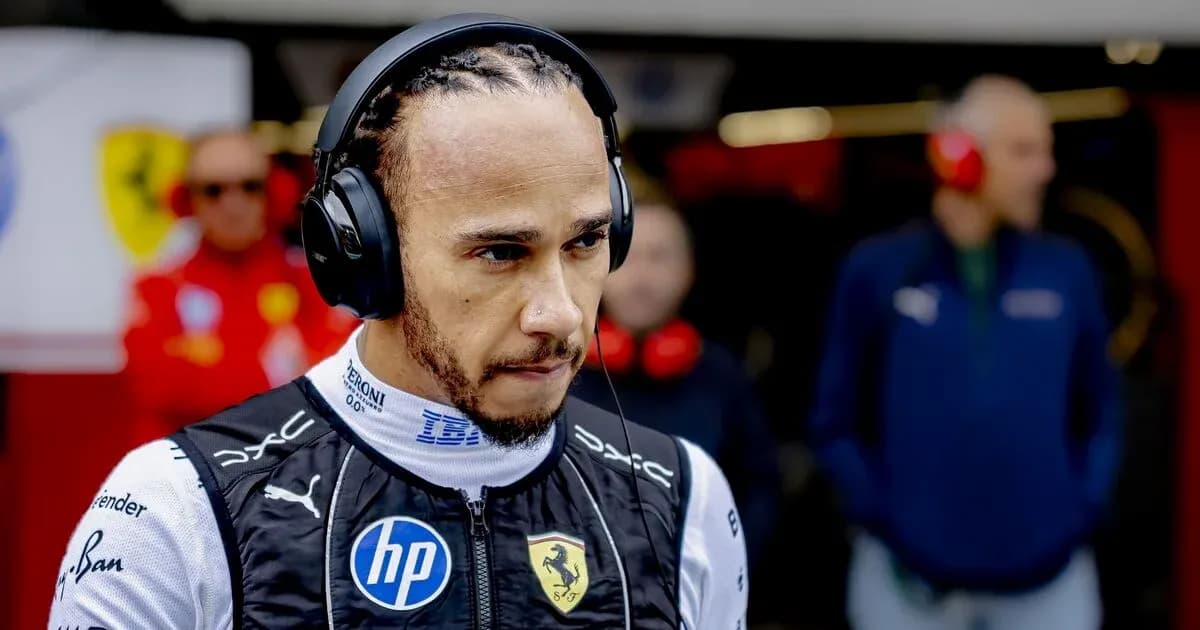
Hamilton’s heartbreak and Ferrari’s misfire
For Hamilton, Brazil is usually the stage for something special. Not this time.
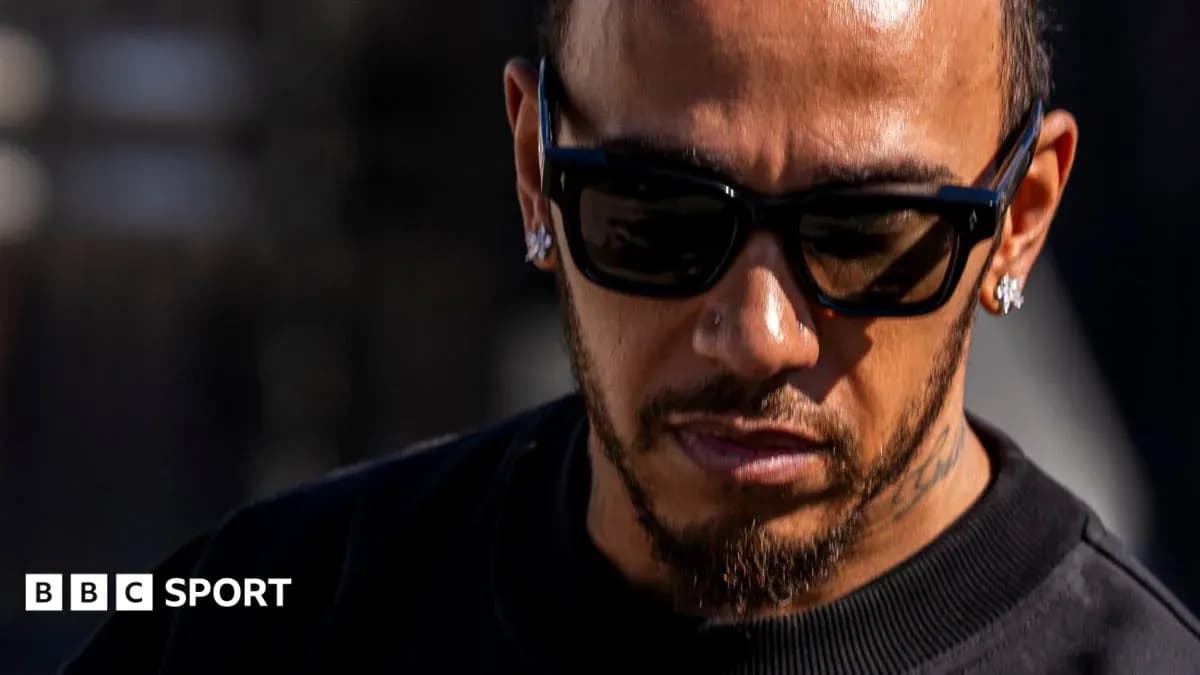
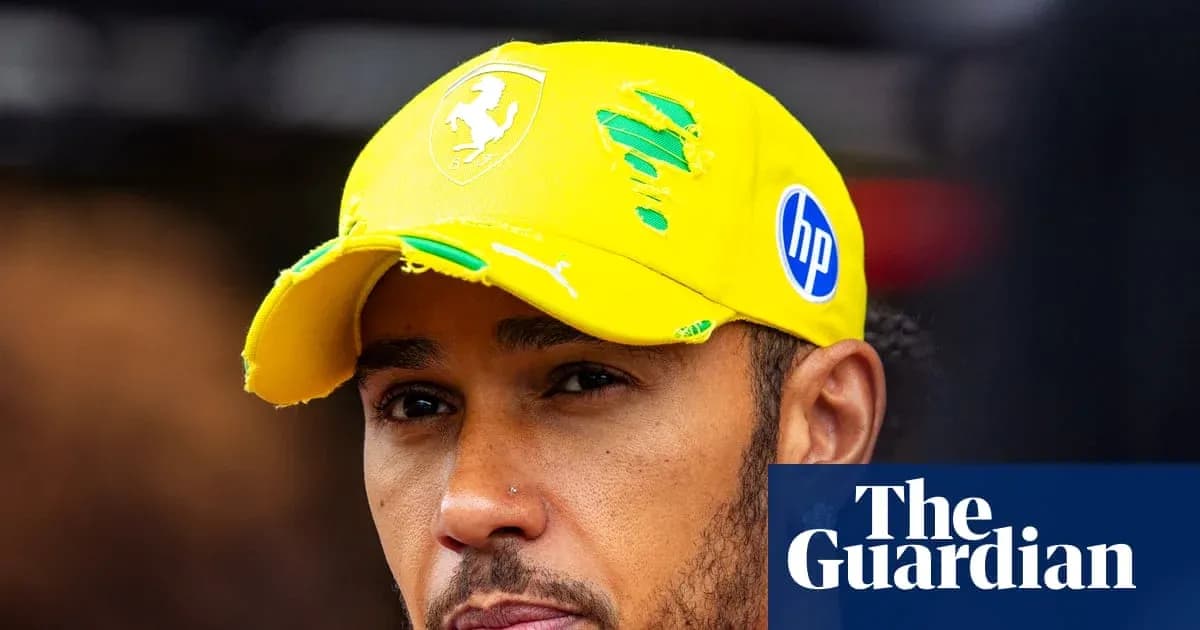
He started well, made sharp moves in the early chaos and briefly looked set to mount a serious attack. Then the tyres went. Massive oversteer, sliding through corners, fighting a car that refused to settle. The seven-time world champion called himself “devastated” by how the race unravelled, saying he pushed as hard as he could but simply didn’t have the pace in those conditions.
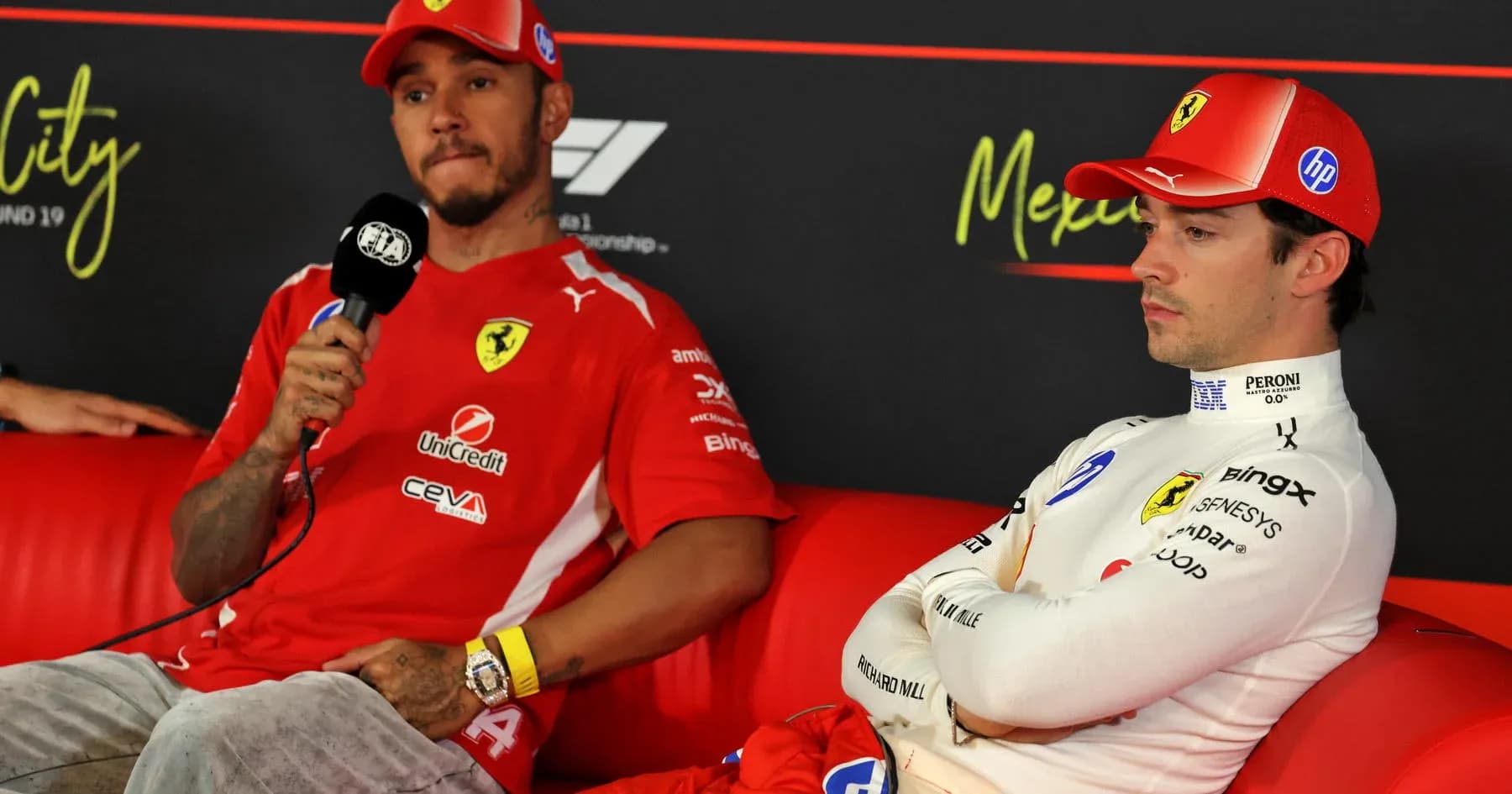
Hamilton crossed the line ninth, one place behind Charles Leclerc. Even that finishing order didn’t tell the full story.
Leclerc had originally taken seventh on track, but the stewards ruled he caused a collision with Liam Lawson while the pair fought wheel‑to‑wheel for position. The five‑second time penalty dropped him behind both Antonelli and Hamilton, compounding a grim weekend for Ferrari.
The team left Interlagos as the only outfit still capable of denying Mercedes the constructors’ title, then watched it slip away as neither of their drivers reached the podium and one of them was punished after the flag. Ralf Schumacher added a sting from the sidelines, arguing on German television that Hamilton is “not entitled” to the position he is taking within Ferrari given his pace relative to Leclerc.
Hamilton’s race at least escaped further damage. He had been investigated mid‑grand prix for going off track while overtaking Oliver Bearman. The stewards judged he gained no lasting advantage and had already ceded the place back, so no penalty followed.
Bearman wasn’t so fortunate elsewhere. The Haas driver picked up a five‑second penalty for an unsafe release, dropping extra time onto a day that had already gone badly. It made no difference to his final position; he stayed 17th.
A rookie’s reality check
For Rafael Camara, this was a home debut he will remember for all the wrong reasons – and, in time, maybe all the right ones.
The Brazilian rookie finished 20th, two laps down and last of the classified runners. He described it as a “tricky race” in which he experienced “everything in just one race,” admitting to mistakes he hadn’t expected to make. The frustration was clear, but so was the sense that he saw value in the ordeal, calling it “a very good learning for the future.”
On a day when even champions were skating off line, a rookie surviving to see the chequered flag at Interlagos is no small achievement. The gap to the front will sting. The lessons might prove priceless.
Champagne, politics and a shifting paddock
Even the podium ceremony had its twist. As Norris reached for his Champagne bottle, it shattered in his hands, startling the McLaren driver. He later joked that the cold temperatures had made the glass too brittle, calling the broken bottle “the most difficult part of today” and admitting he was “very, very worried” in the moment.
Away from the track, the sport’s power structures continued to shift.
FIA president Mohammed Ben Sulayem is moving to scrap the age cap that currently stops anyone over 75 from standing for the presidency, just months after term limits were removed. The proposal, seen by the BBC, argues that age restrictions risk excluding experienced candidates who could benefit the federation. At the same time, Ben Sulayem reiterated that the Qatar and Abu Dhabi Grands Prix remain set to go ahead, stressing that the FIA will base decisions on security advice and facts, not speculation.
In the team corridors, Christian Horner opened up on the manner of his Red Bull exit, saying he discovered he was being removed during a meeting he thought would be about “marketing structure.” He was told the team had become “more Christian Horner Racing than Red Bull Racing,” a line that cut deep for a man who insists everything he did was for the benefit of the company that employed him.
Driver management also took a turn. Oscar Piastri confirmed his split from long‑time manager Mark Webber, ending a partnership that began in 2019 and helped engineer his move from Alpine to McLaren. Rumblings of strain had surfaced last year, and Webber had already scaled back his travelling. Now, the break is complete.
Verstappen’s mistake, Norris’ mastery
Back on track, Verstappen’s own debrief was brutally honest. He pinned his poor launch on how he held the clutch, accepted he was “slow off the line” and called it his mistake. The chaos in the opening corners left him boxed in while Hamilton sliced through. Within two laps, though, Verstappen was “flying by cars,” leaning on superior grip and turning the midfield into a blur.
If Verstappen’s drive was about recovery, Norris’ was about control. McLaren team principal Andrea Stella hailed his driver as a “master” of adaptability, pointing out that no car or set of conditions is ever perfect and that the ability to adjust is now one of the most important traits in a modern F1 driver. Stella would prefer not to rely on that skill so heavily, admitting the McLaren remains “pretty difficult” to drive, but on a day like this it made all the difference.
Norris, bottle mishap and all, walked away with a win that felt like a statement: in chaos, he thrives.
What next?
Mercedes have their title back. McLaren have their race winner back in full flow. Red Bull still have a driver who keeps embarrassing the simulators.
Ferrari, meanwhile, leave Brazil bruised, penalised and empty‑handed from a weekend that could have kept the title race alive a little longer.
Three races remain. With a constructor crowned, a champion confirmed and reputations hardening, the question now is simple: who uses this final stretch to shape the story of next season – and who gets left behind in the spray?