LeBron James' Custom Canyon Grizl CF with 32in Wheels
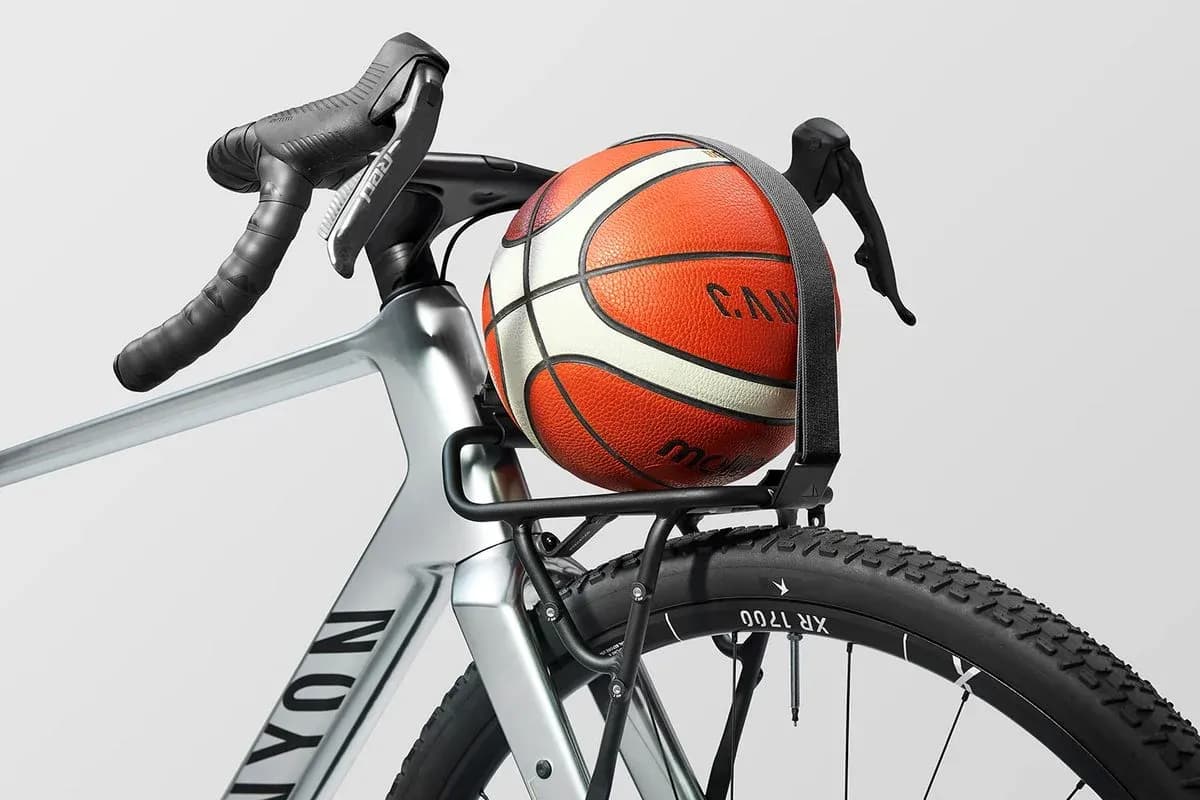
LeBron James has a new custom-built machine, and it’s every bit as outsized as the man himself. Canyon has created a unique Grizl CF gravel bike running enormous 32in wheels, engineered specifically for the 6ft 9in NBA star.
This isn’t a case of simply upsizing an existing frame and calling it a day. The bike was designed and built in southern Germany, where Canyon’s gravel lead engineer Wolfgang Kohl and his team had to rethink the platform from the ground up.
Kohl is clear: you can’t just scale up and hope for the best. The geometry can be made to fit, but the forces a rider like James puts through the frame grow far faster than the dimensions. To cope with that, Canyon re-engineered the entire system so it would still ride as a responsive, cohesive package rather than flex and twist under load.
The result is a 3XL Grizl CF with a specific carbon layup tailored to James’ size and power. The frame is reinforced to handle the extra stress, while custom CNC‑machined thru-axles with wider Boost spacing keep those massive wheels locked in place. Even the seat clamp is a one-off, built to match the demands of the build and the rider.
One of One – For Now
The sight of a global brand like Canyon rolling out a 32in gravel bike for one of the world’s most famous athletes will only fuel the noise around the supersized wheel format. Yet Canyon is adamant this isn’t the start of a new range. Internally, it might be a valuable test bed, but publicly the company calls James’ Grizl “one of a kind” – a fully functional bike, but not a product line.
It’s a familiar pattern. Scott’s 32in off-road machines have already made a mark in racing: Robin Gemperle won the 2026 Unbound XL on one, while Cameron Jones tackled the 200‑mile Unbound course on a similar setup. When Scott unveiled those bikes, the message was blunt – they were “pure prototypes”, with no intention of putting them into shops.
BMC followed a similar route. Its riders appeared on 32in prototypes at the Andorran round of the XC World Cup in July 2025. The bikes turned heads, but BMC later confirmed it had no plans to bring a 32in model to market.
So the big brands are circling the idea, testing, learning, racing. Yet the companies actually committing to 32in wheels remain the smaller, bespoke builders willing to stake their identity on a bold new standard.
That might not last. The industry pieces are quietly moving.
Tyre giant Schwalbe said in January it is “fully convinced” by the 32in format and will release production tyres next year. James’ Grizl already rolls on prototype 32in G‑One RX rubber, a clear sign that development has moved well beyond sketches and lab benches.
Merida is pushing too. Stephan Seitz revealed in March that the brand is working on both gravel and cross-country mountain bikes built around 32in wheels. He went further, predicting that by next spring the size will have become the new performance benchmark.
If that timeline holds, what looks like a one-off celebrity build today may soon resemble a preview of where top-end off-road bikes are heading.
Built for the Tallest Riders
Right now, the clearest consensus around 32in wheels is simple: they make the most sense for tall riders. Bigger wheels smooth rough ground, carry speed, and stabilise the bike at pace – all traits that become especially valuable when the rider towers over a standard frame.
James fits that brief perfectly. He has spent years working around bikes that never quite matched his dimensions, constantly aware of compromises in fit and handling.
“On most bikes I've ridden, I was aware of the bike, where it didn't fit me, what I was working around,” he says. This time, the feeling is different. “This is the first one that I didn't have to think about. That's what I love most about riding. It's just you out there and everything else is gone.”
For Canyon, that’s the payoff: a machine that disappears beneath the rider, even when that rider is one of the largest, most powerful athletes on the planet.
For the rest of the cycling world, the question lingers. If 32in wheels can finally give LeBron James a bike he doesn’t have to think about, how long before more riders start asking for the same thing?