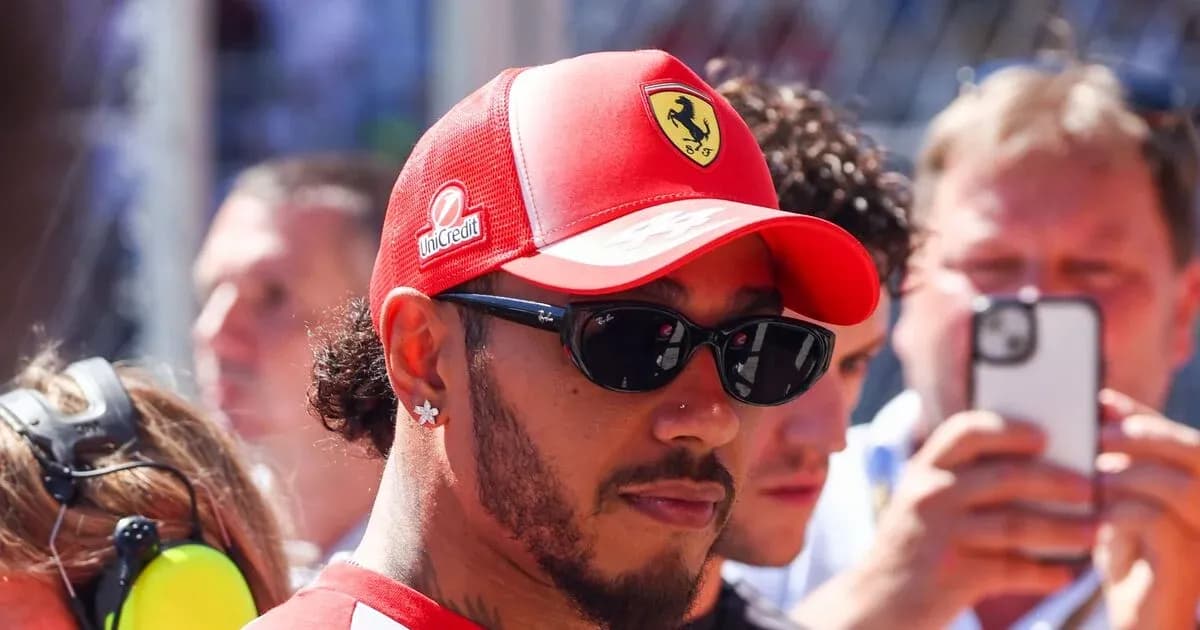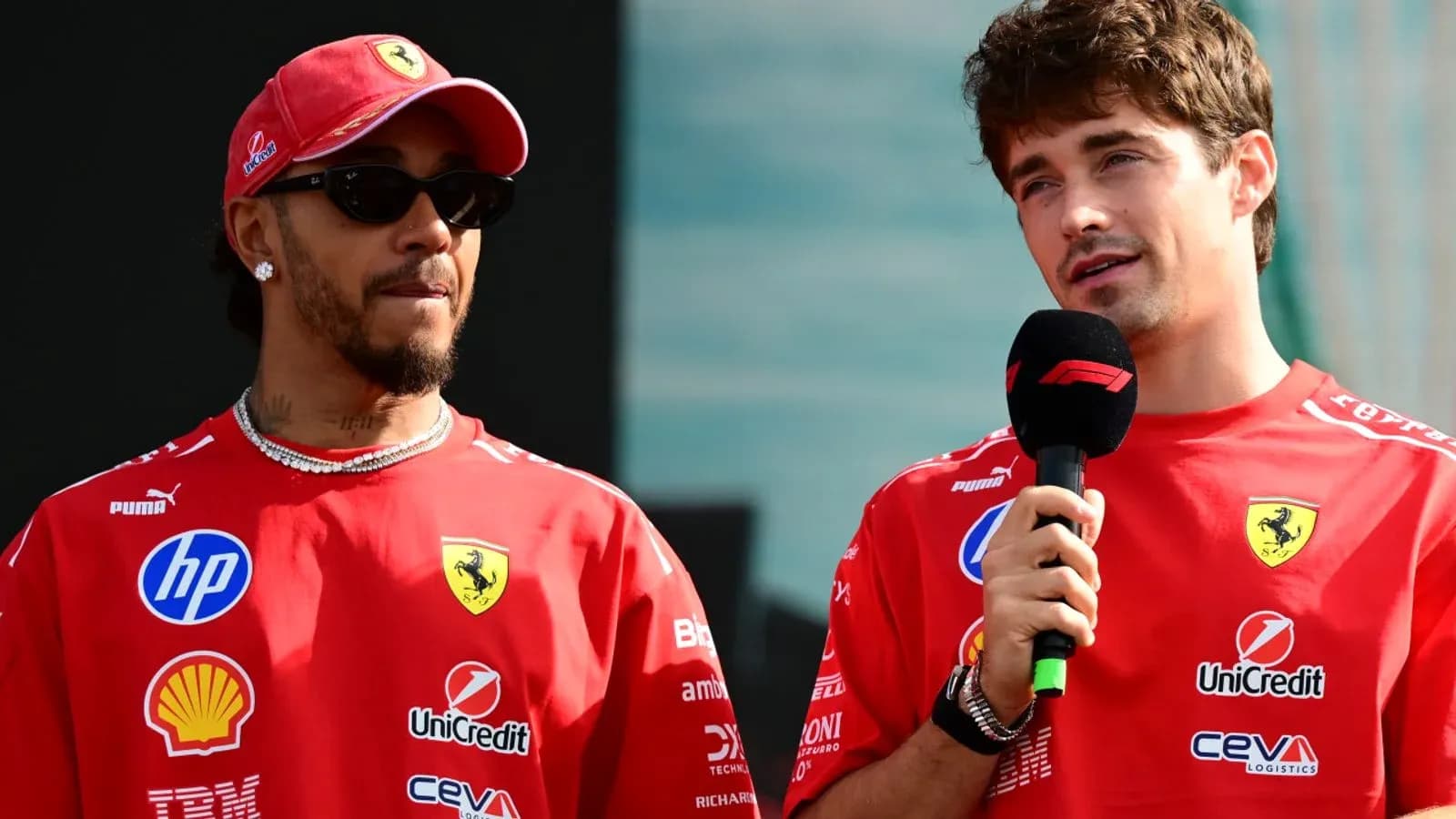
Charles Leclerc did not bother with excuses.
“I didn’t behave the way I should have,” he admitted, speaking about the opening-lap squeeze on Lewis Hamilton at Monza that lit a fire under Ferrari’s home race and left the team answering questions for days.
At the exit of the first chicane, Hamilton was muscled wide by his own team-mate, bounced over the kerbs, and spat back into the pack. Six places gone in a few seconds. At Monza. In a Ferrari. He salvaged only sixth at a circuit that had been painted red for him and Leclerc.
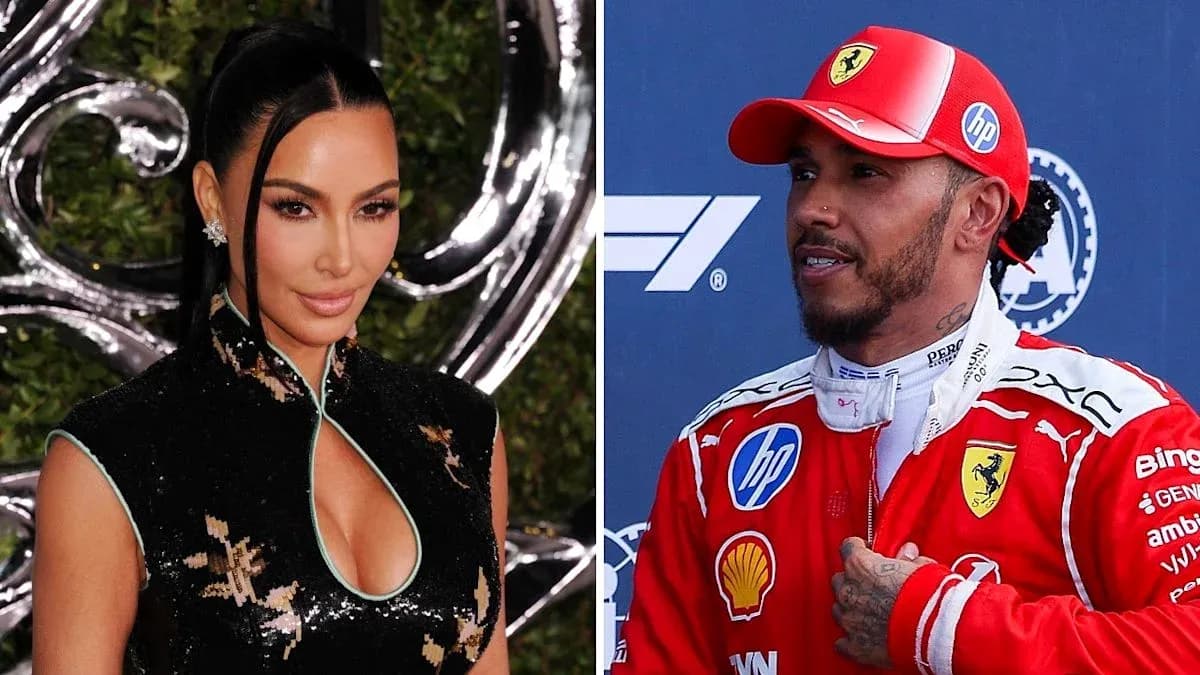
Hamilton’s frustration was instant and raw. He accused the team of having “no rules” after the race, a pointed reminder that at Mercedes he’d operated under clearly defined terms of engagement. Ferrari, it seemed, had just been given a brutal live test of what happens when two elite drivers go to the same piece of tarmac with no guardrails.
Ferrari’s firestorm, handled behind closed doors
The fallout did not stay in the garage. It never does at Ferrari.
Leclerc, who has spent enough years in red to understand how quickly a spark becomes a blaze in Maranello, knew what was coming.
“What was very important was to speak first of all,” he said. “I’ve been in Ferrari quite a few years now and I know how it feels when everything on Ferrari is kind of on fire.”
He’s right. Similar flashpoints at other teams might fill a segment or two on a weekend review. At Ferrari, they become a saga.
“When you look at Monza, there has been friction between other team-mates and we barely talk about it,” Leclerc pointed out. “But when it’s about Ferrari, it takes proportion that is not normal.”
So the meeting was called. Not just between the drivers, but at the very top: Ferrari chairman John Elkann, CEO Benedetto Vigna and team principal Frederic Vasseur all involved as the team headed into Spanish Grand Prix week in Madrid.
Leclerc did not hide from his part.
“We spoke with Lewis. We’ve always had a great relationship. I have a lot of respect for Lewis,” he said. “I told him, in Turn 2, I didn’t behave the way I should have and the way a team-mate should.
“It happens when you are super motivated, Lewis is super motivated and I’m super motivated and we all try to do our best. Sometimes you go too far, which I did, and we will retune that in order for it to not happen again in the future.”
A rare, clear admission. No grey area. No “racing incident” shield. Just a driver owning the moment he crossed the line.
A crash, blurred vision and a race against time
Monza did not calm down for Leclerc after that first-lap drama. Less than two laps later, his race ended violently at the final corner, the Ferrari snapping away and slamming into the barriers.
The impact left him with blurred vision and dizziness in the immediate aftermath. For a brief spell, the sporting debate around team orders and respect had to make way for a more basic question: would he even be fit to race in Madrid?
The answer, after extra medical checks and intensive treatment, is yes.
“I will be 100-per-cent fine,” Leclerc said. “It was only right after the crash that was just a little bit strange and felt a little bit dizzy, but very quickly from Monday afternoon I felt better.
“I had quite a few treatments for the neck because that’s where most of the shock went and I’m feeling good now, so I’m ready for this weekend.”
So the physical scars are under control. The more interesting part is what happens when the visor drops again and a red car appears in his mirrors – or, just as likely, alongside him – with Hamilton at the wheel.
Hamilton: ‘We squashed it’
If Leclerc’s language was contrite, Hamilton’s was pragmatic. This is not his first civil war.
Across his career he has gone wheel-to-wheel with Jenson Button, Nico Rosberg and George Russell in the same garage, each rivalry with its own edge, its own scars. He recognised the Monza flashpoint for what it was: a test of a new partnership at Ferrari, not a terminal rupture.
“I think what’s great is that there was no shying away from having a discussion,” Hamilton said. “We sat face to face, just him and I, and talked about it and we were just both open and honest and we squashed it and we can move on.”
He did not disguise his appreciation for how Leclerc handled it.
“I think that shows the maturity from him and I think it’s healthy,” Hamilton added. “It’s a relationship we have built over time. Of course, there’s going to be frustrations and I’m sure there’ll be more times where we’re close because we’re very close in pace. We both want to win just as much as each other and we both want to do well for the team as well.”
Hamilton had publicly called for “rules” after Monza, hinting at the structured approach he knew so well at Mercedes. There, the boundaries were often spelled out: how to race, when to hold position, what counted as acceptable risk between team-mates.
This time, though, those specifics were not on the table.
Hamilton revealed that the post-Monza talks did not include any formal “rules of engagement” for racing Leclerc.
“Right now, I’m just trying to focus on having a better weekend this weekend,” he said. “I’m sure at some stage we’ll discuss how we can be better, but we’ve not had a lot of time to just turn around. You can’t change things in two days.”
The message is clear: the emotional reset has happened. The structural one can wait.
Madrid awaits – with tension just below the surface
So Ferrari arrive in Madrid with their drivers publicly united, privately cleared of any lingering resentment, and medically cleared to race. On paper, the Monza storm is over.
But the dynamic has changed.
Leclerc has drawn a line under his own misjudgement. Hamilton has parked his anger and praised his team-mate’s maturity. Senior management has stepped in early to keep a lid on the noise.
The next chapter will not be written in a boardroom. It will be written in the braking zone for Turn 1, with two scarlet cars arriving at the same corner, driven by two men who both believe they should be leading Ferrari’s return to the front.
They say it will not happen again. The season will show whether that promise can survive the next split-second decision at 200mph.