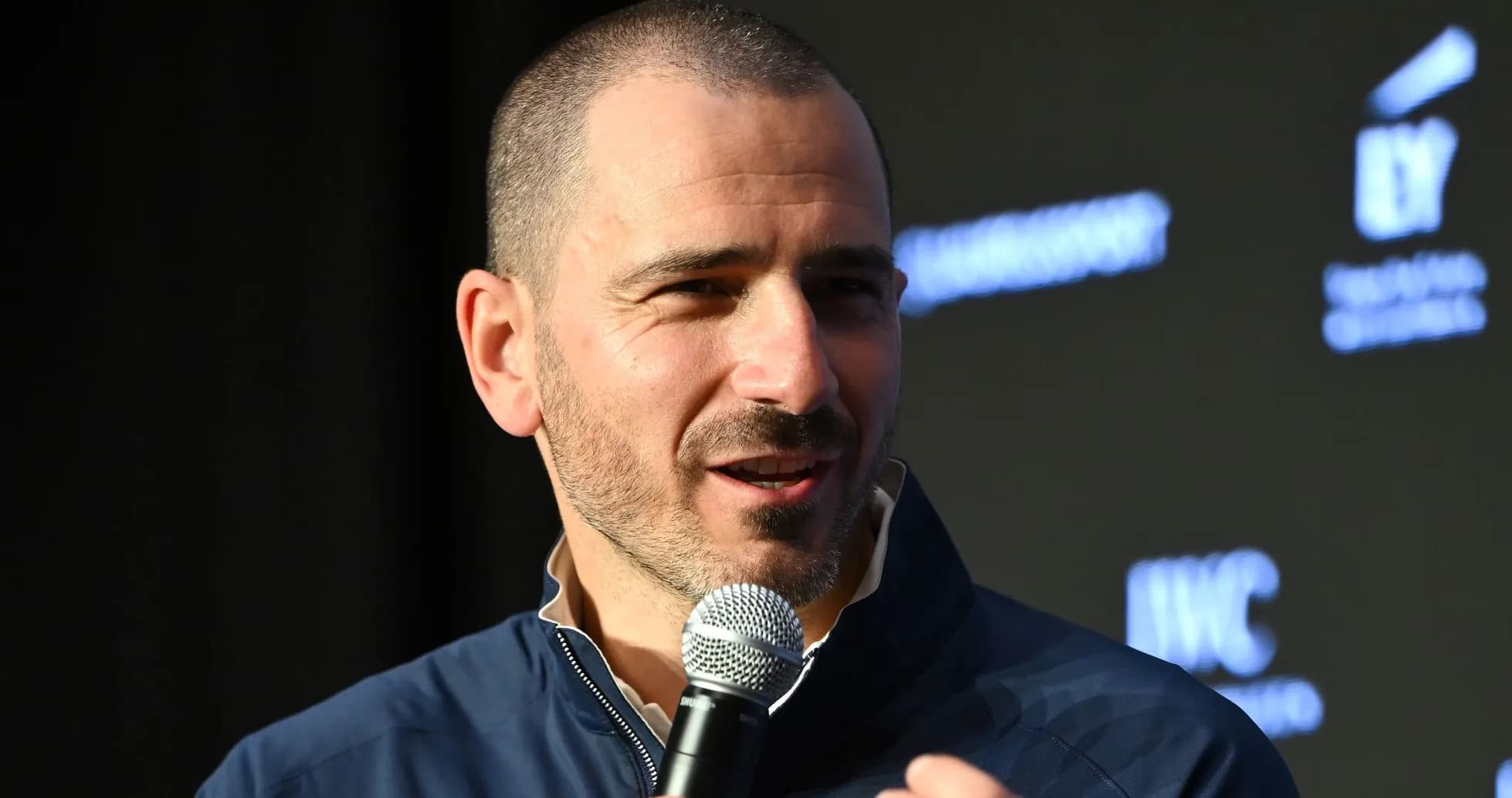
Leonardo Bonucci still remembers the summer when his career almost took a dramatic turn. Not a tactical tweak. A life change.
During Euro 2016, while he anchored Italy’s defence on the biggest stage, one of football’s most influential coaches was quietly trying to pull him away from Turin. Pep Guardiola wanted him at Manchester City, and he wanted him badly.
Guardiola’s charm offensive
Speaking to World Soccer Agency, via Sport Mediaset, Bonucci laid out just how intense that pursuit became. Guardiola, an open admirer of centre-backs who can dictate play from deep, saw in Bonucci the perfect fit for his blueprint in England.
“For my style of football, the coach who is best suited and most appreciates playing out from the back is Guardiola,” Bonucci said. “So he courted me for many weeks, and let me tell you, being courted by Guardiola is not like any other experience. You really do start to wobble, and it was tough taking place during the Euros, where I had to be concentrated, but even during the tournament there were some discussions.”
This was not a vague enquiry or a passing compliment. It was sustained pressure, arriving in the middle of a major tournament, from a coach whose track record with defenders — and with careers — speaks for itself.
The Premier League stage beckoned. So did a leading role in a project that would soon dominate English football.
Torn between a dream and a lifelong love
The temptation was real. The decision was not simple.
Manchester City were building towards the juggernaut they would become, and Guardiola wanted Bonucci as a cornerstone of that evolution. For many players, that call alone would have been enough to pack their bags.
Bonucci’s heart refused to follow so easily.
“As far as I was concerned, the idea of leaving Juventus made my heart ache,” he admitted. “Some days I’d say to myself, oh wonderful, the Premier League and Guardiola, but then the day after I remembered that I had always dreamed of Juventus.”
He had already reached a Champions League final with Juventus. He had grown into one of the symbols of the club’s modern era, part of a defence that defined a cycle of dominance in Serie A. Walking away from that was never going to be a straightforward career move; it felt like tearing out a piece of his identity.
One day, the lure of the Premier League. The next, the weight of black and white stripes and a childhood dream. That was the rhythm of his internal battle.
A family crisis that changed everything
Then came the factor that no sporting project, no tactical promise, could compete with.
Away from the stadiums and the transfer talk, Bonucci’s two-year-old son, Matteo, was diagnosed with a serious illness. In that moment, football’s grand narratives shrank. Geography, support networks, emotional stability — they all took precedence over tactical fit and new adventures.
“After the Euros, I spoke to Juve,” Bonucci said. “Matteo’s illness and the fact I didn’t feel 100 per cent about leaving Juve, especially as the club told me that I would not be sold even if an incredible offer came in, made it a normal decision to stay. Working with Guardiola would’ve allowed me to have even greater experience, technically and tactically.”
The equation suddenly became clear. Juventus wanted to keep him, even in the face of a huge offer. His family needed familiarity and closeness. His own instincts were pulling him back towards Turin.
The move that might have reshaped Guardiola’s early years in England, and Bonucci’s legacy abroad, never happened. Not because of a failed negotiation or a late change of terms, but because a defender who built his reputation on cold clarity at the back listened to something far more powerful than a manager’s call: his own conscience, and his family’s needs.
Guardiola found other solutions. Manchester City still rose. Bonucci stayed, and continued to live out the dream he had always imagined in black and white. The sliding door closed, but the choice told you everything about the man behind the defender.