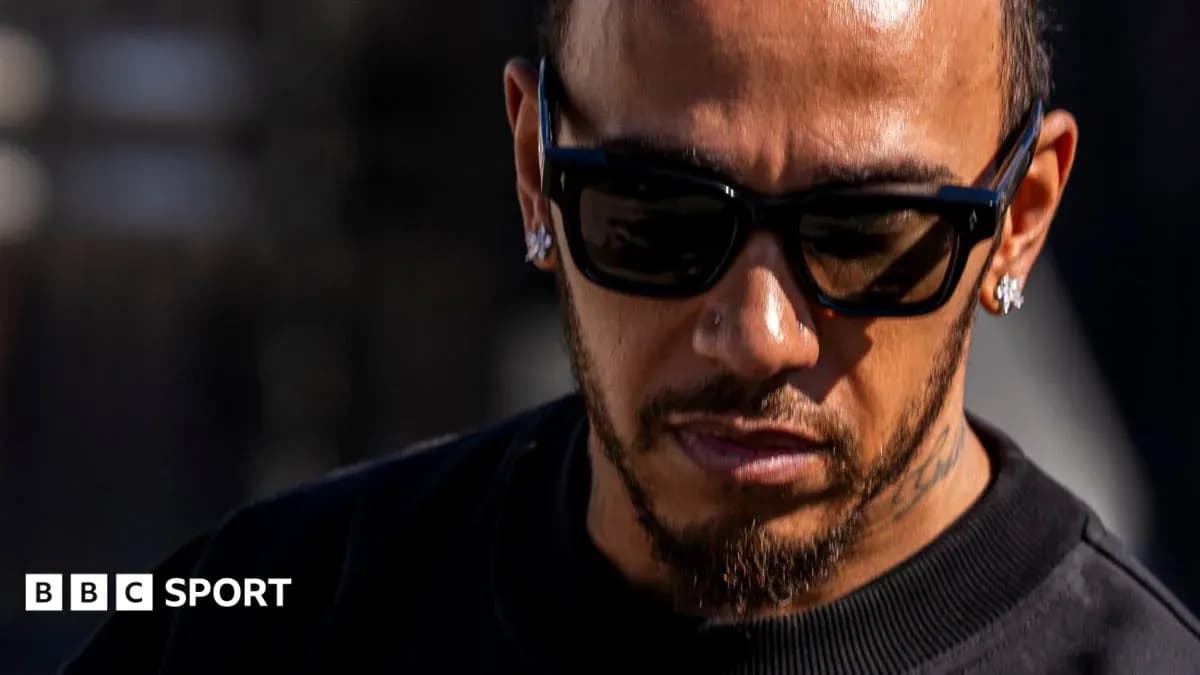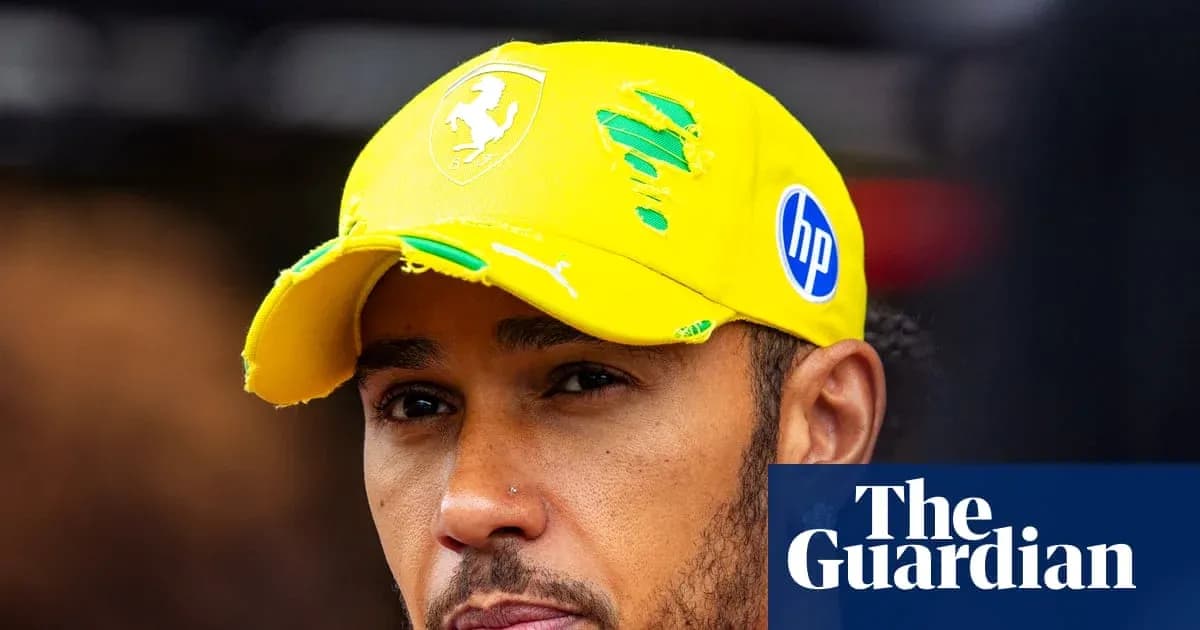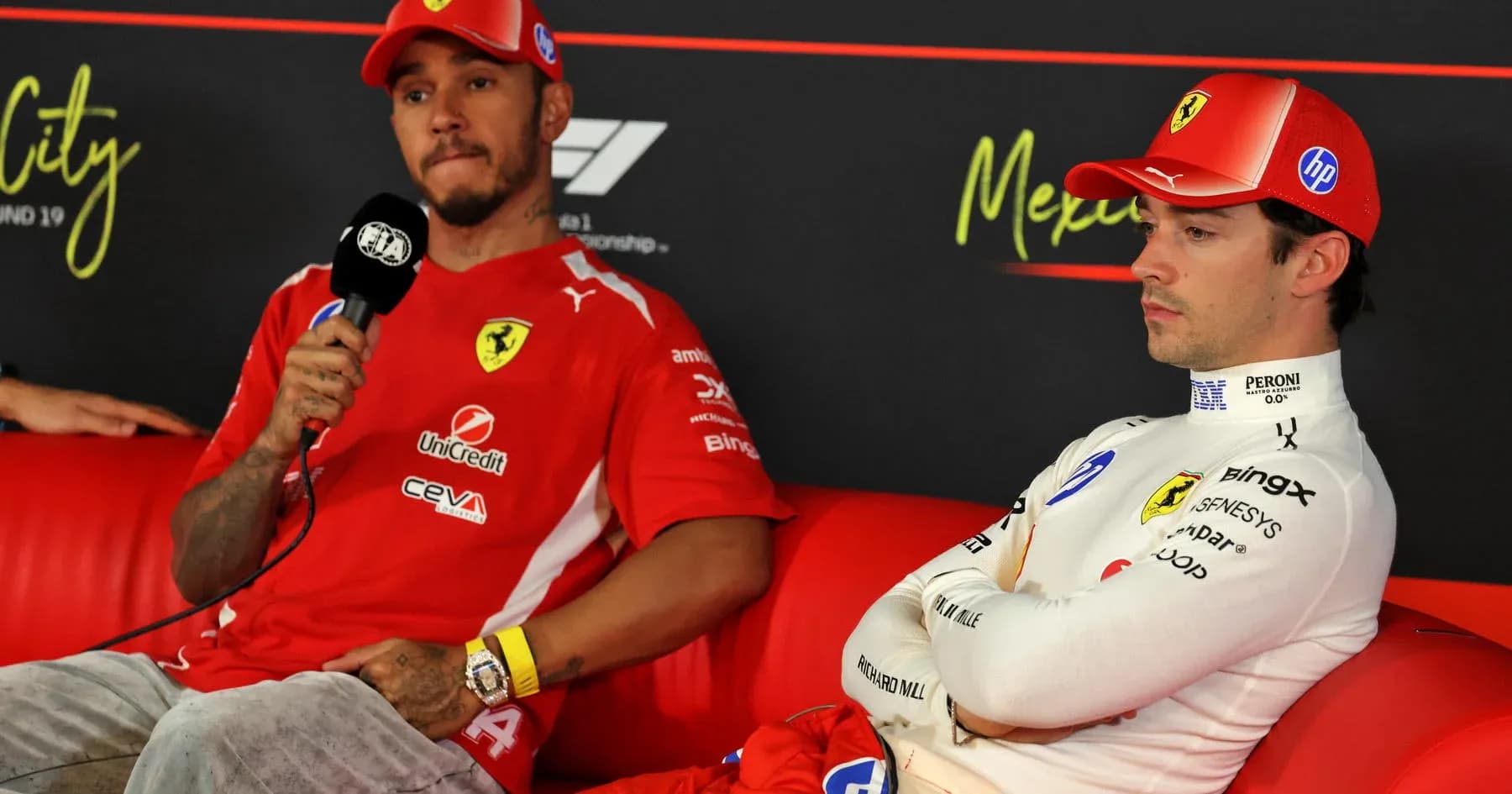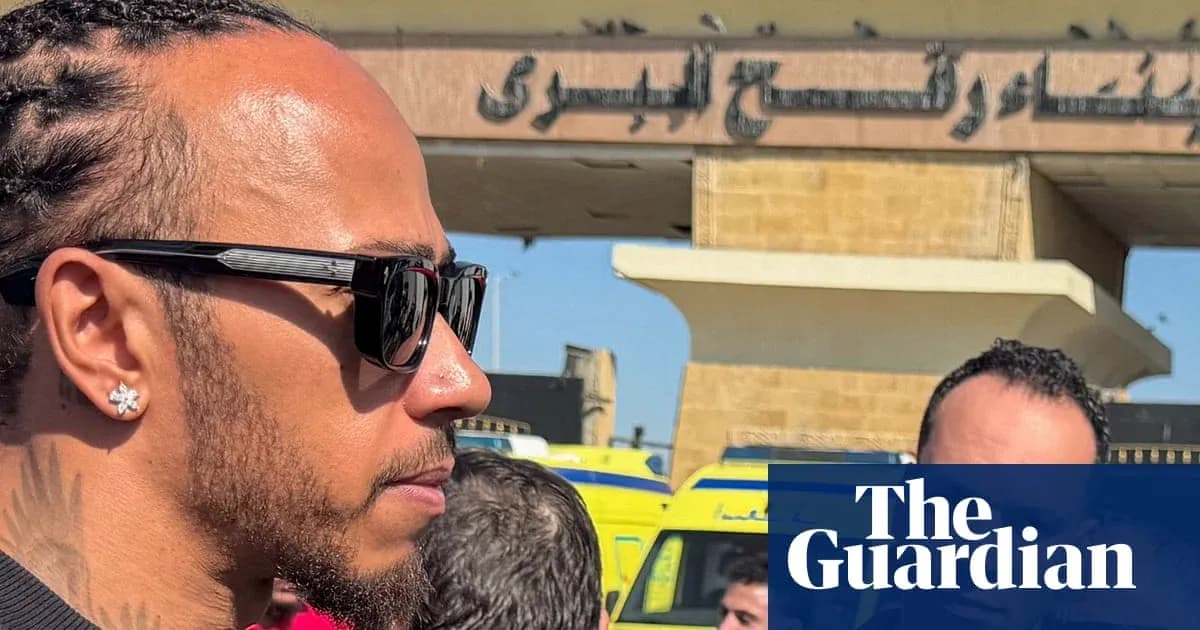
Lewis Hamilton spent the start of his week not in a garage or on a simulator, but at one of the most fraught border crossings on earth.
Fresh from making his 400th Formula One start at the São Paulo Grand Prix, the seven-time world champion travelled to Egypt’s Rafah crossing with the Gaza Strip, meeting organisations battling to push humanitarian aid into the besieged territory.
This was not a photo-op tacked on to a long-haul race. Hamilton has been one of the few global sports stars to speak consistently and bluntly about the human cost of the conflict in Gaza and other crises. He has used his platform to highlight children killed in Israeli airstrikes, repeatedly calling for a ceasefire and for broader global action.
Back in October, he laid out his stance in stark terms: “I think we need to make sure we’re pushing to free Congo, free Sudan, free Syria, free Palestine. I think there’s a lot of peace that I’m hoping we get to at some stage.” The trip to Rafah put those words into a raw, physical context.
At the edge of a sealed strip
Rafah has become a grim symbol of bottlenecked aid and stalled diplomacy. A ceasefire deal reached last year has largely frozen major combat operations in Gaza, yet the promised relief has not followed. The volume of aid entering the territory remains well below the agreed minimum of 600 trucks a day, leaving international agencies warning of deepening catastrophe.
On the ground, the map is still changing. Israeli forces have continued to advance, expanding their control from 53% of Gaza to at least 60%, according to an independent commission of UN experts last month. Airstrikes have not stopped. The same commission reported that Israeli fire along the advancing front has killed at least 196 Palestinians, among them 18 women, 32 boys and 11 girls.
It was into this landscape that Hamilton stepped.
He toured the Rafah crossing, where aid convoys inch through a maze of checks and delays, before heading to logistics warehouses run by the Egyptian Red Crescent, the organisation that coordinates and facilitates the entry of aid into Gaza. There, the scale of the operation is measured not in race laps or split times, but in pallets, medical supplies and food rations stacked to the ceiling, waiting for clearance.
At the crossing itself, Hamilton greeted aid workers and officials with “Assalamu alaikum” – “peace be upon you” – the most common of Arabic greetings but loaded with meaning at a frontier defined by war and deprivation. He shook hands, exchanged brief words, and listened as staff outlined the strain of trying to keep a lifeline open when the pipeline is choked.
Khaled Megawer, governor of North Sinai, the Egyptian region that includes Rafah, said the visit was arranged to give Hamilton a clear view of Egypt’s efforts to push aid into Gaza. For Cairo, the presence of one of the world’s most recognisable athletes offered a rare chance to spotlight a grinding humanitarian operation that usually unfolds far from television cameras.
A champion who keeps widening his fight
Hamilton’s journey from the São Paulo podium steps to the edge of Gaza underlined the breadth of his public role. The first Black driver in Formula One history, he broke into the sport with McLaren in 2007 and has spent nearly two decades dismantling barriers on track and off it. His 400th start last weekend placed him in an elite club of two, alongside former teammate Fernando Alonso, who reached the same milestone in 2024.
Where many drivers keep their world tightly narrowed to lap times and tyre strategies, Hamilton has repeatedly pushed beyond the paddock. He has spoken about racial injustice, police violence, LGBTQ+ rights and now, with increasing intensity, about conflicts stretching from Congo and Sudan to Syria and Palestine.
The Rafah visit was another step in that evolution: a world champion walking away from the comfort of the grid to stand at a border where the numbers that matter are not championship points, but trucks per day and lives saved.