Liam Lawson left São Paulo with points, a bruising wheel tap from Charles Leclerc, and one more line on an increasingly compelling F1 résumé.
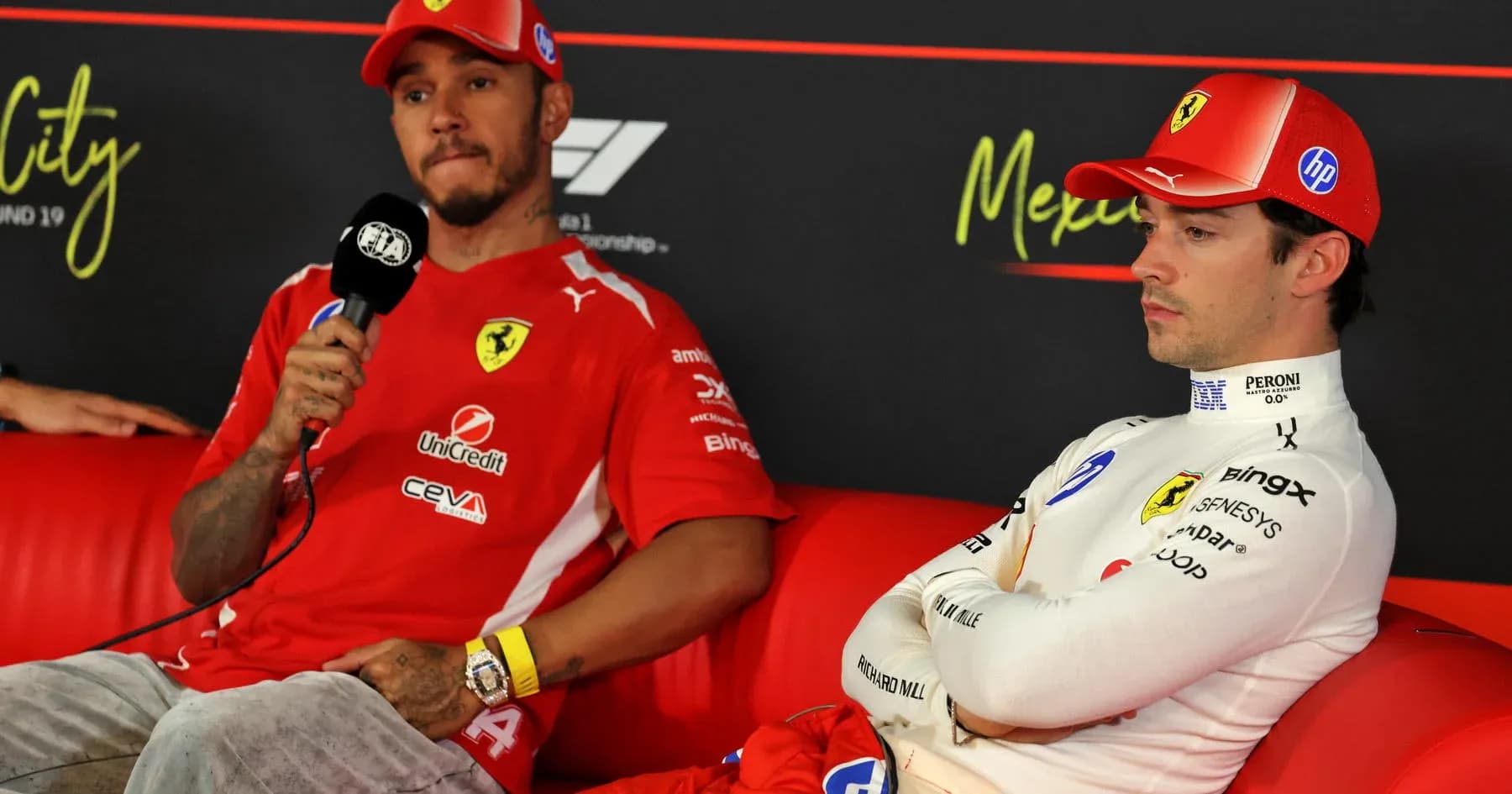
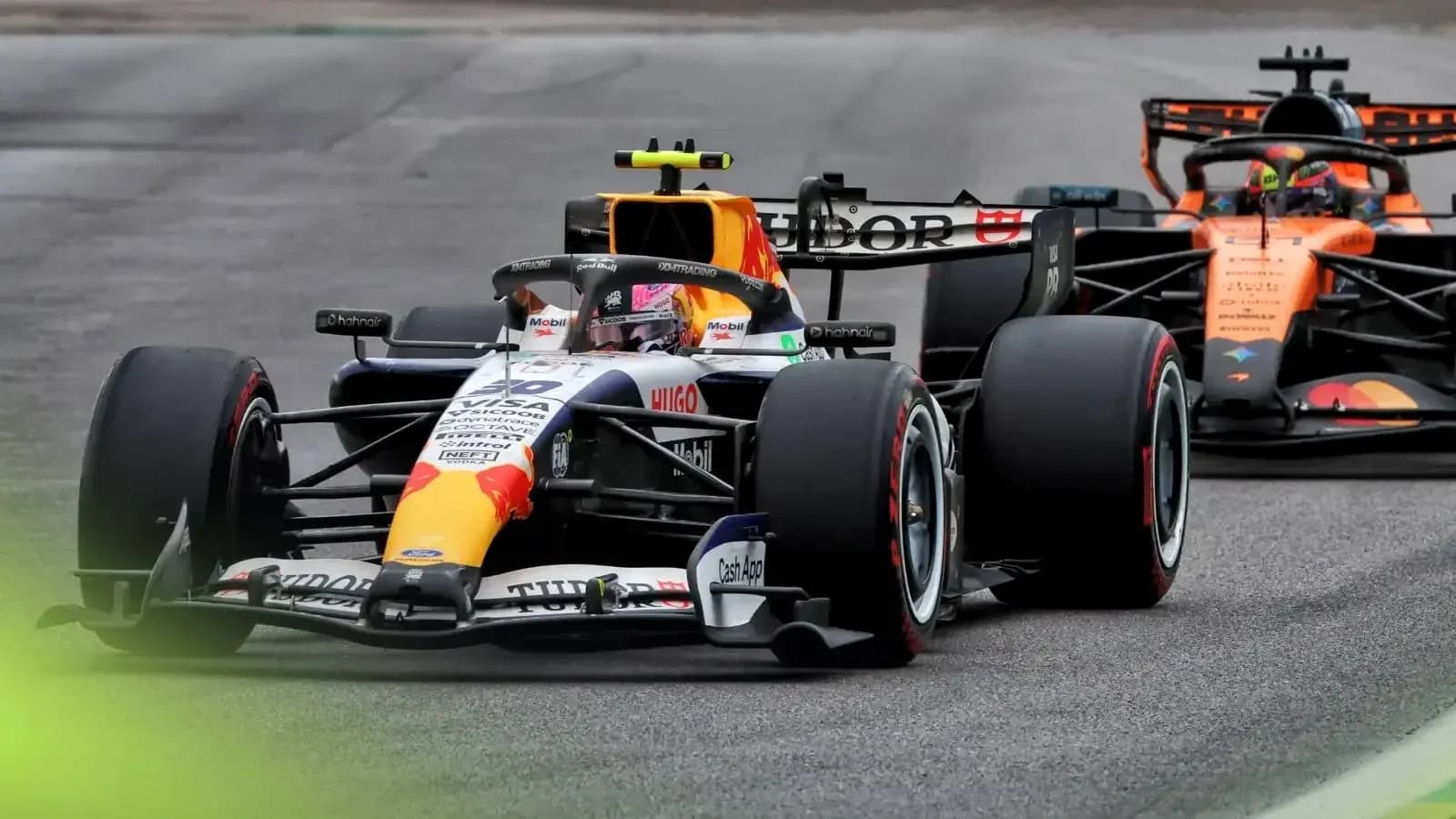
The Racing Bulls driver finished eighth at Interlagos after a fierce late scrap with Leclerc, a duel that spilled over when the Ferrari nudged the left-rear of Lawson’s car in the closing laps and muscled past for seventh. Both drivers have been called to the stewards, but neither car suffered serious damage.
On the face of it, eighth place is a tidy afternoon for a Racing Bulls driver. The story of Lawson’s race, though, ran a lot hotter than the final classification suggests.
A GP2 déjà vu
Lawson didn’t miss the echo of history in the way Leclerc made the move.
“I think it was his wing that hit my tyre. So I think we got really lucky,” Lawson said afterwards, still processing the incident. He immediately reached back seven years for the comparison: Leclerc’s now-famous GP2 move on Alex Albon at Abu Dhabi in 2017, when a tap to the left-rear at the hairpin broke Albon’s run and opened the door for victory.
“I feel like it was exactly like his GP2 move to Abu Dhabi, like on [Alex] Albon years ago,” Lawson said. “He did the same kind of thing, so maybe it’s his specialty. I don’t know if it’s legal or not. We’ll obviously go and review it, but it was a good battle overall.”
This time, Lawson was the one on the receiving end. Leclerc’s front wing kissed the Racing Bulls’ left-rear through Turn 12, unsettling the Kiwi just enough to swing the momentum. The Ferrari slipped ahead, built a gap of under two seconds, and held it to the line.
The stewards will decide where the line lies. Lawson knows exactly how fine it felt from the cockpit.
From shock launch to reality check
For a few glorious laps, Lawson’s race looked like something much bigger than “best of the rest.”
“I mean, crazy race,” he said. Off the line, he launched superbly, found grip where others didn’t into Turn 1, and surged into second. For a moment, the Racing Bulls was not a midfield car at all. It was the hunter, shadowing race leader Kimi Antonelli.
“Honestly, I had a really good start, good grip in Turn 1. Obviously, I made up a place, and then, to be honest, I was thinking I might try and attack Kimi at some point in the lap.”
That thought didn’t last long. Once the field settled, the natural order reasserted itself. Antonelli and the frontrunners stretched away, and Racing Bulls’ limitations surfaced.
“But once the pace stabilised, they’re a lot quicker than us, and we started to fall back. We were damaging our tyres, quite a lot more than they were,” Lawson admitted.
On a drying track, the car’s weaknesses became clear. The early aggression, the fight to hang on, all came with a price in rubber.
“I think the pace on the dry was okay. And then at the end, yeah, I tried to keep Charles there. We had some contact in [Turn] 12. I’ll go and review it. I don’t really know exactly what to say yet, but obviously I ended up losing the place.”
He slipped back into what has become Racing Bulls’ usual postcode, yet still crossed the line as the lead midfielder. For a team that measures its Sundays against the pack behind the big hitters, that matters.
Midfield leader, future in limbo
Strip away the drama with Leclerc and the story of Lawson’s season remains the same: he keeps delivering. São Paulo was another strong, controlled drive, another afternoon where he dragged the car to the top of the midfield.
“I had a strong race. I would have liked it to stay wet the whole race. It would have been cool. Probably would have had more of a shot there,” he said, hinting at the feeling that the changing conditions robbed him of a chance to truly disrupt the script.
“But, at the moment, we’re topping the midfield as a team, and that’s what we’re targeting every weekend.”
He is doing exactly what teams say they want from a young driver: clean races, sharp racecraft, measured risk. Yet the clock is ticking loudly in the background.
Racing Bulls has not confirmed its 2027 line-up. Lawson, despite his performances, has no guaranteed seat. The pressure is real, intensified by the looming presence of Formula 2 driver Nikola Tsolov, who is pushing hard for promotion and casting a long shadow over Lawson’s prospects.
A decision is expected before the end of the season. The brutal possibility hangs there: that a driver who has spent the year overachieving could find himself off the grid.
Lawson can feel the noise building around him.
“I appreciate all the support I’ve seen over the last few weeks. It’s honestly really nice to see. Obviously I would love it if it was more from a team, but, at the moment, I’m just trying to enjoy driving the car because, with everything else going on, I don’t really know what else you know I’m meant to do.”
There is a raw honesty in that line. No media polish, just a driver who knows his fate is in other hands.
“I don’t know what else I meant to say to you guys. So, at the moment, I’m just going to keep driving and see what happens.
“Obviously, they’ll decide what they do there. I feel like Alan’s been extremely supportive to me, and I appreciate that a lot, and have enjoyed working closely with them and the team this year.
“But, yeah, obviously it’s [Red Bull] a big organisation.”
Red Bull’s system has always been ruthless. It has also been the launchpad for some of the sport’s biggest stars. Lawson sits squarely in that tension: good enough to belong, vulnerable enough to be expendable.
In São Paulo, he showed once more that he can fight a Ferrari on merit, recall a seven-year-old GP2 move in the heat of battle, and still drag a midfield car to the front of its class. The question now is whether that is the kind of specialist skill this organisation truly values – or just another impressive performance that disappears into the noise of a very crowded talent pool.