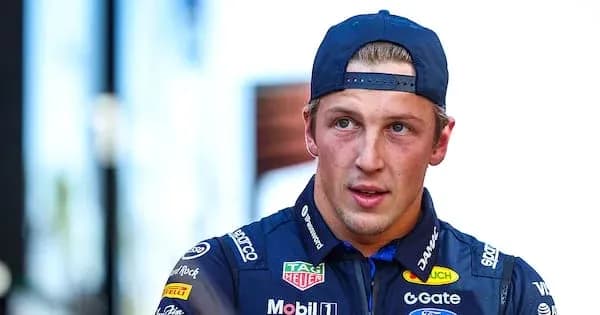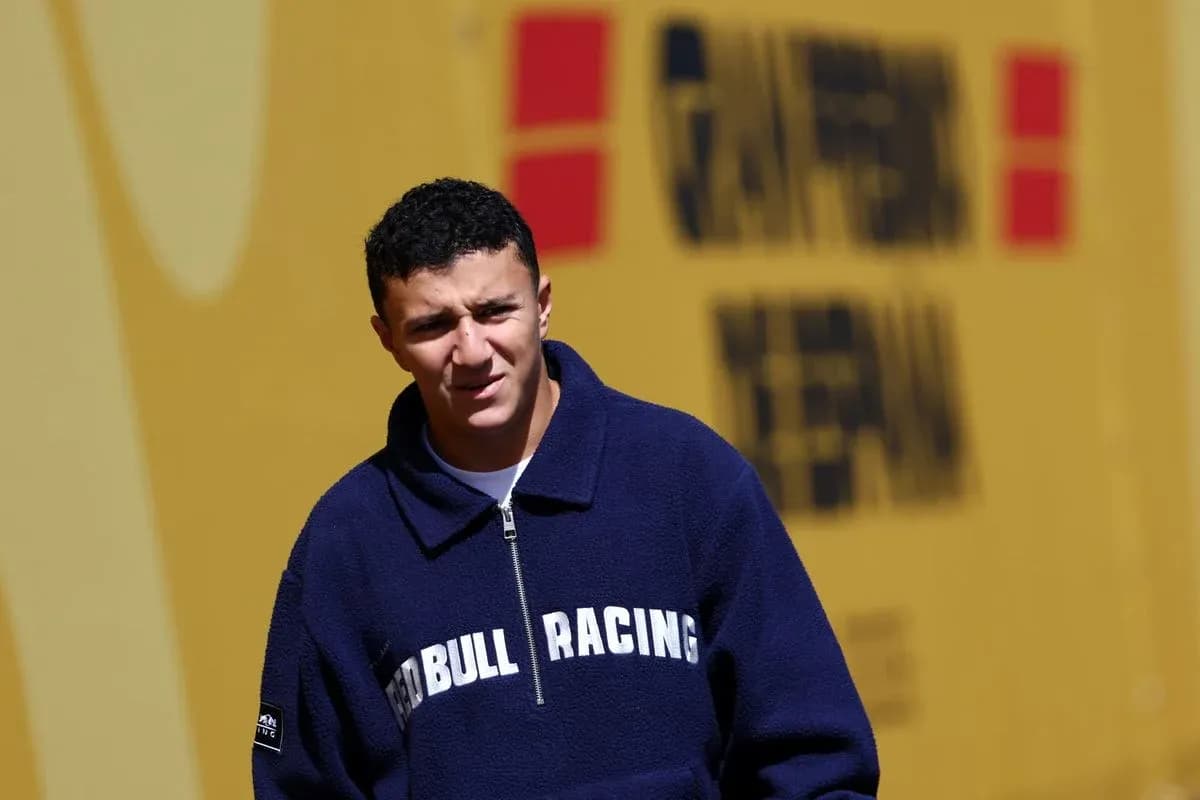
Liam Lawson is fast becoming the fault line in the 2026 Formula 1 driver market.
Thirteen seats on next year’s grid are already locked in. Of the remaining nine, most look like formalities, renewals waiting to be signed. The real intrigue, as so often, sits inside the Red Bull empire.
Only one man is guaranteed a place there: Max Verstappen. Beyond him, the energy drink giant has four seats to fill across Red Bull Racing and Racing Bulls, and a growing queue of hungry young talent.
For now, the picture looks deceptively simple. GPblog understands the current structure is expected to roll over into 2026: Isack Hadjar alongside Verstappen at Red Bull, Lawson continuing at Racing Bulls with Arvid Lindblad. Stability on paper. A storm underneath.
Because Lawson’s short-term future might be mapped out, but his long-term trajectory is anything but secure. Every lap he turns is now being weighed, dissected and compared against a brutal internal standard: are you the next Verstappen, the next Sebastian Vettel – or are you just another good driver in a system that only celebrates greatness?
Rosberg lays down the Red Bull standard
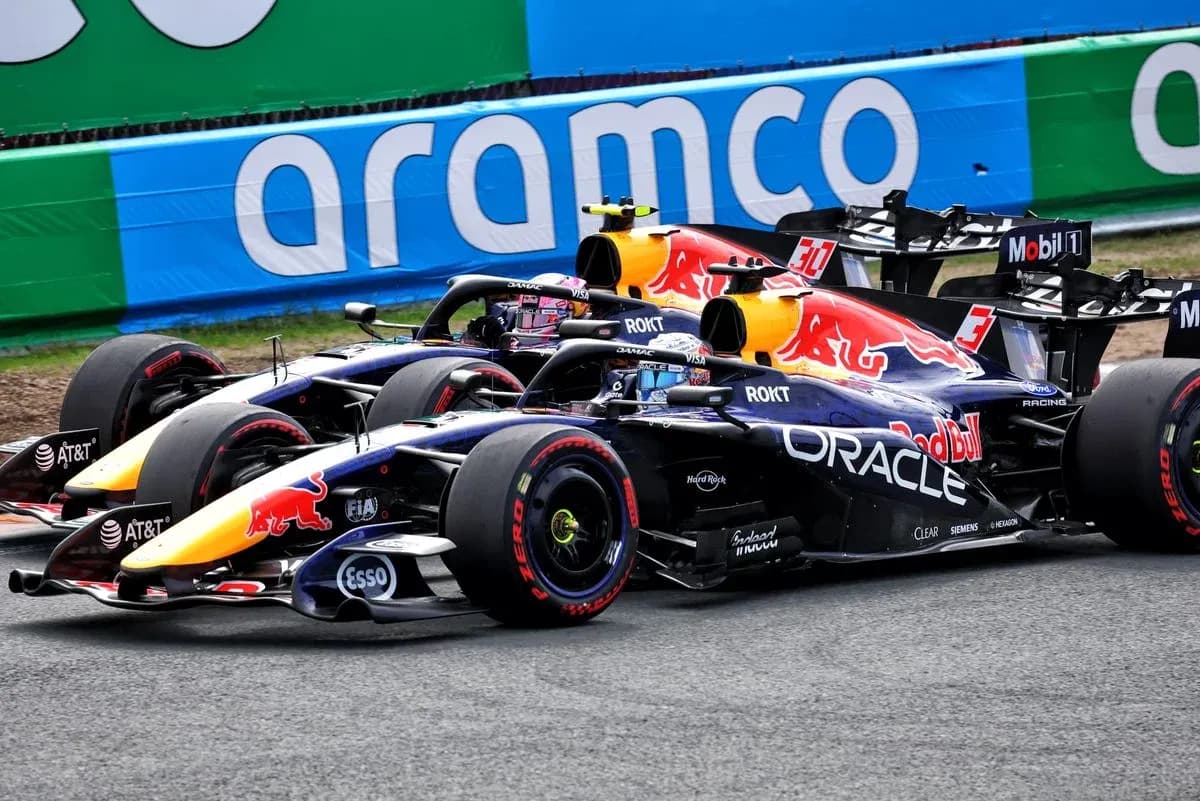
Lawson has been thrust back into the spotlight over the last three Grands Prix, subbing in for the injured Hadjar. He has responded with a tidy run of results: seventh in Zandvoort, 14th at Monza, sixth in Madrid. Solid. Professional. Points on the board.
For Nico Rosberg, that’s not enough.
Speaking on Sky F1, the 2016 world champion cut straight to the heart of Red Bull’s philosophy. This, he argued, is a team that hunts unicorns.
“They’re looking for the next Max Verstappen and the next Sebastian Vettel,” he said. “Everything else is just not good enough.”
In Rosberg’s eyes, Lawson’s current level of performance doesn’t yet scream future world champion. The numbers are respectable, but they don’t bend the conversation around him. They don’t force Red Bull’s hand.
“At the moment, I’m not sure that Liam Lawson would be considered at that level with what he’s been producing so far,” Rosberg added, pointing out that Lindblad and Hadjar remain very much alive in the internal debate.
That is the harsh reality of the Red Bull system: doing a “good job” has never been the benchmark. The bar is Verstappen. The bar is Vettel. Anything below that, historically, has been expendable.
Mekies pushes back
Yet this is not quite the same Red Bull that once shuffled drivers with ruthless speed under Christian Horner and Helmut Marko. The leadership tone has changed, and with it, perhaps, the patience level.
Laurent Mekies, now Red Bull team principal and CEO, sees Lawson’s cameo in very different colours.
“I think he’s done a very good job,” Mekies said, offering a measured but clear defence of his stand-in driver. He highlighted the difficulty of jumping into a different team and car mid-season and argued Lawson had handled that challenge as well as Red Bull could reasonably have hoped.
The results back up at least part of that claim. Sixth place in Madrid brought home “very important points,” as Mekies put it. Seventh at Zandvoort did the same. Even Monza, where Lawson finished 14th, came with a caveat: contact with Nico Hülkenberg and front wing damage derailed what the team believed could have been another strong points finish.
From Mekies’ vantage point, this is not the same Lawson who first appeared for the team in the early races of 2025. He sees a more complete driver now, one who has grown, adapted and justified the team’s faith.
“So, I think he did a very good job,” he concluded, underlining that the internal picture today is “very different” to that early 2025 stint. The message between the lines was clear: Lawson has earned gratitude, and for now, he has earned time.
A different Red Bull, a different future?
Rosberg’s criticism carries weight. He is not just another pundit; he is a world champion whose words echo around the paddock. When he questions whether Lawson is truly Red Bull material, people listen.
Yet the decision will not be his. It will rest with a Red Bull hierarchy that no longer operates with quite the same iron-fisted immediacy of the Horner–Marko era. That subtle shift could prove crucial.
In the old days, a driver producing “reasonable” points without headline-grabbing peaks might already be looking over his shoulder. Today, Lawson may be allowed to grow into the role, to turn competence into conviction.
The numbers are not spectacular. They are not Verstappen-level. But they are not the numbers of a man drowning either. They are the numbers of a driver still writing his case in real time.
The question now is simple, and unforgiving: in a system built on world champions, can Liam Lawson turn “good job” into “no-brainer” before someone like Lindblad or Hadjar rips the seat from under him?