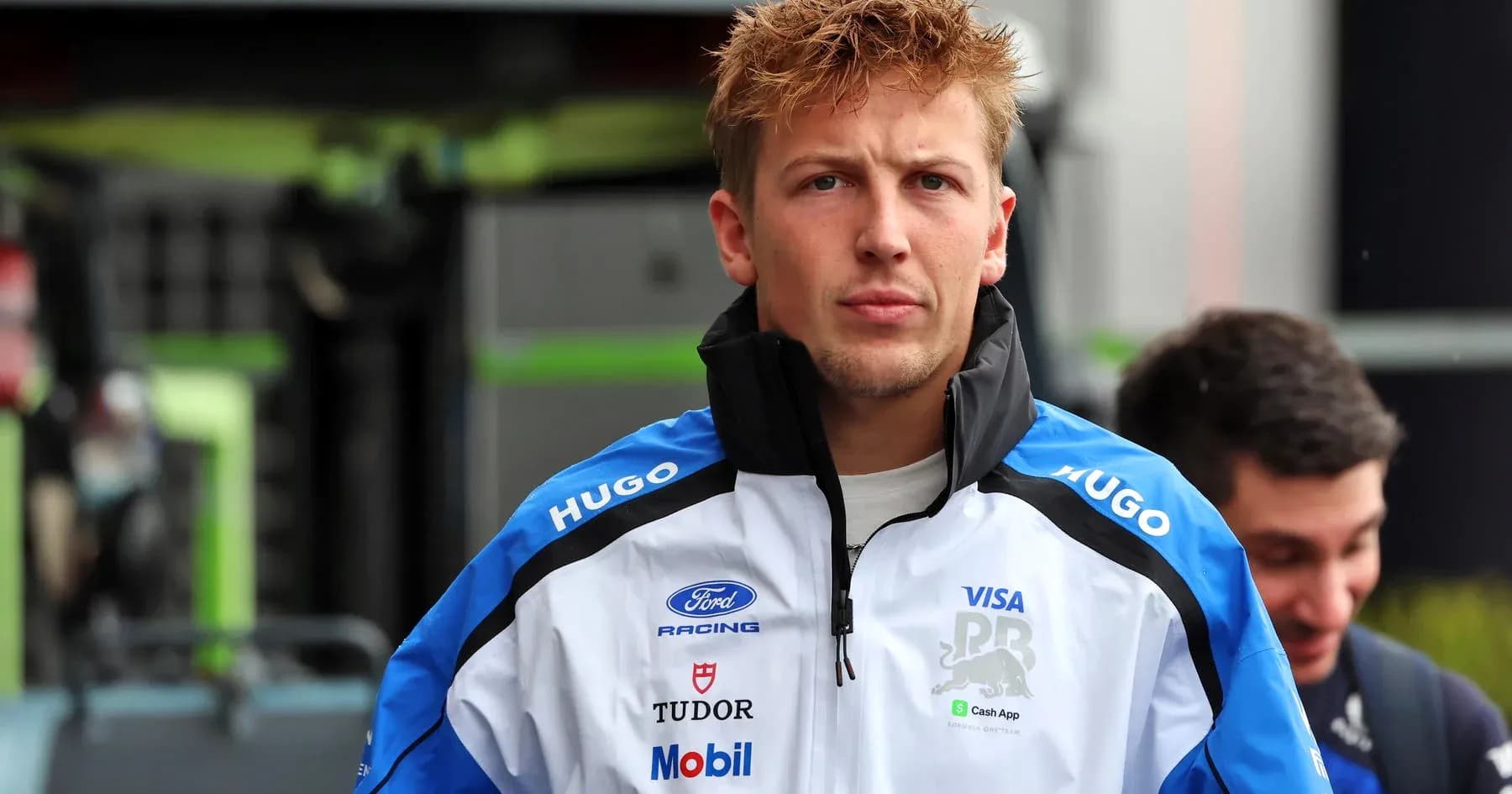
Rain hangs over Interlagos this weekend, and with it comes a set-up headache that Liam Lawson and Racing Bulls can’t escape.
Under Formula 1’s parc fermé rules, whatever configuration the team locks in for qualifying on Saturday must carry through to Sunday’s Sao Paulo Grand Prix. The problem? Forecasts point to a dry qualifying… and a wet race.
That’s the tightrope Lawson is walking.
From promise to problems
The New Zealander opened Friday looking sharp. He put his VCARB03 10th in FP1, a solid marker on a circuit that punishes hesitation and rewards confidence on the brakes into Turn 1.
Then came FP2.
Racing Bulls rolled the dice on a new set-up direction, searching for more performance as track temperatures dropped. It backfired badly. Lawson slid down to 13th, this time behind team-mate Arvid Lindblad, and found himself wrestling a car that simply wouldn’t turn.
“We started a little bit stronger this morning, and then we tried something that didn't really work in FP2,” Lawson admitted, detailing how the cooler conditions only exaggerated the wrong call. The tweaks they’d made pushed the balance the opposite way to what the track needed, and the car responded with heavy understeer.
The verdict from the cockpit was blunt: that set-up is going in the bin.
“We'll probably go back on that. I think we had a better car in FP1, so we'll try to start with something similar in FP3,” he said, with one eye already on the radar. “Then we'll see what happens with the weather because it is probably going to rain.”
A one-lap fight on cold tyres
Interlagos looks short and simple on paper. It rarely drives that way, especially when temperatures drop.
Lawson underlined just how unforgiving qualifying could be if the tyres don’t switch on in time.
“Putting the lap together and basically doing a good job, I think it's very, very tough here,” he said. The out-lap is short, the window tiny. Miss it, and Turn 1 becomes a lottery.
“For the tyres, the laps are really short for warm-up, so we're struggling to get everything properly ready for Turn 1,” he explained. Any hesitation, any delay in traffic, and the first braking zone can be ruined before the lap has even begun.
That’s where the chaos of Q1 looms large. With 20 cars scrambling for space, the risk of a queue in the pit lane or a train on the final corner is real.
“Any traffic queuing in the pit lane on track can really, really affect Turn 1, so it's going to be interesting, especially Q1 when everybody's on track together,” Lawson warned.
Then he cut to the real issue: “The bigger question mark is going to be the rain.”
Chasing balance in a split-weather weekend
The contrast between sessions shocked the team. What looked like a workable platform in FP1 turned into one of the least drivable packages they’ve had in recent races.
“I think we're pretty surprised by how much of an effect what we changed had,” Lawson said. “The car was probably one of the worst balances we've had this season, or at least in the recent races in FP2.”
Once the asphalt cooled, the front end faded. Corner entry dulled. The understeer grew.
“A big factor is that when the track temperature comes down, we just had so much understeer in the car, so we'll try and revert on that for Saturday,” he added.
The fix sounds simple: go back to what worked in FP1. The reality is more delicate. Any set-up they choose must survive both a likely dry qualifying and a potentially wet grand prix. Too aggressive a swing towards dry performance, and they risk a nervous, unpredictable car in the rain. Too conservative, and they may lack the bite needed to escape the early qualifying cut.
“But obviously, we can't change anything drastically because if it rains, you need to have a good car in the rain as well,” Lawson pointed out.
So Racing Bulls head into Saturday with a clear reference, a clear mistake to avoid, and a weather forecast that refuses to cooperate.
The pace is there in glimpses. The question now is whether Lawson and his engineers can find a compromise sharp enough for one lap on cold tyres, yet stable enough to survive a storm over Interlagos.