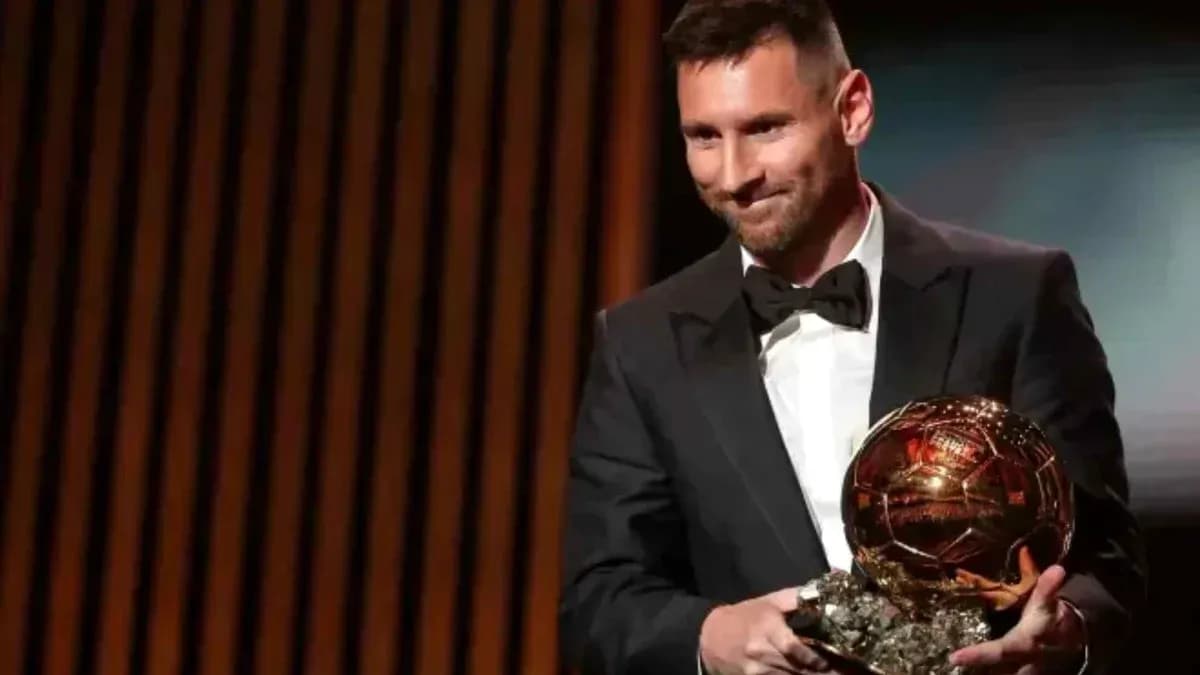
Lionel Messi’s latest Ballon d'Or nomination is not really about a shortlist. It is about time.
Twenty years sit between his first appearance among the candidates, in 2006, and this new one. An entire generation of footballers has risen and retired in that span. Messi is still there, still shaping the conversation, still bending the record book around his career.
From teenage prodigy to timeless reference
In 2006, Messi was 19 and still a promise, even if a dazzling one. At Barcelona he was already turning heads, a wiry winger slicing in from the right, a kid whose talent felt almost exaggerated. That first Ballon d'Or nomination captured a player on the verge, not yet the finished article, not yet the global reference point.
Everything that followed rewrote modern football history.
The captain of Argentina grew from prodigy to benchmark, stacking trophies and individual honours until the Ballon d'Or itself seemed to orbit around him. Across two decades he collected eight of them, building a dominance that defined an era and forced every other superstar to measure themselves against his standard.
Now comes the 2026 nomination, and with it a number that feels almost unreal: 20 years between first and latest recognition at the very top. Not a symbolic span. An exact one.
A record of eras, not seasons
Messi already owns a distinction no one else can touch: he has won the Ballon d'Or in three different decades — the 2000s, 2010s and 2020s. He has done it while wearing three different shirts: FC Barcelona, PSG and Inter Miami. Careers usually peak at one club, maybe two. His has stretched across continents and cycles without losing its edge.
This latest nod comes off the back of another year in which he refused to fade into the background. In the colours of Inter Miami, he stepped into a league still learning how to deal with his presence and immediately became its central attraction. With Argentina, he drove the world champions all the way to the final of the 2026 World Cup, extending a national story that had already reached its emotional peak in Qatar.
The numbers and trophies tell part of it. The longevity tells the rest.
Chasing a ninth — and widening the gulf
On October 26 in London, the Ballon d'Or will be handed over again. If Messi’s name is called, another barrier falls. He would move to nine Ballon d'Ors, a figure that stretches the imagination as much as it stretches the record.
The gap to Cristiano Ronaldo, his great rival of the age, would grow to four — nine to five. In an award that has so often framed the rivalry between the two, that distance would underline just how far Messi has pushed the limits of individual dominance.
The trophies, the goals, the finals: they all matter. But this particular mark — 20 years between nominations at football’s highest individual level, with the chance to claim a ninth crown — speaks to something rarer.
It is not just greatness. It is greatness that refused to age on schedule.