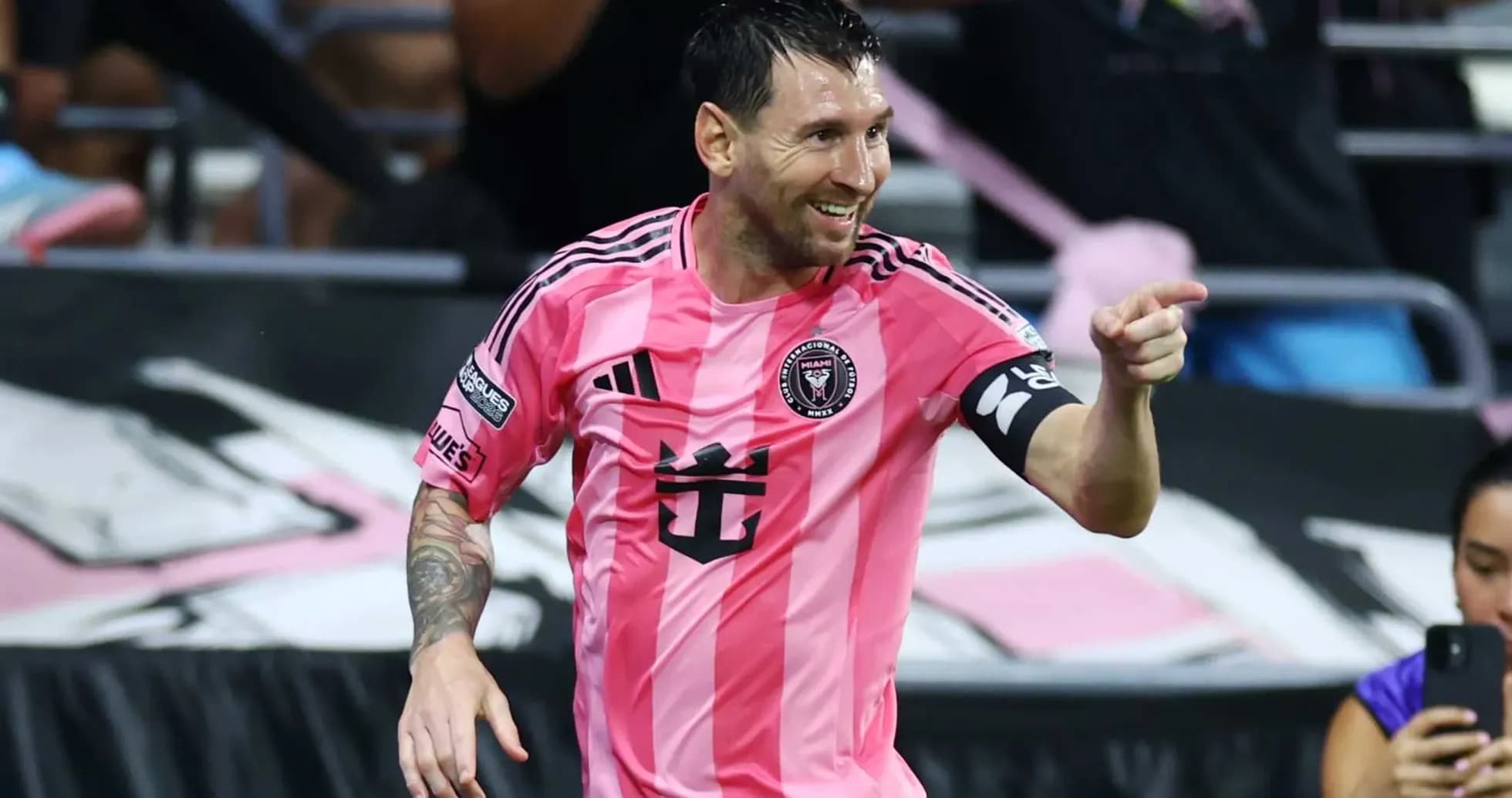
Lionel Messi is preparing to swap the pitch for the boardroom in Spanish football – and this time, the move is far bigger than a sentimental post-career project.
According to Spanish daily Marca, the Argentine icon has reached a preliminary agreement to buy Eldense, a recently promoted Segunda División club based in Elda, in the province of Alicante. If the deal is completed, Messi will take full control of the club’s shares, with no third-party partners involved.
This is not a one-off experiment. It would be his second club in Spain after acquiring Cornellà, the Catalan third-division side, earlier this year. Piece by piece, Messi is building a small but pointed portfolio inside Spanish football, not as a frontman for an investment group, but as the main decision-maker.
A legacy built inside the game
The idea behind the project is straightforward: Messi wants to invest his legacy back into football itself. Not in glamorous superclubs, but in institutions that sit closer to the game’s grassroots, where the margins are tight and the impact can be immediate.
Eldense is an intriguing choice. Newly promoted to the second tier, the club operates in a region that sits within reach of Catalonia, where Messi plans to settle once his playing days at Inter Miami are over. The geography makes sense. So does the timing.
The agreement is described as “preliminary,” but the process is already moving into its decisive phase. Completion is expected within the next few days, once the final legal and contractual checks are done, including financial due diligence. The deal still needs the green light from Spain’s National Sports Council, a standard but essential step before any change of control is made official.
A club already used to change
Eldense is no stranger to upheaval. The club last changed hands in October 2015, when an international investment group with Colombian roots, led by businessman Juan Carlos Trujillo, bought it from Pascual Pérez. That move was supposed to modernise and stabilise the institution.
More recently, rumours swirled around another potential takeover. Argentine businessman Ricardo Beni had been linked to a deal worth around 12 million euros. His name circulated for months, a sign that Eldense had become a live asset on the market.
Now Messi’s name has entered the frame with far greater force. The profile is different. The impact, if confirmed, will be on an entirely different scale – not just financially, but symbolically. A global superstar taking control of a modest Segunda club sends a message about where he sees his future influence.
Turmoil on the pitch
While the boardroom prepares for a possible superstar arrival, the dressing room is living a very different reality.
Eldense’s start to life in the second division has been bleak. Two points from four league matches, no momentum, and growing anxiety around the project on the field. The pressure claimed its first victim last Monday, when coach Claudio Barragán was sacked – the first managerial casualty in the Segunda División this season.
The club has yet to appoint a replacement. Players train under a cloud of uncertainty, with results poor, leadership in flux, and now the prospect of a complete change of ownership looming over everything.
For any new owner, the situation is both a problem and an opportunity. The team is struggling, but still at an early stage of the campaign. The structure is fragile, but also malleable. A clear sporting project, backed by decisive investment and a coherent identity, could transform Eldense’s trajectory.
A different kind of power move
Messi’s possible takeover does not come with the noise of a sovereign wealth fund or a private equity giant. It comes with something else: the weight of a name that has defined an era.
He is still playing, still competing at the highest level with Inter Miami, yet already shaping a second life inside the sport. Cornellà was the first hint. Eldense, if confirmed, would be the statement.
The question now is simple: if Lionel Messi starts building clubs in his own image, how far can that project go in reshaping the map of Spanish football from the second division up?