
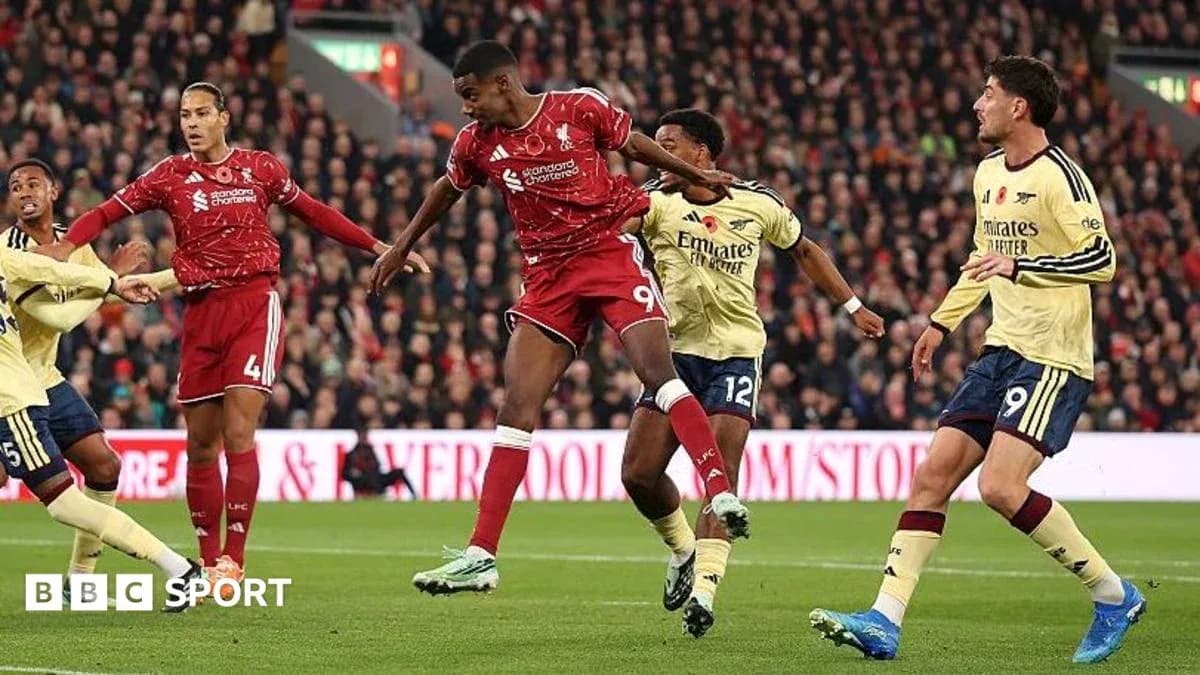
Liverpool were denied a penalty they should have had against Arsenal when Jurrien Timber pulled back Alexander Isak at Anfield, according to the Premier League’s Key Match Incidents Panel.
The incident came in the 21st minute on 1 November. Bradley Barcola whipped in a cross, Isak attacked it, and just as he moved to meet the ball, Timber grabbed his shirt. Isak could not quite reach the header. Play went on.
Referee Andy Madley waved away the appeals. VAR Stuart Attwell checked it and backed the on-field decision. No penalty, no on-field review.
The panel has now cut through the debate.
By a 4–1 vote, it ruled that a penalty should have been awarded on the pitch. On top of that, a 3–2 majority felt VAR should have stepped in and sent Madley to the monitor, branding the non-intervention a “clear and obvious error”.
At that moment Arsenal were 1-0 up through Kai Havertz. That goal would decide the game. In a tight, high-level contest, the decision sits right at the heart of the result.
Two panellists defended the VAR outcome, pointing to the “subjectivity in assessing impact” – in other words, how much Timber’s shirt pull actually affected Isak’s ability to reach the ball. The rest of the panel saw it very differently: the grab was clear, the effect obvious, the threshold for intervention met.
Crucially, the panel was unanimous on one point. Timber’s foul did not reach the level of denying an obvious goalscoring opportunity, so there was no case for a red card. Penalty, yes. Dismissal, no.
Isak, notably, stayed on his feet. That detail fed directly into Andoni Iraola’s anger after the final whistle.
The Liverpool manager told BBC Match of the Day: “There is a clear grab of the shirt. Alex was just in front of him. He was going to head in front of the goal, but couldn't because he grabbed the shirt.
“If he goes to the floor, they call the penalty, 100%. It should be like this, but it is what it is.
“Next time, the managers should tell Alex to go to the floor, otherwise they won't call it.
“The answer is you have to dive. If you don't dive they won't call it.”
Those words land even harder in light of the panel’s verdict. A striker stays honest, fights to stay upright, and his team pays the price. The league’s own review body now effectively confirms the sense of injustice.
The Liverpool-Arsenal flashpoint was not the only error flagged.
On 31 October, Ipswich were also denied a spot-kick they should have had against Hull City. At a corner, Nobel Mendy held back Dara O’Shea in the box. Referee Peter Bankes missed it, VAR Neil Davies stayed silent, and play continued.
The panel ruled that decision wrong as well. Ipswich went ahead shortly afterwards, but the match ended 2-2. Another game, another key moment that should have gone differently.
Two nights, two penalties that never came. And a familiar question hangs over the Premier League’s use of VAR: when the league’s own experts keep having to correct the biggest calls, how long before trust on the pitch finally snaps?





