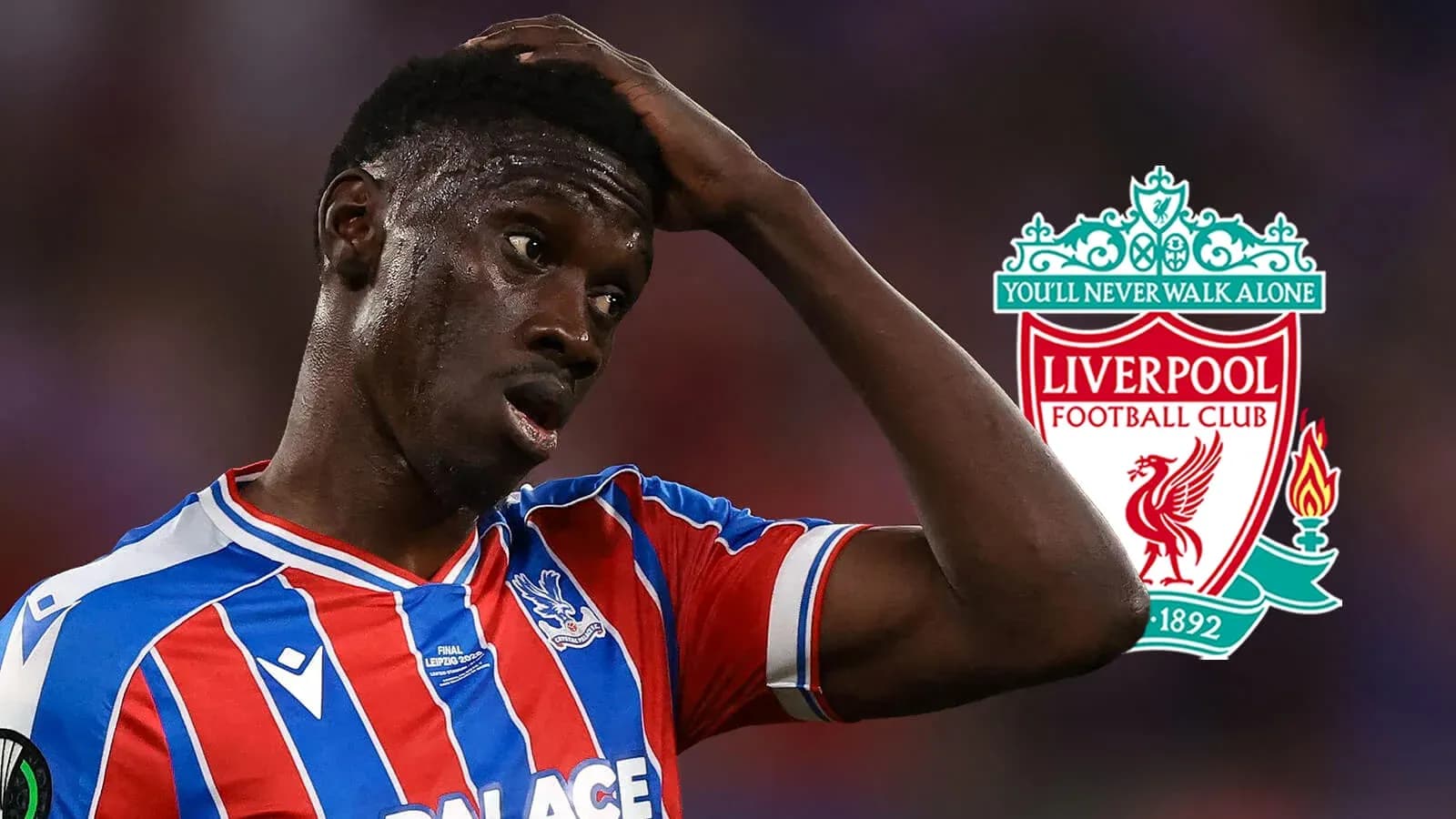
Liverpool’s failed move for Ismaila Sarr has not just left the winger at Crystal Palace for another season. It has opened a wider debate about how African players are treated in the modern transfer market.
The deal collapsed late in the window, and Sarr’s agent, Diomansy Kamara, has made it clear he is unhappy with how events unfolded.
Liverpool push, Palace dig in
Liverpool went hard for wide reinforcements after landing Victor Munoz and sealing a huge £123million agreement for Bradley Barcola. Jürgen Klopp’s side wanted a third winger through the door before the deadline and zeroed in on two Premier League options: Sarr at Crystal Palace and Yankuba Minteh at Brighton.
Talks with Palace over Sarr were serious. The Reds tabled a £40m offer for the Senegal international. Reports from Fabrizio Romano suggested Liverpool even went as high as £50m, a figure quickly disputed by other sources, but the message from Selhurst Park did not change.
Palace set Sarr’s price tag at above £50m and made it plain they would not be bullied into a late sale. With the clock ticking on the window and no sign of compromise, Liverpool walked away.
At the same time, other irons in the fire cooled. Ibrahim Mbaye, discussed during negotiations for Barcola, slipped from their grasp as the 18-year-old headed to Aston Villa in a €55m (£47m) deal. Another target gone.
A double blow for Kamara
For Kamara, Sarr’s stalled move was only half the story. Another of his clients, Lamine Camara, looked set for a major step in his career with a £47m switch to Chelsea. That transfer collapsed at the last minute when Monaco pulled out of selling the midfielder.
Two big moves. Two late breakdowns. One angry agent.
Kamara took to social media with a long, pointed statement, using the cases of Sarr and Camara to shine a light on what he sees as a deeper problem.
“The cases of Ismaïla Sarr and Lamine Camara must all interrogate us,” he wrote, before turning his fire on the way African players are handled in high-stakes negotiations.
He argued that African players can be made to feel like “just a commodity: you buy it, you set its price, you negotiate its future and, too often, your will seems to go to the background.”
His message was relentless. Respect their work. Respect their careers. Respect their ambitions. Respect their voices.
For Kamara, a transfer cannot simply be a cold exchange of numbers between two clubs. “Behind every contract, there’s a man, a career, dreams and life choices,” he wrote, while acknowledging that clubs having the final word is “a reality of professional football.”
Then came the central question: “What about the career and the will of the player?” The player, he insisted, must be heard in decisions that shape his future. “Let’s never forget what’s important: behind every success, it’s the players who write history first.”
Interest everywhere, movement nowhere
Sarr was not short of admirers. Manchester United and Galatasaray both explored a deal. The winger, keen to move, deleted all Crystal Palace-related pictures from his Instagram profile as he tried to nudge a summer transfer into life.
United never pushed beyond initial interest. Galatasaray did make offers, but their bids fell well below Palace’s £50m-plus valuation. The stand-off never broke.
Liverpool then saw the other part of their wide-forward plan crumble. Brighton rejected verbal offers of £50m and £60m for Minteh. Andoni Iraola’s side considered going back in with a package worth between £65m and £70m, but Brighton’s response – a quoted price of £80m – ended that pursuit on the spot.
Excitement and unease at Anfield
Barcola’s arrival still sends a jolt of excitement through Liverpool’s fanbase. A £123m statement signing, a winger with the profile to light up Anfield for years.
Yet the mood is not entirely celebratory. Supporters look at the squad and see gaps: no third winger to rotate with Barcola and Munoz, no new right-back, no central midfielder to refresh the engine room.
Sarr remains at Palace. Camara stays at Monaco. Liverpool and Chelsea move on to other targets. The window closes.
Kamara’s words, though, linger over the market like a challenge: in a sport driven by billion-pound economies and rigid club power, how long before the player’s voice truly leads the conversation?