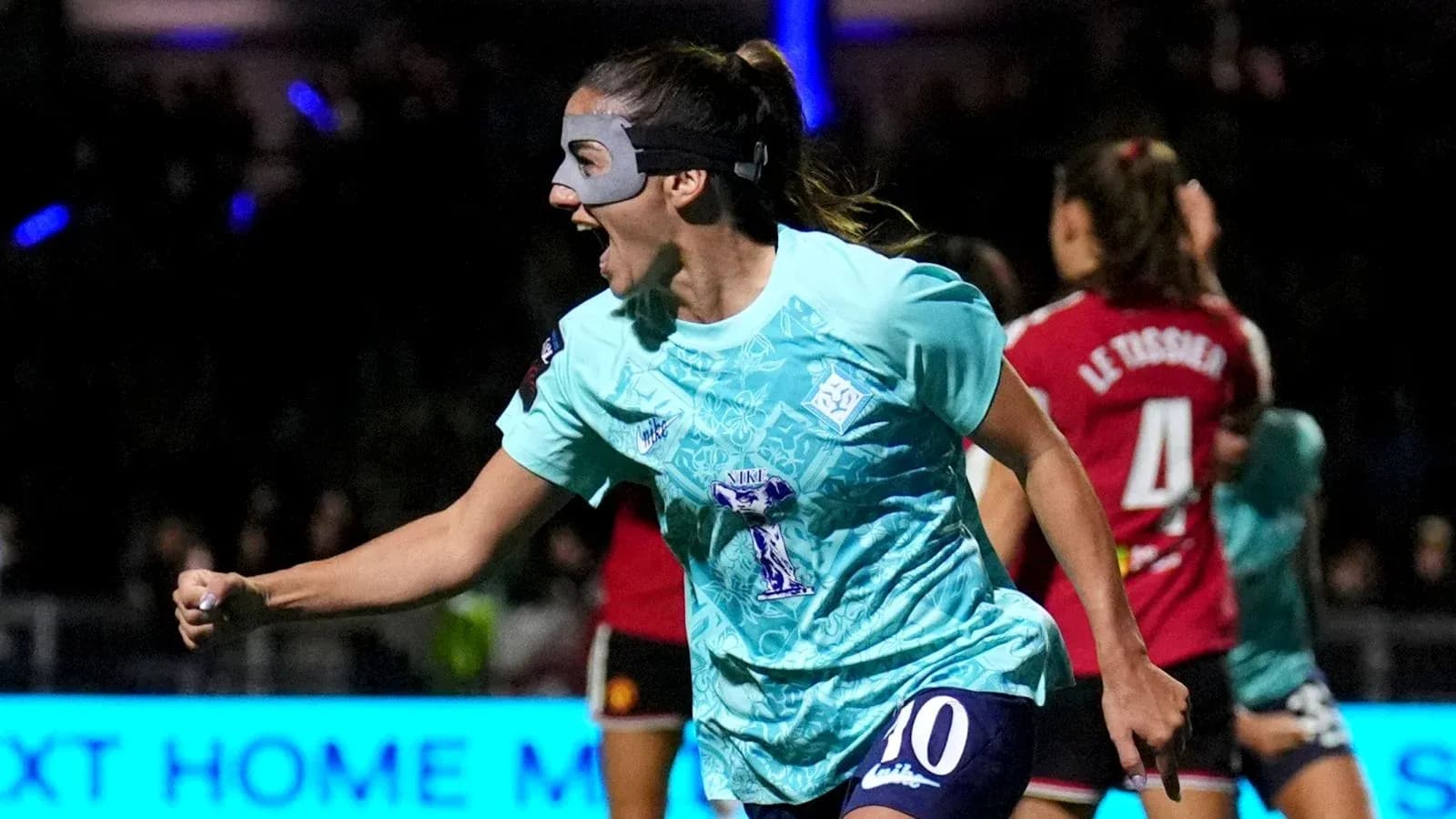
London City Lionesses ushered in their new superstar era with a statement win, easing past a flat Manchester United 2-1 at a packed Hayes Lane to open the 2026/27 season.
All eyes had come for Alexia Putellas. The two-time Ballon d'Or winner walked out into a sell-out crowd, the emblem of Michele Kang’s lavish rebuild and the symbol of a club suddenly thinking in titles, not survival. Yet when the breakthrough came, it was as scruffy as they come and from the wrong player in red and white.
A chaotic first blow
Nine minutes in, London City swung a hopeful ball into the box. Julia Zigiotti and Alanna Kennedy grappled for position, bodies tangled, arms everywhere. Zigiotti got there first – and planted a perfect header past her own goalkeeper.
An own goal. The first strike of the new WSL campaign. Not the glamorous script anyone had written, but it suited London City just fine.
From that moment, Eder Maestre’s side took a grip and refused to loosen it. They kept United at arm’s length, dictating tempo, shuffling the ball through their new core with a calm that screamed experience and ambition.
Rosa Kafaji buzzed between the lines, demanding the ball, snapping into spaces. Mapi Leon marshalled from the back, stepping out, breaking lines. Putellas, still clearly short of full rhythm, knitted play together with those familiar angles and disguised passes that bend games to her will. Janni Thomsen slotted in as if she had been here for years.
United, by contrast, never really arrived in the first half. Their manager Eva Olid admitted as much later: “We were not us.” On the pitch, that showed as sideways passes, hesitancy in possession, and a team that looked overawed by the quality in front of them.
London City in control
The pattern barely shifted after the break. Kafaji almost produced the second goal herself early in the second half, stepping inside and unleashing a fierce long-range drive that forced a sharp save from Phallon Tullis-Joyce. It was a warning that London City could hurt United from distance as well as through their intricate combinations.
There was one sour note for the hosts. Around the hour mark, Lucia Corrales went down clutching her shoulder and could not continue. She left the pitch in clear discomfort, a jarring interruption to what had otherwise been a near-perfect afternoon.
Yet the control never really slipped. London City moved the ball with assurance, recycling possession, dragging United’s press into dead zones. With Mary Earps and Kadidiatou Diani not even required from the bench, the message was unmistakable: this squad runs deep.
Olid tried to spark a reaction, and United did improve after half-time. They showed more intent, more willingness to have the ball, as their coach had demanded in the dressing room. But intent without incision rarely troubles this level of opposition. For all their extra possession, United barely laid a glove on London City’s back line.
Van de Donk’s touch of class
The pressure finally told with eight minutes left. A slick move carved United open, and Danielle van de Donk, alive as ever in the chaos, applied the finish that matched the occasion.
The ball arrived into the box with bodies converging. Van de Donk, back to goal, produced a deft, instinctive flick – the kind of improvisation that separates the good from the elite. The ball skipped past Tullis-Joyce and into the net. 2-0. Game over.
It was a moment that summed up London City’s new identity. Not just dominant, but daring. Not just organised, but expressive. The kind of football Maestre has been preaching and, on this evidence, now has the players to fully deliver.
From the touchline, Maestre cut a satisfied figure. Later, he spoke of dominance, identity, togetherness, and targets. It all sounded like a coach who knows this is only step one of a much larger plan.
United’s late flicker
United finally found a sliver of joy in the final act. Deep into stoppage time, with the result already sealed, substitute Simi Awujo pounced to tuck away a late consolation. It was, remarkably, United’s only shot on target.
That statistic told the story better than any soundbite. While the scoreboard read 2-1, the gulf in control, confidence and quality felt far wider.
Olid’s post-match verdict was blunt. The first half, she said, bore no resemblance to the team she has been building. The second-half response showed more of their principles, but she knows 40 minutes of possession and a single shot on target will not cut it against this new-look London City.
A new force, and a clear warning
As the players walked off, Putellas waved to the crowd, Leon chatted with team-mates, Kafaji soaked in the noise. Up in the stands, owner Michele Kang watched a blueprint come to life: star names on the pitch, a full stadium, and a performance that backed up the hype.
This was not a flawless display. Early-season rust showed in patches, and Corrales’ injury will be a concern. But the fundamentals were there – structure, swagger, and a bench strong enough to leave world-class talent unused.
For London City Lionesses, this felt like the beginning of something serious.
For Manchester United, it felt like a stark reminder: in a league accelerating at this pace, 40 good minutes is no longer enough.