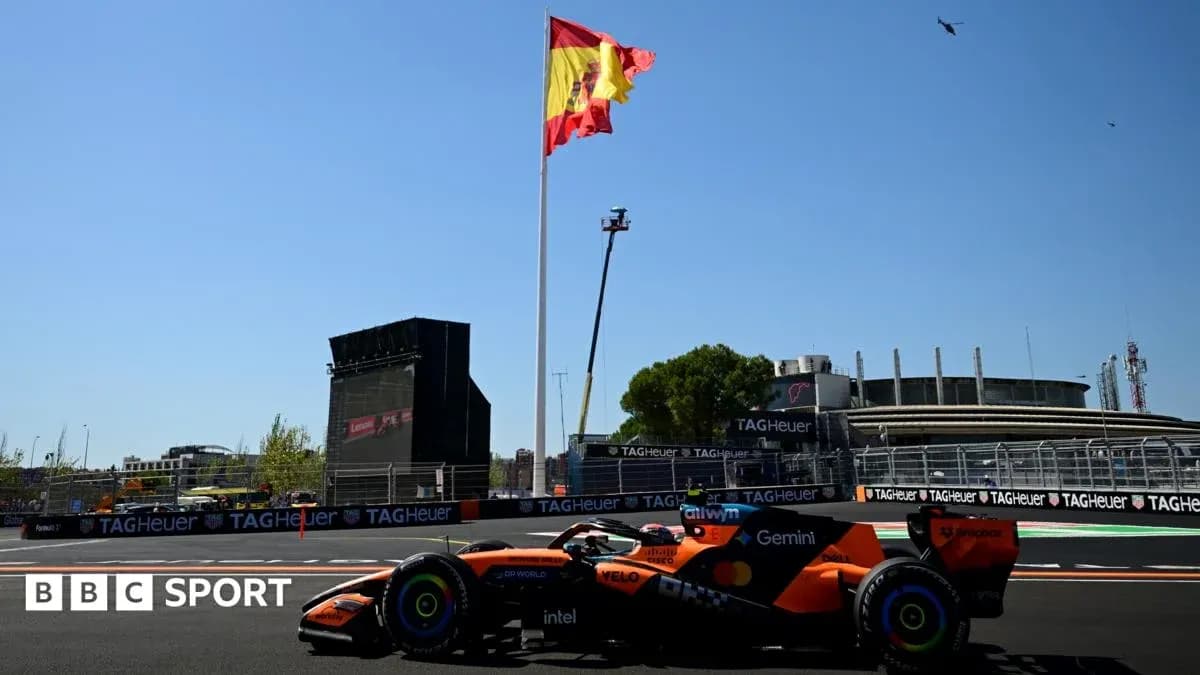
The Spanish Grand Prix’s bold new home in Madrid delivered spectacle off the track – and a flat line on it. After a weekend of muted racing and sharp driver criticism, organisers are already preparing to redraw the Madring layout for 2025.
The setting impressed. The racing did not.
Drivers left the inaugural event frustrated by a circuit that punished mistakes over a single lap but strangled any hope of real combat on Sunday.
Alex Albon did not bother dressing it up. The Williams driver called the race “pretty boring”. Audi’s Gabriel Bortoleto went even further, admitting he “almost fell asleep”.
World champion Lando Norris, never shy of a blunt assessment, summed up one section of the track as “useless” and concluded: “It was not a great racetrack.”
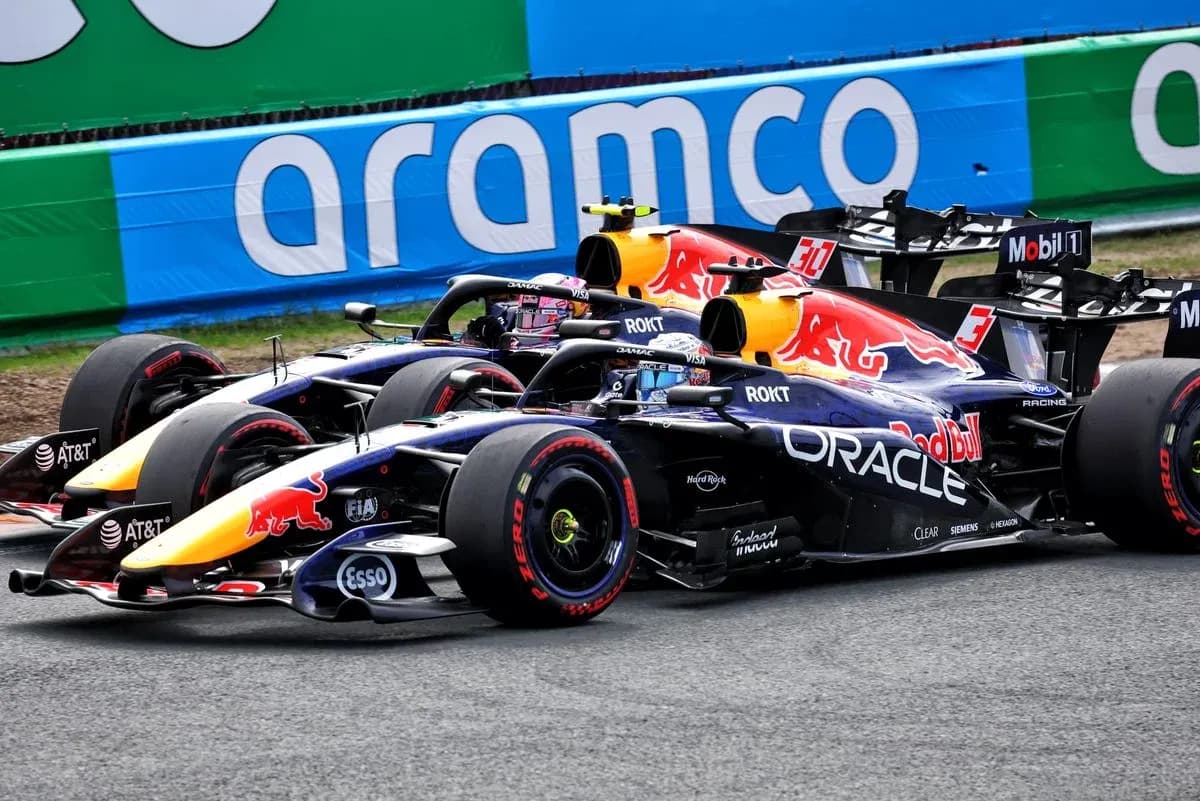
The complaints centred on one theme: no overtaking, no jeopardy, no real fight.
Kimi Antonelli, who won the race, still sounded more relieved than thrilled. The Italian highlighted how the layout actively discouraged drivers from attacking.
“It definitely doesn't create overtaking opportunities and it doesn't push you to try and make a move because 80% of the time you might have a contact,” he said. “There are some corners that need to be changed to create more overtaking opportunities because right now, yes, it's nice over one lap, but for sure in the race you're just stuck behind.”
Norris drilled into the detail. His main target: the slow, fiddly closing sequence.
“There are some obvious changes they should make,” he said. “They should get rid of [Turns] 18, 19 – useless. Just have more of a straight into a hairpin.
“I don't know how someone looks at this design and goes, ‘mint’.
“There's a lot of opportunity. They can make it into a track that's good for racing, and I'm excited to come back here next year if they can make these changes because I think it's a track that is good fun to drive and it can be a great racetrack.”
So the layout came under fire. The venue, though, drew almost universal praise from inside the paddock.
Team principals lined up to applaud what Madrid has built around the track at the Ifema exhibition centre, a stone’s throw from the city’s international airport. They see a modern, flexible campus with room to grow – and, crucially, room to change.
Ferrari boss Frederic Vasseur struck that balance clearly.
“First, I have to say that we can discuss about overtaking, but overall, for me, the event was mega,” he said. “The infrastructure, we were mega welcome in the city. We have also to be fair with them and to congratulate Madrid for the job done on this side.
“They are keen to do modifications in the future. They have probably more latitude in Madrid than in Monaco to change something. Let's work together to see if we can do something. But overall, I think we have to be fair with them. It was a good effort.”
Mercedes team principal Toto Wolff went even further in his praise for the debut.
“For a first [race], it's probably one of the best, or maybe the best, that I've seen so far,” he said. “It's a temporary circuit. They've built something that is challenging for the drivers. A mini Macau or a mini Monaco. The location is good.
“We’re thinking about how much more can we do next year in terms of the events here or presentations because we have the space and that's very rare. So I would say congratulations for a first.”
Then came the sting in the tail.
“And then it's the tricky bit. Doing a track that is spectacular also for the drivers. And then building it in a way that there is lots of overtaking.
“I had a discussion yesterday with the CEO of the circuit and they are totally open-minded about next year and say we've had the discussions with the FIA – ‘what is it we should do? How is it that we should lay the track out when it comes to overtaking also?’
“There is a constant discussion and I think that they are on it and understand that we can tweak it a little bit here or there.”
That open door is critical. The Madring is not a fixed, carved-in-concrete classic. It is a hybrid: part existing roads within the Ifema complex, part purpose-built sections, including the visually striking banked Turn 12, La Monumental.
Because large chunks of the layout must be reinstalled each year, the circuit has a rare luxury in modern F1 – genuine flexibility.
Madring managing director Luis Garcia Abad, formerly Fernando Alonso’s manager, did not respond to requests for comment from BBC Sport on Monday. But he had already made the organisers’ position clear after the race.
“The FIA defined clearly which is the way to improve the track layout, and we will be open because we will have to reinstall the track for the next year,” he told Autosport.
“I really believe that the drivers enjoyed qualifying a lot. But for sure we will try to make an improvement for next year.
“We have the space, we have a venue, we have the facilities, we have the capacity to do it. I'm sure that FOM, FIA and ourselves, we will try. If we can improve something, we will do it.”
Inside the paddock, that willingness to act has bought Madrid time. Outside it, the reaction was far less forgiving.
On social media, fans shared pictures and stories that clashed sharply with the polished images beamed worldwide. Complaints ranged from poor access and visibility to broken facilities and spectators forced to sit on bare earth at trackside. The word that kept surfacing: unready.
Organisers had always been racing the clock to deliver the first event, and the rushed build showed in places the cameras rarely lingered.
So the new Spanish Grand Prix has split into two stories. One is a city that embraced F1, a venue with huge potential and a paddock impressed by the ambition and infrastructure. The other is a circuit layout that suffocated the race and a fan experience that, for many, fell short of the price and the promise.
The next move belongs to Madrid, FOM and the FIA. They have the space. They have the mandate. Now they have a year to turn a showpiece setting into a circuit worthy of the noise it generates.