The Madring had the lights, the noise, the skyline and the hype. It had the kind of single-lap thrill that makes drivers grin and engineers purr.
What it didn’t have was a motor race.
A Circuit Built for Qualifying, Not Combat
On paper, a brand-new layout in 2026 should be the ultimate blank canvas. Start with nothing, end with a track that lets the best drivers in the world fight wheel-to-wheel. That’s the job.
Madrid got halfway there.
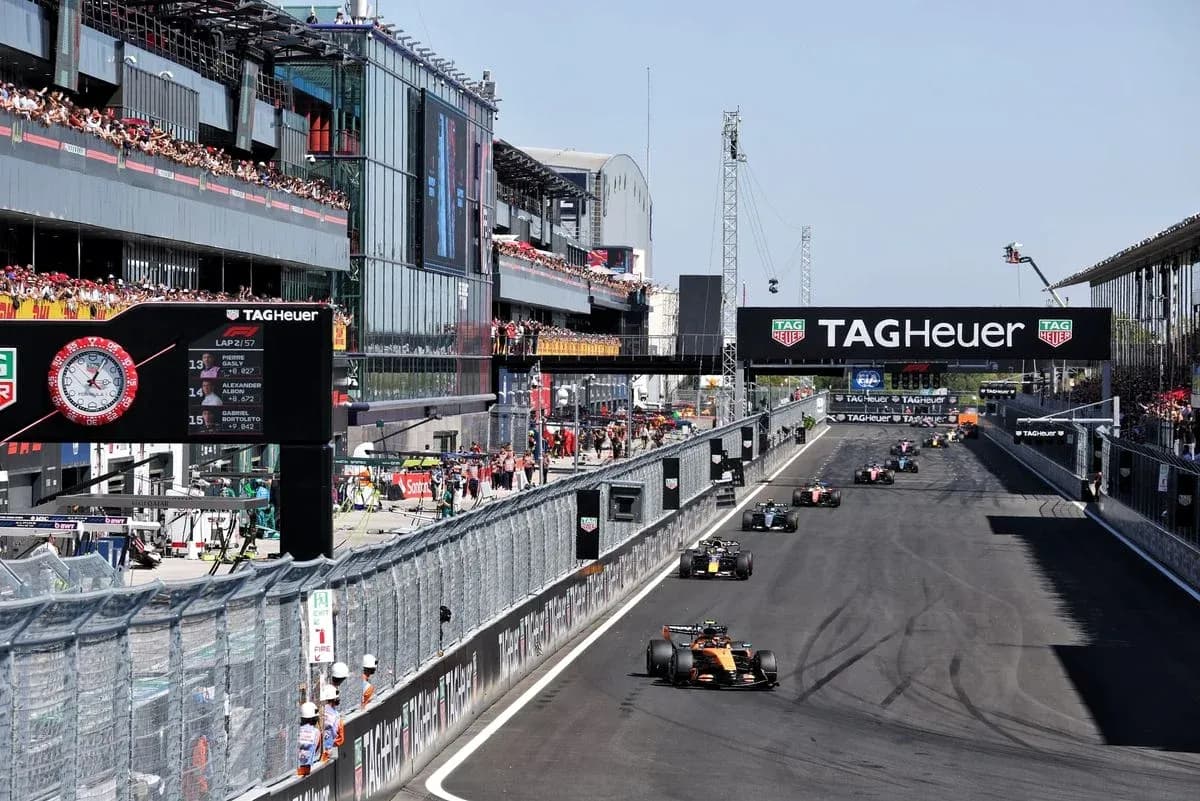
The Madring is a great time-attack circuit. One lap, low fuel, soft tyres – it looks spectacular and it asks plenty of the drivers. F2 and F3 proved that with the usual junior chaos. The corners flow, the commitment is obvious, and from the cockpit it’s clearly a proper test.
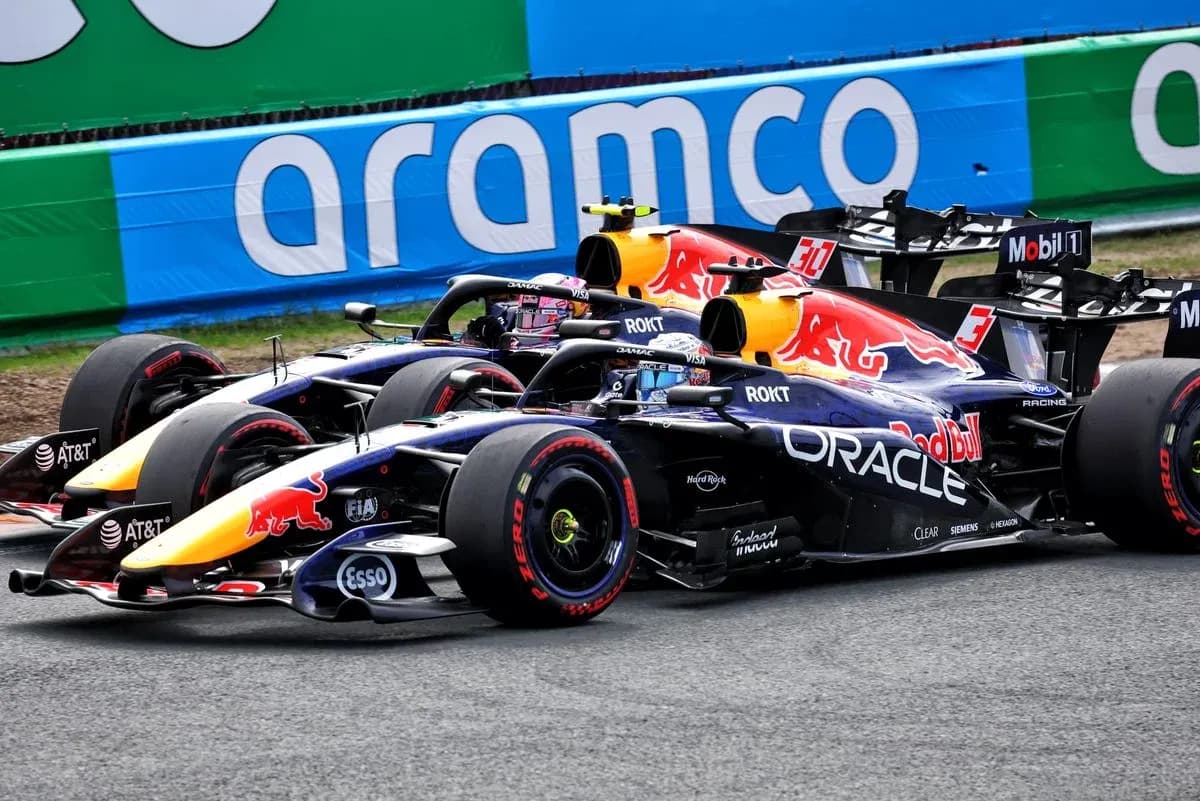
But for F1 on a Sunday, the design falls apart. There’s no obvious, honest overtaking zone. The track pinches where it should open up. The braking zones that should invite a lunge are cluttered with steering input and compromised lines.
You can build the most glamorous event in the world – fan parks, transport links, city-centre vistas – but if the cars can’t pass, the whole thing collapses as a sporting contest. And the worst part? This wasn’t a surprise. The moment the layout dropped, the warning lights were flashing. Nobody in power reached for the reset button.
A Tradition F1 Could Do Without
Madrid hasn’t broken the F1 mould. It’s joined a grim tradition.
Once again, a new addition to the calendar has produced a circuit where overtaking is almost impossible. That’s becoming an art form in itself. It shouldn’t be.
From the outside, the Madring looks fun to drive. From the inside, it clearly is. The weekend also avoided the wall-bashing carnage some had predicted, though Ollie Bearman’s FP3 accident exposed another flaw: the time it took to repair the Tecpro barriers. Getting the car cleared was easy. Getting the barriers back into place was slow and faintly farcical – a couple of marshals wrestling with equipment designed to stop a 900kg F1 car at speed.
Then the race underlined another modern F1 problem: the lottery of the VSC and safety car. Lando Norris, by general consensus in the paddock, had done enough to win on pace. His McLaren was quick enough that, on a proper racing circuit, he should have had multiple chances to fight through. Instead, Lance Stroll’s off and the resulting VSC ripped the race away from him.
This is not a complex issue. The tools exist to stop neutralisations deciding grands prix in this way. Yet the rulemakers leave it alone.
A Few Walls Away From Being “Mint”
What makes Madrid so frustrating is how close it feels to being right.
The Madring isn’t one of those fixed-road, no-wiggle-room street tracks. There was flexibility here. It was built with F1 as the headline act, not as an afterthought behind F3 or touring cars. And still, the racing product was neutered.
Street tracks are never going to be wide, forgiving playgrounds. But this one is narrow in all the wrong places. The spots where you’d expect drivers to get creative are funnelling them into single-file processions. The sections that should be about clean, hard braking and a decisive move are tangled up with combined braking and turning, which kills confidence to attack.
Shift a few walls. Flatten a couple of braking zones. Give the drivers somewhere to commit without feeling like they’re flipping a coin with the barriers. That’s the maddening thing: it feels only a handful of sensible tweaks away from being outstanding.
The comparison that kept coming up all week was Macau – a place where overtaking is notoriously difficult outside its long straights, yet still adored for its challenge. But Macau is locked into existing roads. Madrid wasn’t. It had room to breathe and chose not to use it.
A big chance slipped by.
When Strategy Is All You’ve Got
There’s a valid argument that not every circuit on a 24-race calendar needs to be a divebomb playground. A couple of venues where strategy and tyre life do the heavy lifting can add variety.
Madrid might eventually fit that niche. Onboards and trackside shots showed a fast, visually striking lap. Reports from the ground talked up the event itself – the atmosphere, the setting, the buzz.
But this first race was simply too flat.
A car as quick as Norris’s McLaren should not be condemned to staring at the gearbox ahead with no realistic route past once delayed. Charles Leclerc should not be able to cling on for so long without a stop purely because no one can find a way by. Too many drivers were parked in traffic with no escape route, and with that went any real tension.
The fix might not even demand a bulldozer. A braver tyre compound choice could force degradation, open strategy windows, and drag some jeopardy into proceedings. Combine that with a handful of layout tweaks and the whole thing changes character.
For now, Madrid has nailed the show around the race and the sensation of a single lap. But when the chequered flag fell, the lingering feeling was simple.
This should have been a statement debut. Instead, it was a warning.