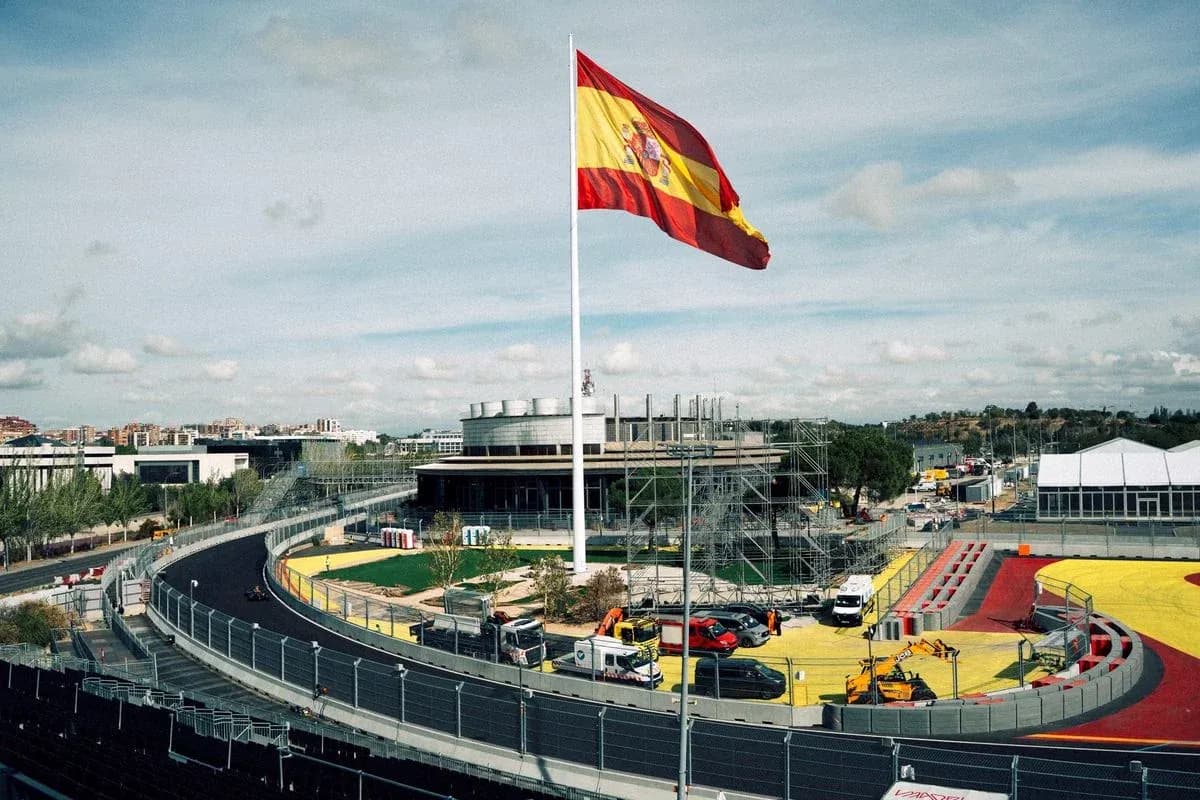
Formula 1 has a new playground this weekend. It isn’t friendly. It isn’t forgiving. And, if the early evidence is anything to go by, it might chew up a few cars before Sunday night in Madrid.
The Madring, the brand-new home of the Spanish Grand Prix, has already earned a reputation before a single F1 lap has officially counted. “A track that kills cars,” is how Williams team principal James Vowles described it after watching Formula 3 test there. The numbers back him up: 19 red flags in two days, three broken chassis, a long list of shattered suspension parts, and a paddock full of F3 teams quietly fuming at the repair bills.
This is no sterile, wide-runoff Tilke clone. Drivers who’ve sampled it call it a mash-up of Monaco, Macau and Jeddah. Old-school, narrow, lined with walls that don’t politely peel away from the racing line. Corners with character. Corners with consequences.
And the sport is only just waking up to what it has signed up for.
A Circuit That Bites Everywhere
The F3 test, requested by the circuit organisers as a live shakedown to avoid a Las Vegas-style embarrassment, became something else entirely: a warning.
What really unnerved teams wasn’t just the volume of incidents. It was where they happened. The red flags were scattered around the lap. No single “problem corner” to manage. Instead, a dozen places where a tiny error can end with a car in the wall and a finance director reaching for the headache pills under the 2026 cost cap.
Audi-backed F3 championship leader Freddie Slater, who loved the place but left it with a clear understanding of its brutality, summed it up simply.
The corners are tight. The walls are close. They don’t drift away from you on exit like at so many modern venues. You’re always trying to drive away from concrete, not lean on the full width of the track. To be fast, you have to push. If you don’t push, you’re nowhere. That tension — between commitment and survival — is exactly why so many F3 cars ended up damaged.
Slater still called it one of the best tracks on the calendar, likening it to old-school UK circuits and Macau. High praise. But that admiration comes with a caveat: it punishes hesitation and greed in equal measure.
The First Big Trap
The lap opens with a slow chicane, reminiscent of Jeddah’s fiddly first sector, before the cars fire flat-out through Turns 3 and 4. Then the circuit bares its teeth.
The second chicane is the first real car killer. High-speed, blind, and with a wall that comes at you on exit. During the F3 test, it collected car after car. The temptation is obvious: nail it, and you carry huge speed up the hill that follows. There’s a lot of lap time to be found there. Too much, for some.
The kerbs don’t help. They’re harsh, not the kind you can ride and get away with. Get the line or the angle slightly wrong and the trajectory is brutally simple: head-first towards concrete. Whatever the onboard laps from sims might suggest, this is not a place where you lazily skip over the kerbs and live to tell the tale.
To make matters more uncomfortable, the approach to that chicane is one of only two “straight mode” zones on the track. F1 cars will be arriving at around 340km/h. It’s not the sort of place where anyone wants a straight mode failure or a sudden loss of control.
Survive that, and the lap still doesn’t breathe. You duck under an underpass and climb into another complex that claimed its share of F3 victims. The Madring doesn’t really have a “warm-up” phase. It just keeps asking questions.
La Monumental: Spectacle With a Sting
The showpiece is La Monumental, a 24% banked corner that makes Zandvoort’s banking look modest. But the real danger, F3 drivers found, lies in the build-up to it.
A tight chicane, then a rapid right-left at Turns 10 and 11. The sequence is easy to misjudge, and any mistake there sends you into La Monumental in completely the wrong shape.
Pirelli’s chief engineer Simone Berra has already called La Monumental “the most severe turn” on the calendar. Compared with Zandvoort’s banked section, he says the Madring’s monster corner loads the tyres with 20–30% more energy. That’s a huge leap in stress.
Unlike Zandvoort, where the banking is more power-limited, La Monumental is grip-limited. The tyres and suspension will be working at the edge just to give drivers the confidence to hold it flat. The exit is blind. The bottoming can be severe if you pick the wrong line over the crest. It looks straightforward from the outside. It isn’t.
In F3, it was almost flat. In F2 and F1, it will be a different kind of challenge. Drivers experimented with lines all test long. Expect the same in FP1, as F1’s best try to find a compromise between speed, tyre life and survival.
And remember: this is only halfway through the lap.
The rest of the circuit continues in the same vein — tight, technical, relentless. Corners like the Turn 17 right-hander offer no respite. There is barely a moment to relax or reset. Go conservative, and you’re slow. Push, and you’re flirting with carbon-fibre confetti.
Monza F3 sprint winner Taito Kato put it bluntly: to gain time, you have to get close to the wall. That’s risky. That’s also why it’s fun.
Dangerous, Or Just Demanding?
In Monza, the F1 drivers compared notes during the parade. Carlos Sainz admitted “everyone seemed quite shocked” by what Madrid has produced. Shocked, he clarified, in a good way: F1 has added a track with real character rather than another anonymous street loop.
Still, the F3 carnage has sharpened minds. Sainz, an ambassador for the race, expects a weekend littered with safety cars, red flags and yellow flags in qualifying. He isn’t alone.
Audi’s future F1 driver Gabriel Bortoleto called it dangerous, challenging, and exciting in the same breath. Sergio Perez, asked if it crossed a line, simply said it didn’t look any more dangerous than Jeddah. That’s hardly a reassuring benchmark. Jeddah has already produced its share of huge crashes, including Mick Schumacher’s violent 2022 qualifying shunt that sidelined him for the race.
So the Madring sits in that grey zone: within modern safety standards, but absolutely capable of destroying a car if a driver overreaches.
There is a positive angle. A high-risk, technical layout with many low-speed corners opens the door for drivers to make a real difference. Arvid Lindblad has already called it “a real drivers’ track”. The expectation in the paddock is for a ferocious, knife-edge qualifying session where the margins are razor-thin and one brave lap could spring a Monza-style shock.
The flip side? Those same qualities might suffocate the race.
A Spectacle On Saturday, A Procession On Sunday?
As the weekend looms, one theme keeps surfacing: qualifying will be spectacular. The grand prix might not be.
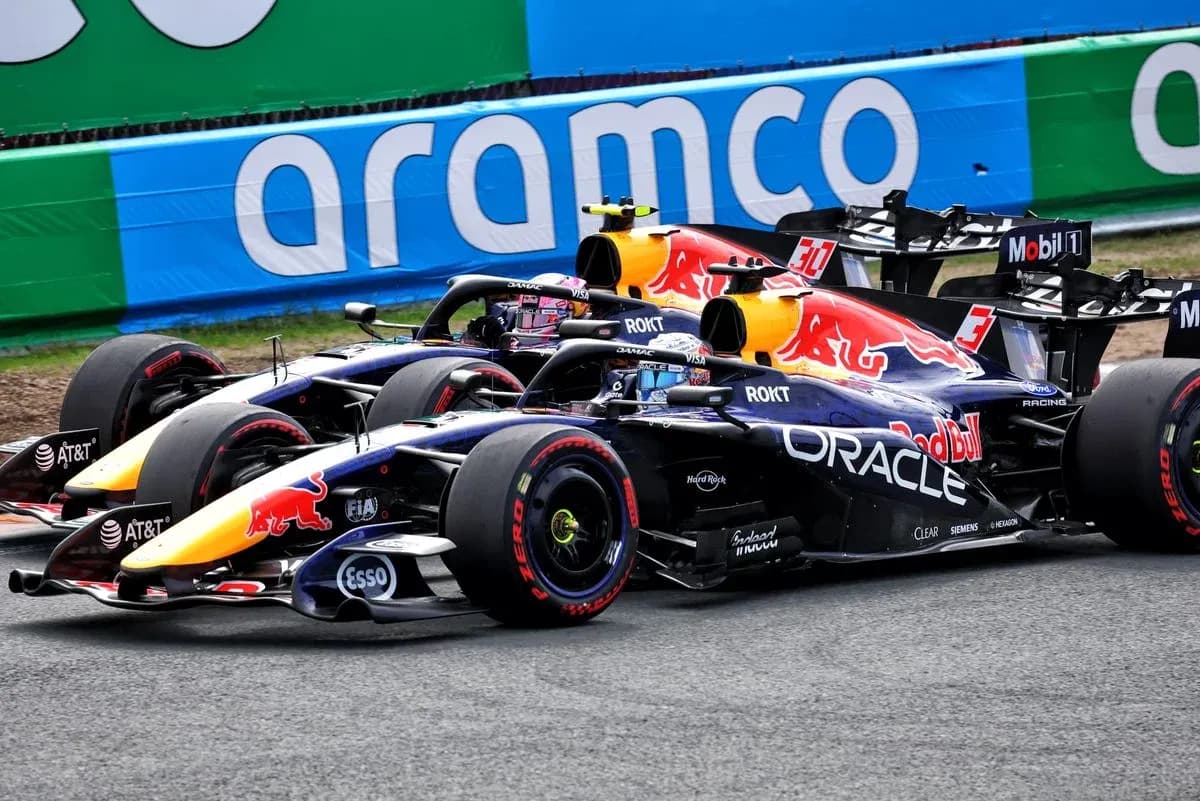
The Madring is tight. It has very few proper straights. Heavy braking zones are scarce. Overtaking spots are, at best, limited and, at worst, almost non-existent. The energy deployment picture suggests something more like Hungary than the slipstream shootouts of Monza, Silverstone or Spa.
Alex Albon didn’t even bother dressing it up. “I don’t think there’s going to be any overtaking,” he said, half-joking that fans should have got their fix in Monza and lower expectations for Madrid.
Chaos might rescue the show. Safety cars, red flags, restarts — they can all shake a race up. There’s also the wildcard of F2 and F3 pounding around before the main event, with five races between them, including F3’s title decider. That means a green, unforgiving track will evolve rapidly, rubbering in, and perhaps catching teams out as conditions change.
The comparison with Baku’s debut is hard to ignore. Ten years ago, GP2 delivered an absolutely wild weekend there, with 17 retirements across two races. The F1 field saw the carnage, dialled back the risk, and the inaugural grand prix turned into a surprisingly dull procession. The chaos everyone expected arrived in later years instead.
Sainz remembers that dynamic well. He points out that F1 drivers, carrying the responsibility of representing hundreds or thousands of people back at the factory, tend to be more disciplined when the cost of a mistake is a destroyed car and a shortage of parts. The cars are faster and, in some ways, easier to crash, but the experience level is higher and the risk calculus is different.
He also expects the field to help shape the circuit as the weekend unfolds. Even during FP1, drivers can flag problem kerbs or features to the race director and the FIA, prompting tweaks to reduce unnecessary danger without neutering the challenge.
Still, there’s a sense of inevitability. Someone will overstep. Someone will pay.
Madrid’s Audition
Sainz has urged patience. He doesn’t want snap judgments on the Madring after one race. He wants a proper debrief, a clear-eyed assessment of what worked and what needs fixing. He freely admits F1 must see whether the track produces “a bit too much” chaos. Some elements will be great. Others, less so.
He points to Miami as the template. Its 2022 debut was, in his words, “a bit of a disaster”. A year later, the event had matured into a strong grand prix weekend. Madrid, he argues, deserves the same runway.
But the reality is harsher. With cities around the world queuing up to host F1, Madrid can’t afford to be forgettable. Even with a 10-year contract in its pocket, it needs impact. Identity. A reason to exist on a calendar that is already bursting at the seams.
On that front, the Madring has at least nailed one thing. Nobody is calling it bland.
It’s a car killer. It’s old-school. It’s wild in places. It should deliver a qualifying session that has drivers hanging it out millimetres from the wall, chasing glory and flirting with disaster.
The real test comes on Sunday. Can this brutal new street labyrinth turn that raw, edgy spectacle into a race worthy of its fearsome reputation? Or will the walls of Madrid watch a high-speed parade instead of a fight?