The Madring barely has its tyre barriers packed away and already the bulldozers are being warmed up.
Organisers of the Spanish Grand Prix in Madrid have accepted that their striking new 5.4km layout needs work if it is to deliver the kind of racing Formula 1 expects when it returns in 2027. The FIA has already sent through a first set of recommendations. The message is clear: keep the challenge, fix the racing.
The circuit, wrapped around Madrid’s IFEMA fairgrounds, impressed the paddock on arrival. Teams and drivers lauded the facilities. The flowing, medium to high-speed corners made qualifying a knife-edge exercise, with mistakes punished and confidence rewarded. As a driving experience, it worked.
As a racetrack, it didn’t.
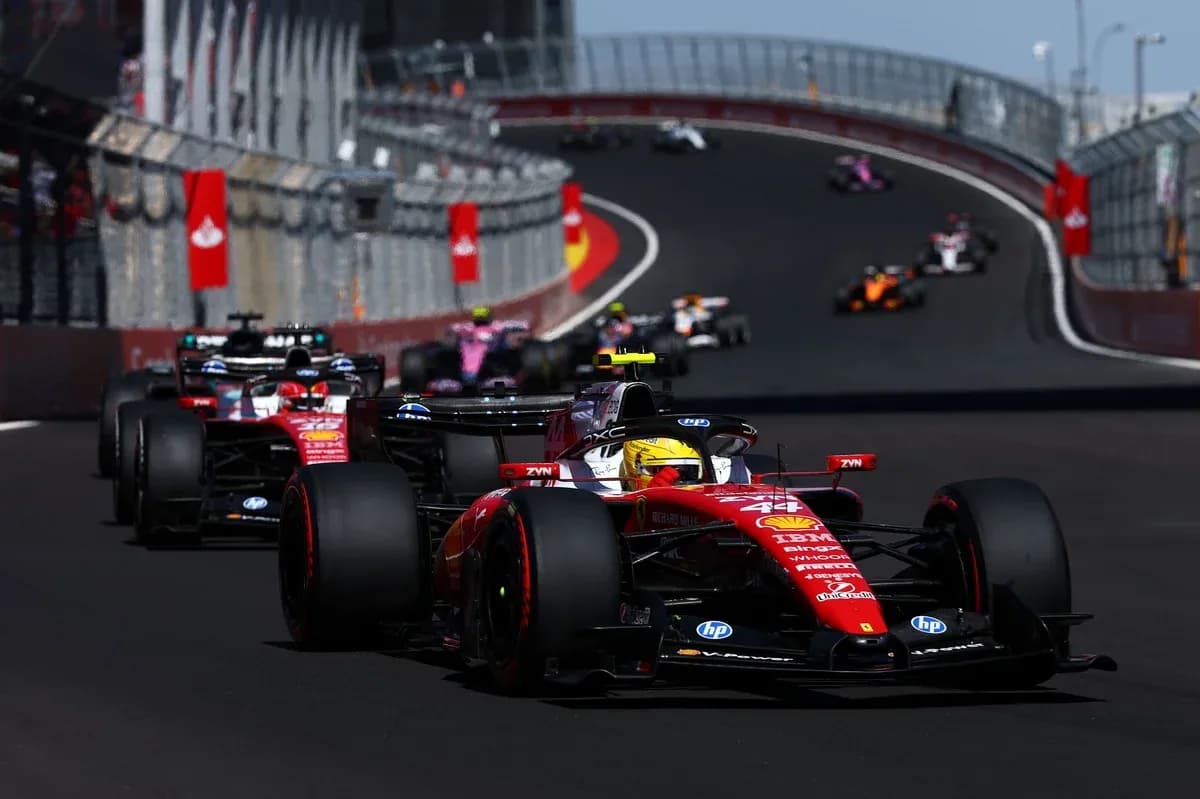
Across F1, F2 and F3, the weekend fell flat once the lights went out. The layout simply did not offer enough genuine chances to pass. The main hope had been the Turn 5 chicane, placed at the end of the circuit’s longest straight, but its awkward geometry turned a would‑be overtaking hotspot into a frustration zone.
Drivers voiced that frustration in Friday night’s briefing. Too many combined corner entries, they argued, forced cars to brake and turn at the same time, handing a defensive advantage to whoever held track position. The long, time‑sapping pitlane only compounded the problem, killing off the appetite for bold strategy calls that might have shaken the order.
Speaking to Motorsport.com after Sunday’s race, event managing director Luis Garcia Abad did not try to hide from the criticism. He leaned into it.
“Being honest with you, the FIA defined clearly which is the way to improve the track layout, and we will be open because we will have to reinstall the track for the next year,” he said, underlining that the temporary elements give Madrid a rare chance to reshape its new toy.
He remains convinced the drivers enjoyed the qualifying battle. But the mandate has shifted. Spectacle on Saturday is not enough; Sunday has to breathe.
Last weekend’s race was only the first of a 10‑year deal, and that long horizon gives Madrid room to be bold. The northern half of the track was drawn on a blank canvas across empty land, and that blank canvas still exists. Abad made it clear they intend to use it.
“We have the space, we have a venue, we have the facilities, we have the capacity to do it,” he said. “I’m sure that FOM, FIA, and ourselves, we will try. If we can improve something, we will do it.”
The pressure is not just coming from the rulemakers. It is coming from the very top of the grid.
World champion Lando Norris did not mince his words after the race. For him, the Madring splits in two: thrilling on one lap, thin on the wheel‑to‑wheel combat that defines a great grand prix.
“To me, it’s not a great racetrack. It’s great in qualifying,” he said, before outlining a simple, aggressive fix: cut the fiddly end section and let the cars race.
A straight blast from Turn 17 to Turn 20, with a wide, inviting braking zone – something in the mould of Austin’s Turn 1 or Turn 10 – is what he believes the layout cries out for. A big hairpin. A proper lunge point. Somewhere a driver can sell a dummy, hang on around the outside, or dive late and make it stick.
“You’ll create much better opportunities for everyone and you’ll be able to enjoy the race,” Norris argued.
He also pointed at the Turn 5–6–7 complex, where the current demand to turn and brake at once “basically defeats the whole object of racing”. If the following car cannot attack under braking because the car ahead can simply cover the inside while rotating, the move never starts.
Those are the trade-offs Madrid now has to confront. The layout’s character – those sweeping, loaded corners that the drivers relish – is the very thing suffocating the racing. The challenge for Abad and his team is to carve out overtaking zones without neutering the circuit’s identity.
They have time, space and political backing. They have direct guidance from the FIA. They have blunt feedback from a world champion who has just lived it at full speed.
By 2027, the Madring will show whether Madrid wants to be just a spectacular venue, or a permanent fixture in the calendar’s list of must‑watch races.