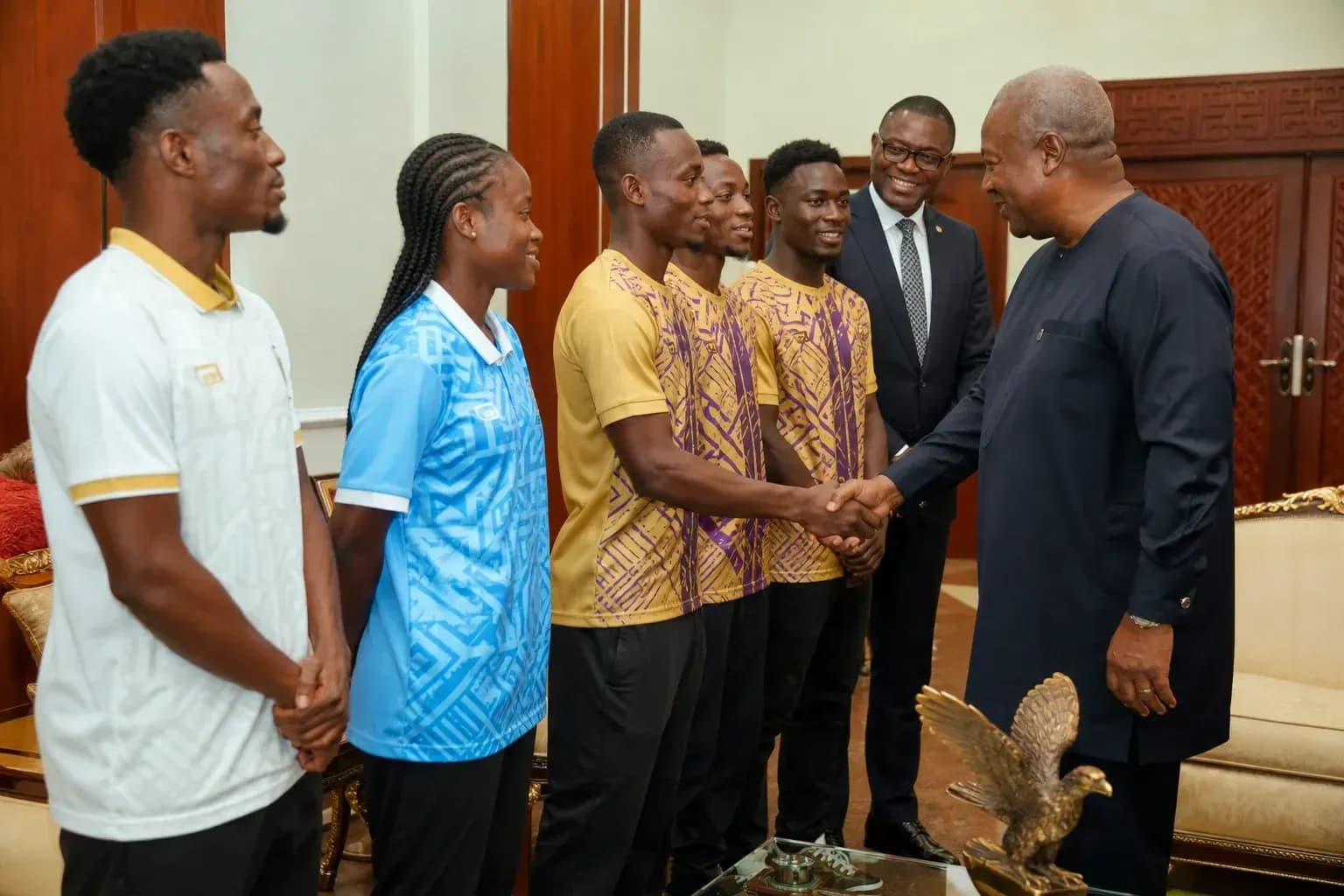
At Jubilee House in Accra, football – not politics – took centre stage. Ghanaian President John Dramani Mahama looked across at representatives of Nations FC, Medeama SC and Ampem Dakoa Ladies and delivered a blunt message: the country is losing its footballing future too early.
“We are selling them too quickly”
On September 8, 2026, during a meeting with the three clubs, Mahama voiced a concern that has echoed around Ghanaian football for years but rarely with such clarity from the very top of government.
As soon as a young player shows a spark, he said, scouts swoop in, deals are struck, and another prospect disappears from the Ghanaian league. The president argued that this conveyor belt of early exits is steadily weakening the domestic championship, stripping it of the very quality it needs to grow.
The pattern is familiar. A teenager breaks through, strings together a handful of standout performances, and within months he is gone – often before fans have even learned his name, let alone watched him develop into a leader on the pitch. Mahama’s view is that this constant outflow is dragging down the standard of competition at home.
For him, the solution begins with time. Ghana, he stressed, must find ways to keep its brightest talents in the national league for longer, allowing them to mature in front of local crowds and within local clubs before taking the next step abroad.
National team as a finishing school
Mahama did not stop at diagnosis. He pointed to the national team as a crucial tool in reshaping the pathway for emerging players.
Promising youngsters, he suggested, should be given opportunities with the national side earlier in their careers. Exposure to international football – the pressure, the tempo, the tactical demands – would serve as a finishing school, toughening them up and rounding out their game while they remain rooted in the Ghanaian system.
In his eyes, that international experience, earned in Ghana colours, would allow players to reach a more mature stage of development before they draw serious attention from international or even local scouts looking to move them on. The aim is not to block careers abroad, but to delay the departure long enough for both player and league to benefit.
Mahama’s stance lays down a challenge to clubs, agents and administrators alike: can Ghana build a domestic environment strong enough, and attractive enough, to convince its next generation of stars to stay just a little longer before chasing the bright lights elsewhere?