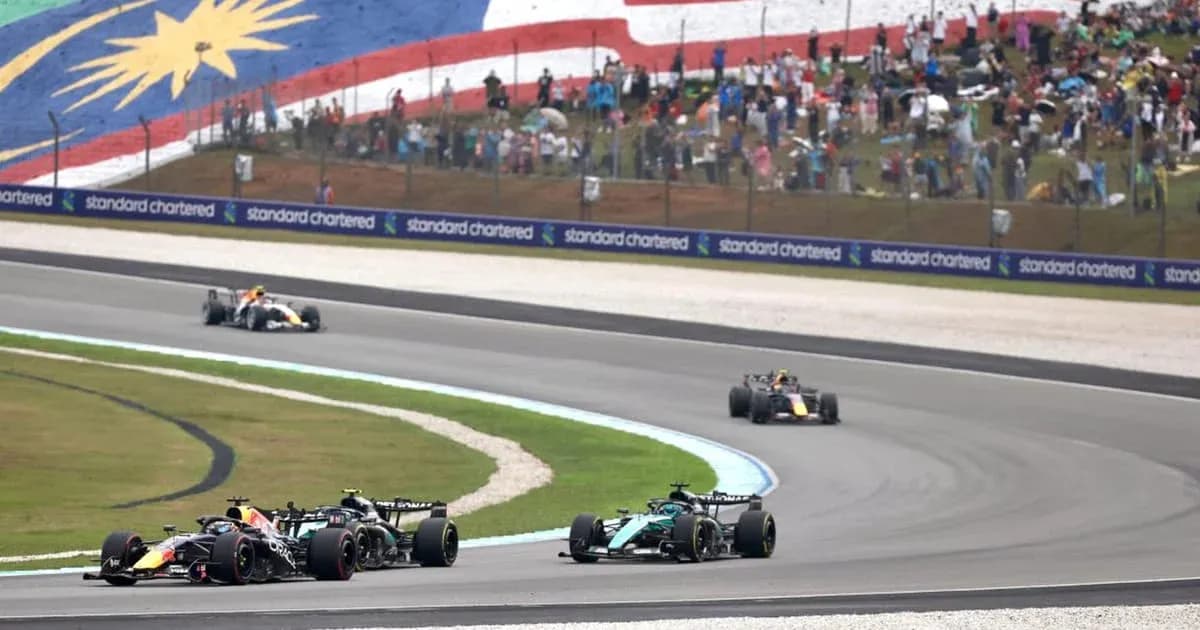
When Formula 1 roared back into Sepang in October, the spotlight fell on the cars, the drivers, the noise. Now, the numbers are making just as much of a racket.
Youth and sports minister Dr Taufiq Johari has revealed that the Bahrain Grand Prix, shifted to Sepang from its original venue due to conflict in West Asia, carried an estimated total bill of RM350 million – a figure that dwarfs the early projections made in the run-up to the event.
The race, held from Oct 2 to 4, marked F1’s first appearance in Malaysia since 2017. It also marked a sharp revision in cost.
From RM40 Million Talk to RM70 Million Reality
Back in July, Sepang International Circuit (SIC) chief executive Azhan Shafriman Hanif had spoken of roughly RM40 million in local preparations, a sum to be shared between Malaysia and Bahrain. A day earlier, Prime Minister Anwar Ibrahim had said the government would only need to rely on the RM16 million already allocated annually for maintaining and upgrading the circuit.
Those numbers now sit awkwardly beside the latest official breakdown.
In a written reply to Nazri Abu Hassan (PN–Merbok), Taufiq said Malaysia’s share of the overall RM350 million cost came to about RM70 million. That amount covered circuit maintenance and operating costs at Sepang. Bahrain picked up the rest of the tab, including hosting fees and other major expenses tied to staging the relocated Grand Prix.
The ministry did not address why earlier estimates of RM16 million and RM40 million have given way to a final figure more than four times higher on Malaysia’s side alone.
Big Bill, Bigger Economic Ripple
The government is keen to stress that the spending did not happen in a vacuum.
Citing figures from Formula One Management, Taufiq said the race generated an estimated RM950 million in economic activity. The money flowed through hotels packed with fans and teams, busy airports, full flights, ground transport, food and beverage outlets, tourism operators and a wide range of service businesses built around the three-day spectacle.
The event also brought jobs. According to the minister, about 7,300 positions were created around the Grand Prix. Of these, 6,167 were in businesses and services catering to visitors, 757 were tied to race operations and infrastructure, and 376 involved F1 teams, sponsors and race operations-related roles.
What the government actually earned from all that activity remains unclear. Taufiq did not disclose how much was collected in taxes, fees or rental income linked to the event, leaving a key part of the financial picture still in the dark.
Crunching the Numbers Before the Next Move
For now, the accounting continues behind closed doors.
Taufiq said SIC and an appointed consulting firm are still assessing the full costs and economic benefits of hosting the race. Their findings will shape one of Malaysian motorsport’s biggest questions: should the country bring Formula 1 back on a regular basis?
Malaysia hosted the F1 Grand Prix from 1999 to 2017, building Sepang into one of the calendar’s most recognisable venues before walking away as hosting costs climbed and returns were questioned. The sudden return of F1 this year, triggered by turmoil in West Asia and the relocation of the Bahrain Grand Prix, offered a one-off glimpse of what the sport can still bring to the country.
Now the engines are silent again at Sepang. The next decision will not be made in the pit lane or on the starting grid, but in meeting rooms, with spreadsheets and economic models replacing lap times. Is RM70 million – inside a RM350 million global bill – a price Malaysia is willing to pay again for the prestige and economic surge of Formula 1?