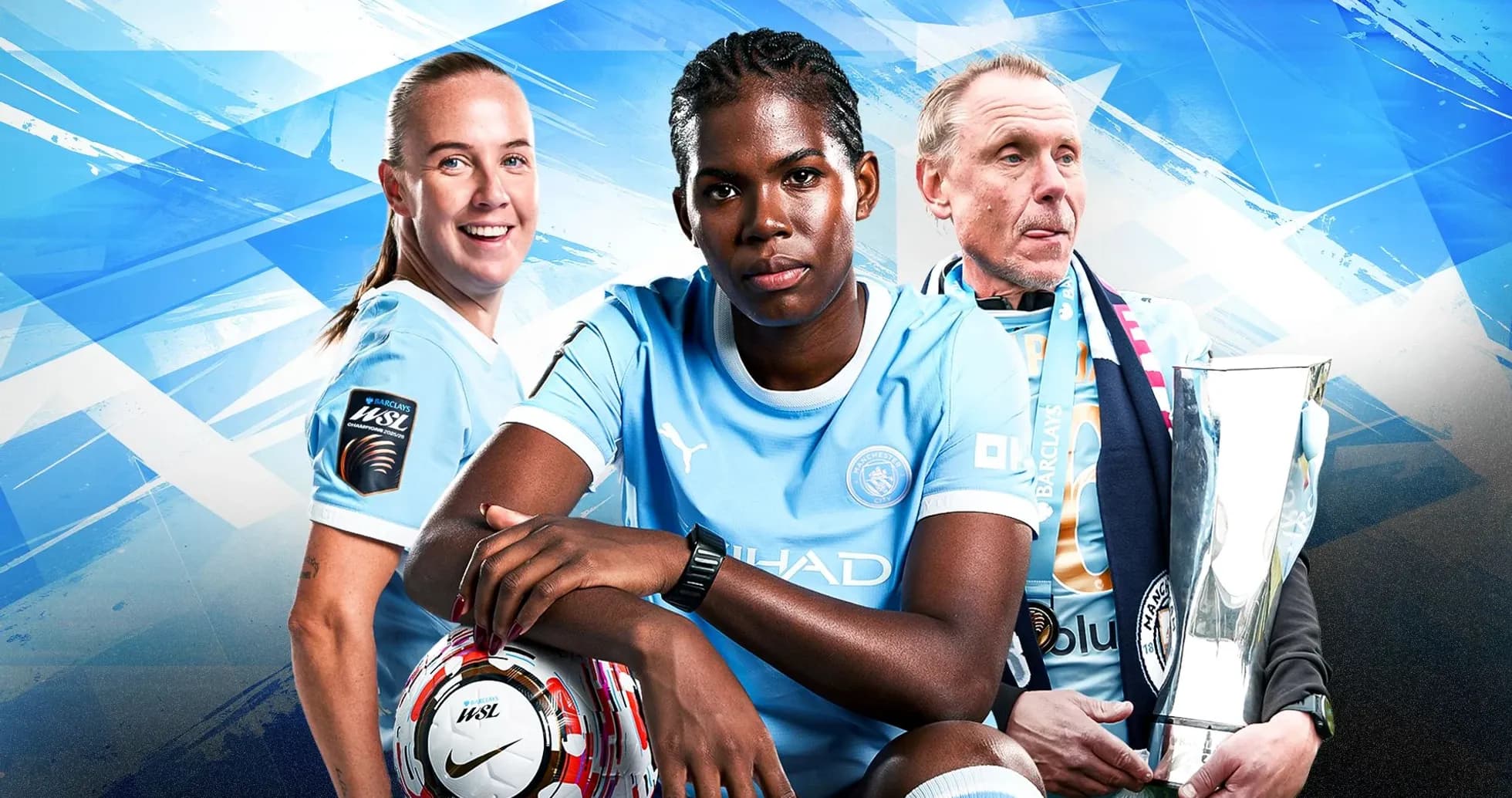
For years, Manchester City were everyone’s dark horse. The team with the talent, the structure, the resources to break Chelsea’s grip on the WSL – but not the edge to actually do it. They flattered, they threatened, then they fell away. Late-season wobbles, ill-timed injuries, or simply a sense that, when it really mattered, they didn’t quite believe they were the ones who should be lifting the trophy.
That is what Magnus Jeglertz ripped up in his first season in charge.
Alex Greenwood called it a “shift in culture”, a change in “the language used” around the building. It sounds abstract until you hear how players talk about it. They were pushed into a space that felt “a little bit uncomfortable”, she admitted, but crossing that line changed mindsets everywhere you looked.
The result? A first WSL title in a decade and City’s first trophies in four years. Crucially, it doesn’t feel like a one-off. It feels repeatable.
Mary Fowler captured that difference in a few blunt words. “In previous seasons, maybe we fell short because there was a bit of a lack in the mindset where we felt we were really capable of winning,” she told GOAL. “But I think now that we've done it, it feels like, 'You are very capable and you can do that again'.”
That “again” is the word that now defines this group.
Hunger, not relief
Coaches often fear what comes after success. The drop in urgency, the subconscious easing off. Jeglertz has walked back into the training ground after a short summer break and seen the opposite.
“I've seen it already in the players,” he told GOAL. “They already have a confidence that is great, that is calm, but curious about how we take the next step. What do we do to become a little bit better? I already see it and that's something that we need to keep having the whole year.”
This isn’t a squad basking in validation. It’s one treating a title as a starting point.
The club has helped that mindset by adding players who know exactly what sustained winning looks like. Niamh Charles arrives from a Chelsea side that turned domestic dominance into a habit: five straight WSL titles, seven more domestic cups in six years. She walks into the dressing room with that experience etched into her.
“That means that she has a little bit of a leader in her,” Jeglertz believes. He sees her influence not just on matchdays, but “in sessions and in how you win from one year to the next year.”
Beth Mead brings another layer of that mentality. Back-to-back European Championship titles with England. A starring role in Arsenal’s Champions League triumph over Barcelona in 2025. This is someone who has lived the sharp end of elite football.
“You can see in her eyes, she's still very eager to be part of this and to learn more,” Jeglertz noted. A serial winner who still looks restless is exactly the profile City want.
On paper, then, the culture and the dressing-room dynamics look primed for a title defence. The questions start when you move from mindset to manpower.
The Champions League question
Last season’s triumph came with one major caveat: no Champions League. While Chelsea, Arsenal and Manchester United juggled Europe and domestic battles, City focused solely on home fronts. That changes now.
The Champions League is back on the calendar, the schedule tightens, and the strain on a trimmed squad will be real.
City’s business this summer has been selective rather than sweeping. Beyond Mead and Charles, the only other senior addition is Carlotta Wamser, a versatile full-back who can cover both sides. She replaces some of the depth lost with Leila Ouahabi’s departure and adds competition in a key area.
The problem? Nine first-team players have gone out the door. For a club stepping back into Europe, the squad has not been “bolstered” in the way many expected.
“The depth is there,” sporting director Nicky O’Neill insisted at the end of last season. “It’s not about a squad transformation. It’s about adding in the key positions we need.”
The logic is clear. The risk is, too.
Early injuries have already started to bite, none more significant than Vivianne Miedema. The Guardian understands she may not be back until 2027, a brutal blow for a player who was meant to be a transformative addition. City’s attempts to move on deadline day, without getting a deal over the line, underline that concern internally.
They have acted in specific areas. Left-back has been rebuilt with Charles and Wamser after Ouahabi’s exit. Mead arrives to help offset the loss of Kerolin to Barcelona in the forward line. Beyond that, Jeglertz is backing the existing core to climb another level.
Banking on internal growth
Risa Shimizu returns from a loan at Liverpool and will be asked to provide genuine depth at full-back. The staff also expect more from Sydney Lohmann and Grace Clinton, two players whose first seasons at City never truly got going. Minor injuries, rhythm issues, and missed opportunities left both short of the impact many anticipated.
This year, that has to change. Lohmann’s own hip surgery complicates that picture, but the expectation remains.
Fowler is another key internal bet. She showed flashes of her talent after returning from an ACL injury in February. Now she has a full pre-season behind her and a clear runway. If she explodes, City’s attack suddenly looks far more varied and unpredictable.
The forward line, in fact, is built on flexibility. Mead, Fowler, Lauren Hemp, Aoba Fujino and Iman Beney can all operate across the front, with several capable of leading the line. That versatility is part of the reason City did not feel compelled to sign a pure back-up centre-forward to sit behind Khadija Shaw all season.
Behind them, the academy conveyor belt is starting to feed into the senior picture. Sacha Lewis, Amelia Oldroyd and Aoibhe Brennan have all signed their first professional contracts this summer. Mayzee Davies, already a senior Wales international, agreed hers last year and could emerge as a useful depth option if she adapts quickly.
At the top of the hierarchy, the spine remains imposing. Shaw, Greenwood, Hemp, Kerstin Casparij, Jade Rose and Yui Hasegawa form one of the most complete starting XIs in the league. Add a fit-again Miedema at some point down the line and the first-choice side looks built to go toe-to-toe with anyone in Europe.
The issue is what happens when that first-choice side is disrupted.
Built for more games – but how many bodies?
City enjoyed an almost spotless injury record last season, a rarity in modern football and a huge factor in their consistency. Replicating that while adding Champions League travel and intensity is a huge ask.
“We’ve learned and we will absolutely be ready next season,” O’Neill said, projecting confidence in the club’s planning.
Jeglertz, for his part, felt the opposite problem last year. “We have too many good players to play these few games we are playing,” he said in May, welcoming the expansion of the schedule. “Next year will be different because it's more games. The squad is built for that.”
On one level, he’s right. A smaller group means more minutes for more players, fewer frustrations, a tighter-knit core. On another, there are obvious pressure points.
Certain positions simply cannot absorb multiple injuries. Others rely heavily on those “bigger seasons” from players like Lohmann and Clinton. If they struggle again, or if niggles turn into longer absences, the knock-on effect could be severe.
The fact City start the campaign with several players already doubts, and with Miedema consigned to the sidelines, is not an ideal launchpad for a year that will demand more, not less, of the squad.
Yet when you scan the rest of the WSL, you see a different kind of vulnerability. Some rivals boast deeper benches, but carry unresolved questions about dressing-room chemistry, tactical cohesion or the sheer clarity of their project. City, by contrast, look joined-up. They know who they are.
From one title to a true era?
No one should expect a Chelsea-style dynasty in the current WSL landscape. The league is too competitive, the margins too fine, the money and talent spread too widely. Stringing together four, five, six titles in a row feels like a relic of a different era.
But City do not need a dynasty to define this period as theirs. They just need to stay at the top table of every competition they enter, to keep putting themselves in the mix for the biggest prizes, year after year.
On last season’s evidence, they were the best team in England by a distance. The belief that came with finally getting over the line, combined with the injection of proven winners like Charles and Mead, suggests this is not a group ready to wait another decade for a WSL crown.
They have the culture. They have the XI. They have a manager who has already shown he can change the mood of an entire club.
Now comes the real test: can this version of City handle the weight of being champions, the grind of Europe, and the inevitable blows that will come, without losing that new, hard edge they fought so long to find?