At Old Trafford, the noise never really died down. It just changed target.
The latest Manchester derby should have belonged to Erling Haaland’s finish, to Josko Gvardiol’s delivery, to the usual swirl of bragging rights and tactical post-mortems. Instead, it has turned into something else entirely: a case study in how VAR can hijack a showpiece occasion and leave the sport arguing with itself.
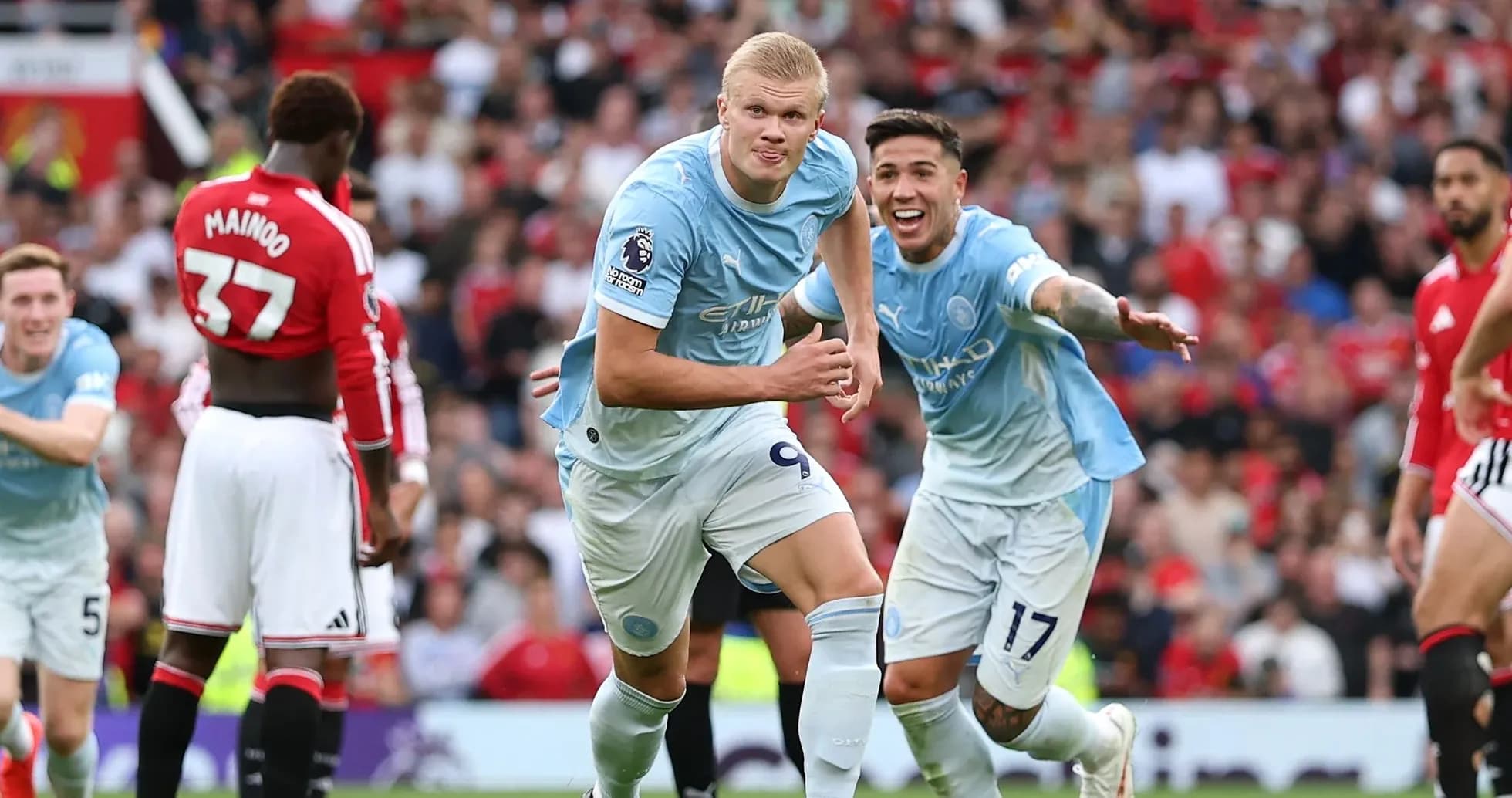
Haaland’s 60th-minute strike, swept in from close range after Gvardiol’s cross, looked routine enough at first glance. The flag went up, Old Trafford exhaled, and everyone prepared for the free-kick. Then came the familiar pause. The check. The wait. The confusion.
Seconds stretched. The decision flipped.
The VAR team overturned the on-field offside call, ruling that Haaland had been onside and that Enzo Fernandez, standing in an offside position and clearly involved in the phase, had not “played the ball.” Goal given. United furious. City celebrating. The stadium boiling.
Within 24 hours, the storm had moved from the stands to the corridors of power. The Professional Game Match Officials body contacted Manchester United to formally acknowledge what it called an “error of judgment” over the incident. The admission landed like a late tackle: heavy, clumsy, and far too late to change the scoreline.
The Premier League Match Centre had initially tried to hold the line. On social media, it defended the call, insisting VAR had determined Haaland was onside and that Fernandez’s involvement did not constitute a deliberate play. That justification did nothing to cool tempers. It only sharpened the sense that the technology and those operating it are drifting away from the instincts of players, pundits, and supporters.
Few voiced that anger more forcefully than Peter Schmeichel.
The former Manchester United goalkeeper, a serial winner at this stadium and a man who understands its pulse better than most, cut through the noise with a blunt verdict on modern officiating. Speaking to Viaplay, he laid bare his frustration with what the game has become under the shadow of VAR.
“I wish that we could scrap VAR,” he said, the words carrying the weight of someone who has seen Old Trafford at its most feral and free. “We’ve got into a system now where VAR and the referees are the most important people in football. It sucks all the energy out of it. As soon as there is a goal, you’re not allowed to celebrate.”
That was the heart of his argument: not just that the decision was wrong, but that the entire experience has been hollowed out. The roar, the instant explosion of joy, the shared certainty that the ball over the line means a goal — all of it now suspended in a sterile limbo.
“We saw after five minutes, the players and the fans could celebrate — but it’s not the same,” Schmeichel continued. “The ball goes in the back of the net, it’s a goal, but then the linesman puts his flag up for offside.
“I wish, and I’m longing for these days, we could scrap VAR because it’s such an annoyance and it’s interfering with football. And it hasn’t made it better.”
That last line will sting at PGMOL headquarters. The technology was sold as a solution, a way to clean up the big errors and restore fairness. Instead, on days like this, it feels like the main character.
Gary Neville, on co-commentary duty for Sky Sports, sounded just as bewildered in real time. Watching the goal stand despite Fernandez’s clear involvement from an offside position, the former United defender admitted that the law — or at least its current interpretation — had left him behind.
“I’m going to need the offside law explaining to me, because that has lost me, I have to say,” he remarked on air. It was an honest confession and a damning one. If a former elite defender, steeped in the nuances of the rule, cannot follow the logic, what chance does everyone else have?
Neville went further, predicting that PGMOL would have to climb down and accept they had made a mistake. By Sunday evening, that is exactly what happened.
In a statement, the officials’ body conceded that the VAR team “did not recognise the likely impact” of Fernandez’s position and should have recommended an on-field review. The key moment in a huge game, they effectively admitted, had been misread from the control room.
The climbdown did nothing for United’s points column. It did plenty for the growing movement that wants VAR either radically reworked or ripped out of the sport entirely.
This is where the derby leaves English football: not just arguing over a single call, but wrestling with a bigger question. If the technology drains the emotion, confuses the laws, and still delivers “error of judgment” apologies after the fact, what exactly is it fixing?
For Schmeichel, and for a swelling chorus of supporters, the answer is obvious. The game they fell in love with did not need a second screen to tell them when to celebrate.