Manchester United’s women were supposed to be building on a breakthrough year. A first major trophy in 2024. A debut Champions League run that stretched to the quarter-finals. Under Marc Skinner, the trajectory looked clear: up, and towards the elite.
That picture has been ripped up in two brutal WSL weekends.
Skinner has gone. His replacement, Eva Olid, has walked into a storm not of her making, and United sit bottom of the table with the worst goal difference in the division – even below newly promoted Charlton. After years of careful construction, this is a team now visibly coming apart.
Six league games without a win – their longest barren stretch since reforming in 2018 – frame the crisis. The sample size this season is small, but the warning lights are not. Two heavy defeats, two flat displays, and a 5-0 humiliation at Chelsea that felt less like a blip and more like a diagnosis.
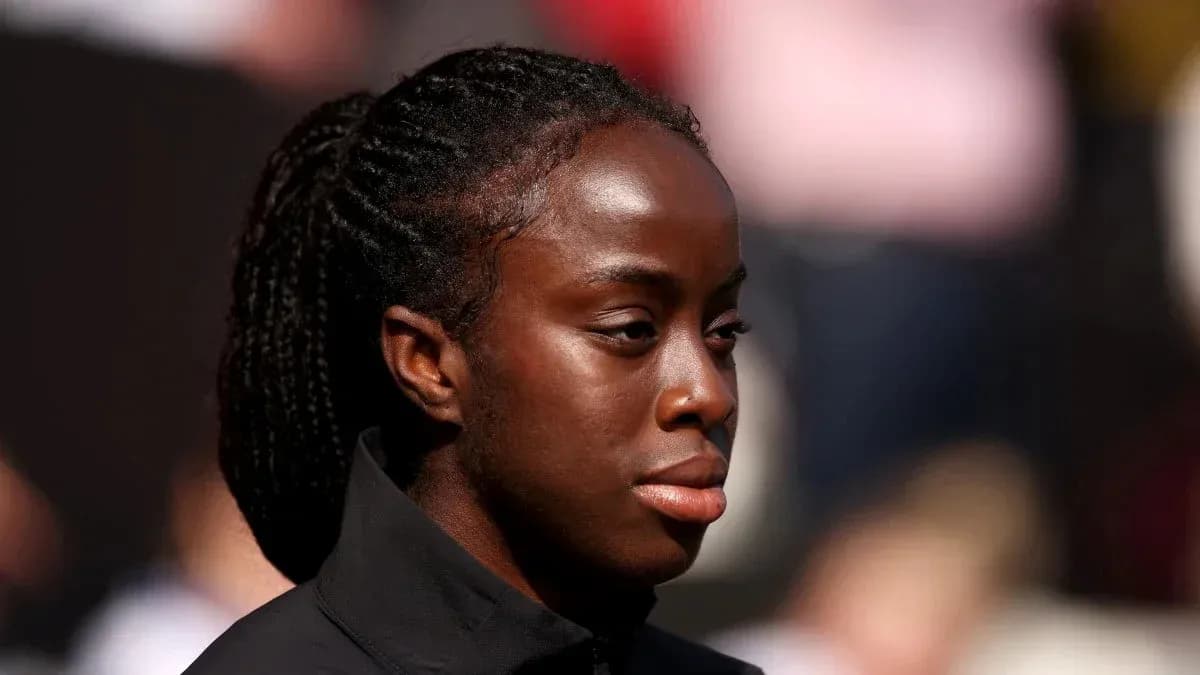
Olid cut a frustrated but determined figure afterwards. “I don’t like the heads down,” she said. “Heads up and we have to continue.” She has no choice but to sound defiant. The reality around her is anything but.
United’s problems run deeper than a new manager trying to imprint ideas. This is a squad she inherited, shaped by decisions taken long before she arrived. The club’s on-pitch fragility mirrors an off-pitch hesitancy around the women’s programme that has been flagged for years.
Investment has been questioned. So has interest. United’s strategic shift this summer towards youth development – a cheaper, longer-term play – over signing established, top-tier talent was enough to push Skinner out, officially a mutual parting but clearly underpinned by tension. The 43-year-old had made no secret of wanting stronger tools to compete. Those calls did not bring the response he wanted.
The consequences are now on display. United have equalled the record for the fewest shots by a non-newly promoted side across their first two WSL games, matching Leicester last season. Leicester went down. That is the company United currently keep.
There is always an adjustment period under a new coach. Systems change, roles shift, habits are broken. But United’s failings are not new. They have now tried 14 times to beat Chelsea in the WSL and have never managed it. Losing to Chelsea is familiar. Losing by five is not.
The solid platform Skinner built suddenly looks like it was made of thinner material than anyone realised. Confidence has drained, patterns of play have evaporated, and United now walk into Arsenal next Saturday live on Sky Sports with so many issues that it is hard to know which fire to fight first.
The only consolation? It is difficult to see how it can get much worse. Olid cannot allow the performances to slide any further.
Chelsea’s ruthless response
On the other side of that 5-0 scoreline stood a Chelsea team in a very different mood.
Sonia Bompastor’s side had taken flak after failing to kill off Aston Villa in a 1-1 draw on the opening weekend. Questions about sharpness, about cohesion, about whether the transition from the Emma Hayes era might come with more bumps than expected.
United felt the backlash.
This was Chelsea at their most unforgiving, the kind of display that reminds the league what an angry heavyweight looks like. They found an obliging opponent, yes, but they did not ease off. “When you have the opportunity to really hurt a team, the best way to respect them is to score as many goals as you can,” Bompastor said. There was no mercy in the execution.
The gulf was glaring: elite against ordinary, a predator circling a wounded side and not wasting a single opening.
Lauren James again operated as Chelsea’s cutting edge, the talent around whom everything bends. This time, though, she had company at her level. The game ran through Keira Walsh, who dictated tempo, while Sjoeke Nusken and Wieke Kaptein imposed themselves in the duels and set the tone physically.
Out wide, Katie McCabe and Ellie Carpenter drove forward relentlessly from full-back, stretching United until the pitch felt enormous. Those runs created the central pockets James craves. From centre-back, Lucy Bronze stepped in to thread passes into the final third, feeding the players who could make it stick. James did exactly that.
Across two games, James has already fired off 19 shots – more than anyone else in the league. She looks increasingly comfortable as a false 9, a solution Bompastor can lean on when injuries or form issues strip her of orthodox strikers. It is a powerful card to play, but one that cannot become a crutch. Not every opponent will leave the same gaps United did.
Arsenal and Lyon are up next for Chelsea, in the WSL and Champions League respectively. Neither will be as generous.
Stanway’s new dimension for Arsenal
Away from the chaos at United and the statement at Chelsea, one player has quietly reshaped her team’s possibilities.
Georgia Stanway has returned to the WSL looking like a midfielder upgraded in every department. Her work on the ball for England has been clear for some time, but her range since coming back from Bayern Munich has gone up another level.
On her Arsenal debut, she completed 98 passes. After two rounds of fixtures, only Liverpool centre-back Grace Fisk has completed more passes than Stanway’s 194. Crucially, 91 of those have gone into the final third – comfortably the highest figure in the league.
That kind of precision changes what Arsenal can be. It eases the creative burden on Mariona Caldentey, who no longer has to act as the lone central architect. Stanway has already carved out four chances in two games, enough ammunition for the Gunners to have put Crystal Palace away at the weekend.
Alessia Russo was unusually profligate with those openings. The finishing touch deserted her. The supply line, though, looked secure.
If Stanway keeps threading those passes and Arsenal’s forwards rediscover their edge, the title race will feel her influence long before winter.