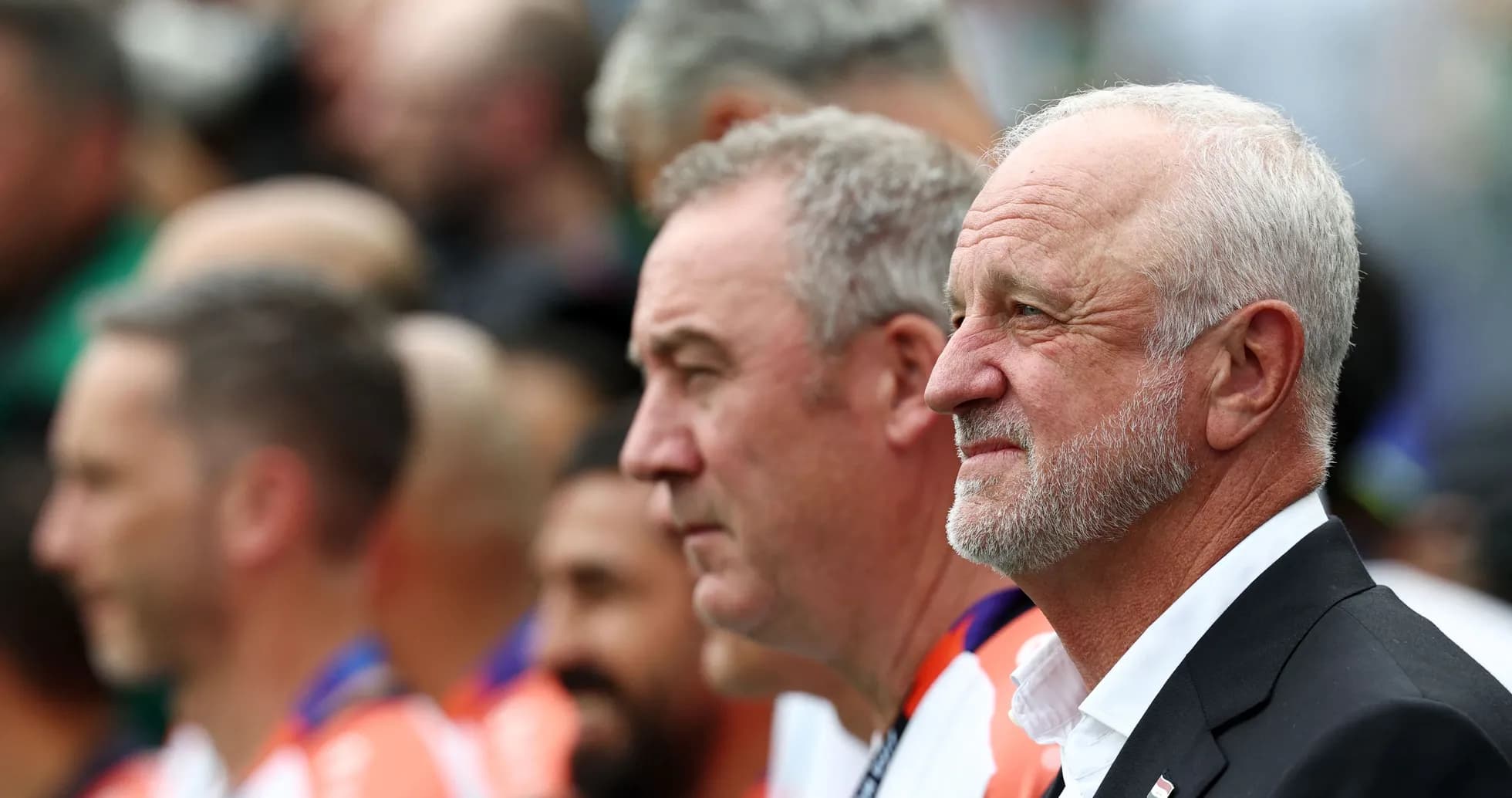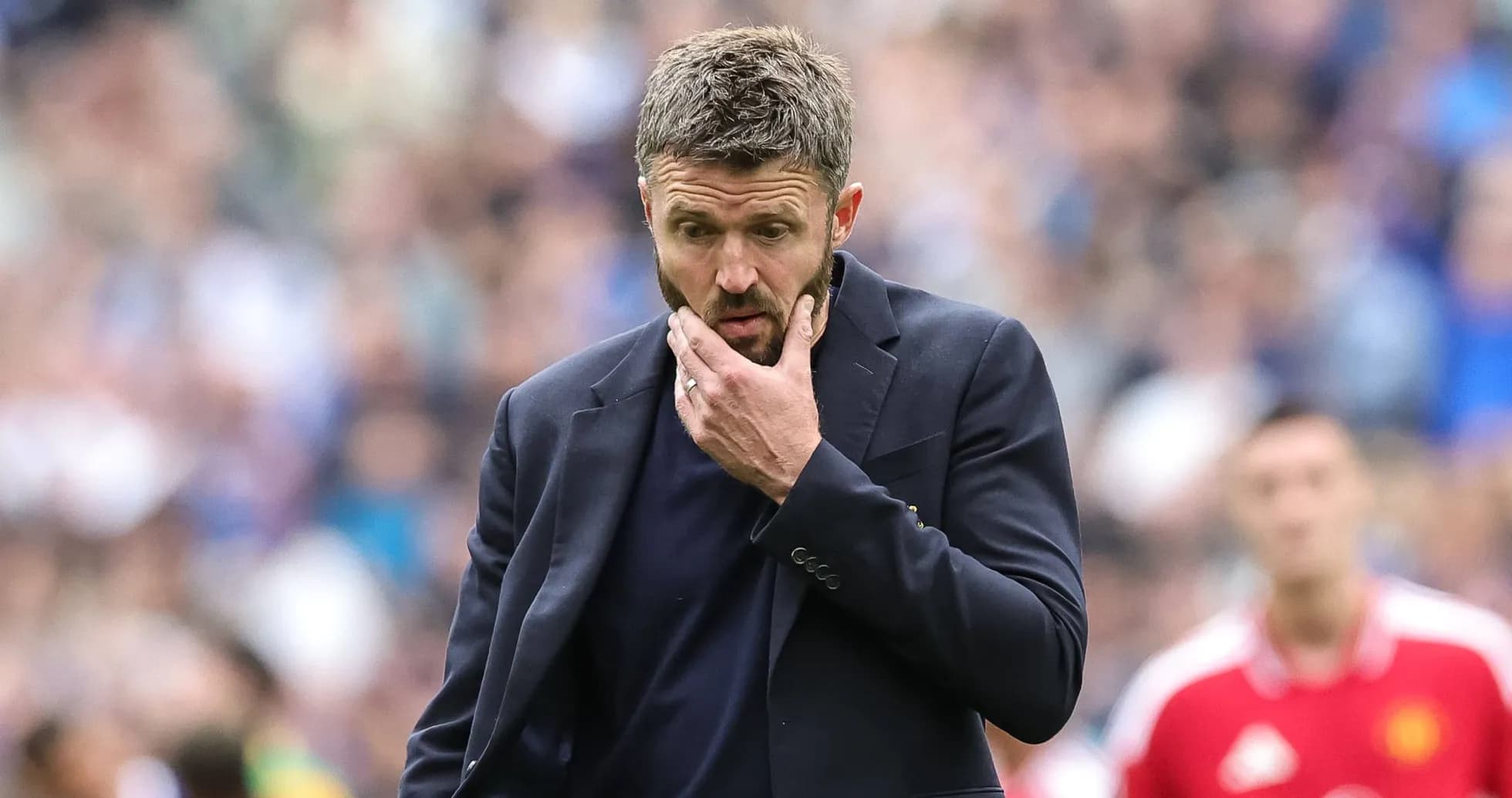
Manchester United’s soft centre was laid bare again at the Hill Dickinson Stadium, and Gary Neville did not bother sugar-coating it.
A game that should have been killed off drifted, then disintegrated, into a familiar mess. United, seemingly in control and edging toward three points, lost their grip as Everton mounted one last surge. In the 96th minute, Ainsley Maitland-Niles drove in the equaliser that felt inevitable the moment United began to retreat.
Three games into the Premier League season, Michael Carrick’s side sit on four points. The table is not yet a crisis. The pattern might be.
Neville’s warning shot
On his podcast, Neville went straight for the jugular: this is how managers lose jobs at Old Trafford.
He drew a direct line between what he saw against Everton and the defensive chaos that ultimately engulfed Erik ten Hag and Ruben Amorim before him. Different coaches, same anxiety at the back, same sense that opponents always have a chance.
"Teams think they've got a chance against them," Neville said. That was the charge, and it stung because it rang true. United led, they played with a measure of confidence, yet the edge never came. The killer instinct never arrived.
Neville felt the complacency creep in even before Everton’s late rally. United eased off, as if the clock alone would drag them over the line. Once the equaliser came, they reacted. Too late. Again.
The backline gamble that backfired
What really baffled Neville was what Carrick did in those frantic closing stages.
With the game still alive, United’s manager shuffled his defence, withdrawing key figures and disrupting what little stability his back four had. To Neville, it was an open invitation for Everton to throw everything at a reconfigured backline already unsure of itself.
He singled out the substitutions of Luke Shaw and Diogo Dalot as a flashpoint, likening the changes to the constant defensive tinkering that dogged previous regimes.
"I don't think it's going to go away and that's my big fear," Neville admitted. Conceding goals, in his view, is not just a bad habit for this team; it is a spectre that "is going to chase them and hunt them down the road."
With what he sees as United’s best back four on the pitch, Neville simply could not understand why Shaw was removed with five minutes to go, adding only the hope that the left-back had not suffered an injury.
The message was clear: United cannot afford to keep playing with their defensive structure in the final minutes of tight games. Not with this history. Not with this fragility.
Carrick faces the problem head-on
Carrick, calm as ever in front of the cameras, did not pretend there was nothing to see.
He praised the quality of Everton’s strikes, acknowledging that two long-range efforts found the top corner on a day when United were punished ruthlessly from distance. But he did not hide behind the idea of bad luck.
"Obviously, we can't ignore it," he said of the goals conceded. "We need to concede fewer goals to give us a better chance of winning games. We'll certainly look at that and keep improving. There's obviously things we need to get better at as a team."
He knows the late concession is not a one-off quirk. It is a theme. And themes, at a club of this size, quickly become verdicts.
Carrick admitted the timing of the goals hurt as much as the manner of them. The game management, especially in those final minutes, simply was not good enough.
Rashford scare adds to unease
As if the defensive questions were not enough, United left Merseyside with a fresh concern: Marcus Rashford.
The forward, bright and dangerous off the left, came off in the second half after feeling what Carrick described as "a little bit of something." Until then, Rashford had looked sharp, dovetailing well with Shaw and repeatedly troubling Everton down that flank.
Carrick pointed to that partnership as one of the day’s positives. The understanding between Rashford and Shaw, built over years, again gave United a natural outlet and a real threat.
"They look really dangerous down that side," Carrick said, insisting there is more to come from that combination once Rashford is fully fit and Shaw is hopefully confirmed as uninjured.
Old habits, new manager
The frustration for Neville, and for many watching, lies in the sense of déjà vu.
Different coach, different tweaks, same late drama, same dropped points. United can still look slick in spells, still stitch together those "good connections" Carrick referenced across the pitch. But when the pressure rises and the minutes tick into added time, too many of the old doubts return.
Carrick is only at the start of his Premier League campaign as United’s manager. The table allows him time. The performances give him no such luxury. He has to solve the defensive riddle quickly, decide who he trusts at the back, and resist the urge to meddle when the finish line is in sight.
Because if Neville is right, and teams truly believe they always have a chance against this United, the late equaliser from Maitland-Niles will not be the last painful punch they have to absorb this season.