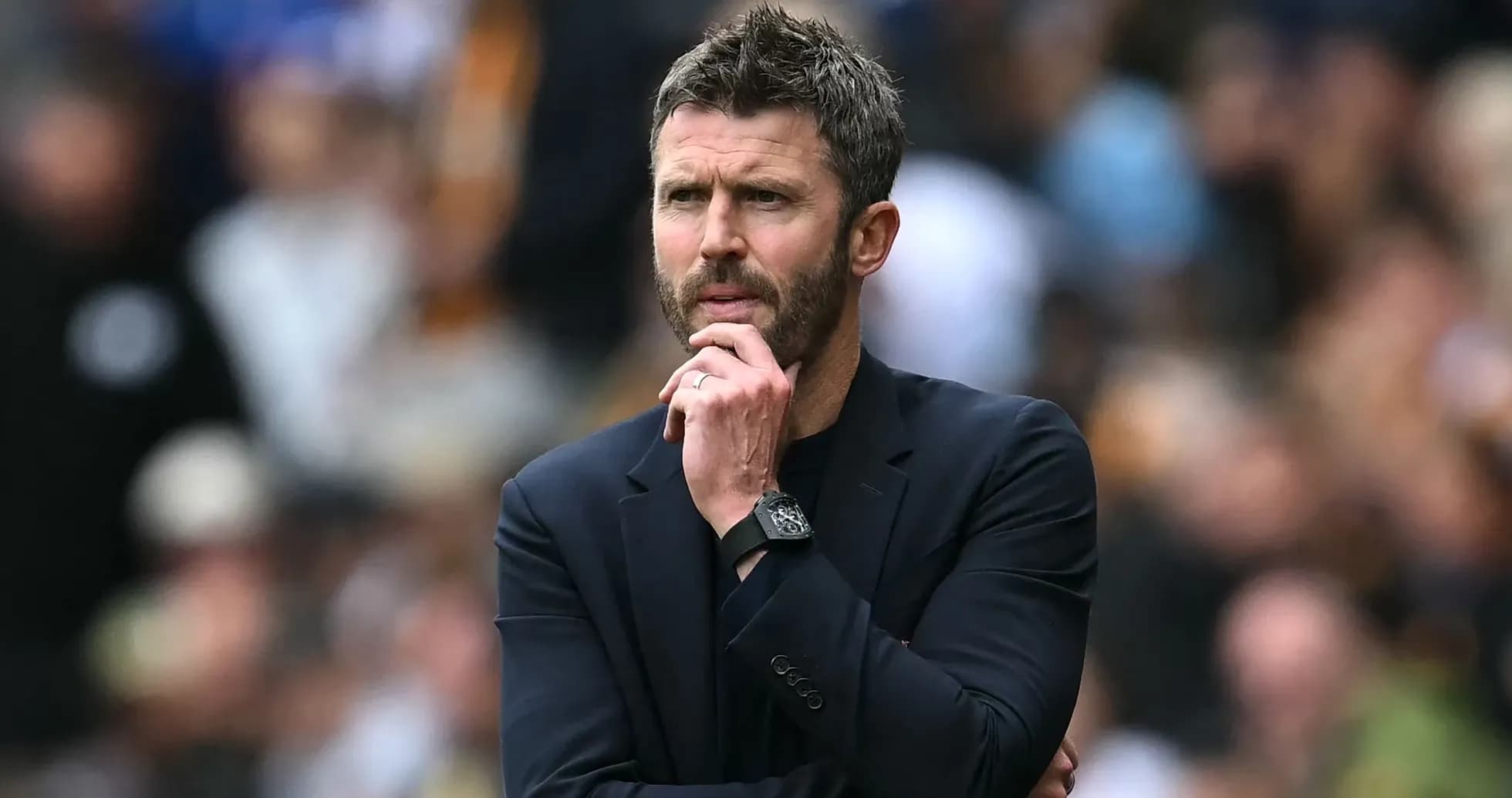
Manchester United’s season began with a jolt rather than a launch, a 2-0 defeat to newly-promoted Hull City exposing old doubts and reopening an even older debate about Harry Maguire.
At a club that has spent the summer talking about renewal, this felt painfully familiar.
Makeshift defence, familiar problems
With Lisandro Martinez and Matthijs de Ligt still short of full fitness, Michael Carrick had little choice but to improvise. Harry Maguire, now 33 and long since stripped of the aura that accompanied his record transfer fee, lined up alongside Ayden Heaven at the heart of a patched-up defence.
Hull did not need to be spectacular. They were organised, aggressive and ruthless from dead balls. United, by contrast, were anything but. Both goals came from set-pieces, both from situations a side with top-four ambitions should handle in their sleep. Instead, United handed away the opening weekend points with the kind of softness that has haunted them for years.
The pressure told not just on the scoreboard, but on the scrutiny around Maguire.
Mikel Obi’s blunt verdict
On The Obi One Podcast, former Premier League winner John Obi Mikel did not bother with diplomacy. He went straight for the heart of the issue.
"When your top centre-back is Harry Maguire, you have a problem," he said. No caveats. No softening. "Harry Maguire was never a Manchester United player, never suited the system or the football club."
For Mikel, the bigger mystery is not Maguire’s struggles, but his longevity.
"The fact that he has managed to stay there for seven, eight seasons is incredible. How has that happened? I don’t understand that, and he’s still there, and he’s the number one defender. That’s a problem."
The Hull defeat, in his eyes, simply underlined what he has long believed.
The moment that lit up the criticism
Mikel homed in on one sequence from the opening goal that will make grim viewing in United’s analysis room. As Hull pounced from a set-piece, cameras caught Maguire grappling not with an opponent, but with his own team-mate.
"The first goal, he was grabbing his own player and stopping him from going to defend the guy who was scoring," Mikel said. "What was he doing? I have no idea."
It was the kind of clip that travels fast, stripped of context and replayed endlessly. But it fed straight into a wider tactical and technical critique.
"They have Lisandro Martinez, Matthijs de Ligt, Leny Yoro; they have players there," Mikel continued. "But I don’t know why he is still starting. Is he good to be a squad player because of his experience? Yes. But not to start games, not to be your number one centre-back."
Then came the harshest line of all: the accusation that Maguire simply cannot move the ball at the tempo United need.
"He’s slow on the ball; he touches it three or four times before releasing it. He doesn’t know what to do with the ball, he’s confused when he has the ball. A centre-back needs to move the ball quicker, but Maguire doesn’t know how to do that quickly enough and get the team to play at the right tempo."
In one podcast appearance, Mikel crystallised the doubts that have circled Maguire for years: decision-making, speed of thought, and suitability to a high-tempo, front-foot side.
From resurgence to renewed doubt
The timing of this collapse in confidence is striking. Only a few months ago, Maguire looked like a player rebuilding his reputation. Under Carrick in the latter half of last season, he strung together a run of solid, assured displays that quietened the boos and briefly shifted the narrative.
That resurgence almost carried him all the way back into Thomas Tuchel’s England squad for the World Cup. Almost. It hinted at a defender who could still play a meaningful role at the highest level, even if not as the undisputed first choice.
Hull away has dragged the conversation back to the other extreme. One bad afternoon does not erase months of progress, but at a club of United’s scale, it does reopen the question: what is Maguire’s long-term place in this team?
Squad leader, or symbol of an era the club is trying to move beyond?
Carrick defends, but demands more
Carrick, as expected, refused to turn on his players. He cut a frustrated figure after the final whistle, but he chose his words carefully.
"Two goals conceded any way is frustrating," he said. "We’ve been pretty good at defending set-pieces over a period of time but they decided the game today."
He would not allow one game to become a crisis.
"One game doesn’t change the direction of everything, but we need to be aware of what we need to get better at."
That is the balance he must now strike: protecting his dressing room while acknowledging that the standards, particularly in defence, cannot stay where they were at Hull.
Because the reality is blunt. United have invested heavily in Martinez, De Ligt and Leny Yoro. They have built a defensive unit on paper that should not be bullied by a newly-promoted side from routine dead balls. Yet when the season opened and the injuries bit, they still turned back to Maguire.
The question now is simple and unforgiving: was this just a jarring misstep on day one, or the latest warning that United’s defensive future cannot continue to lean on a centre-back so many around the game no longer trust to lead the line?