Old Trafford arrived with nerves and left with a roar.
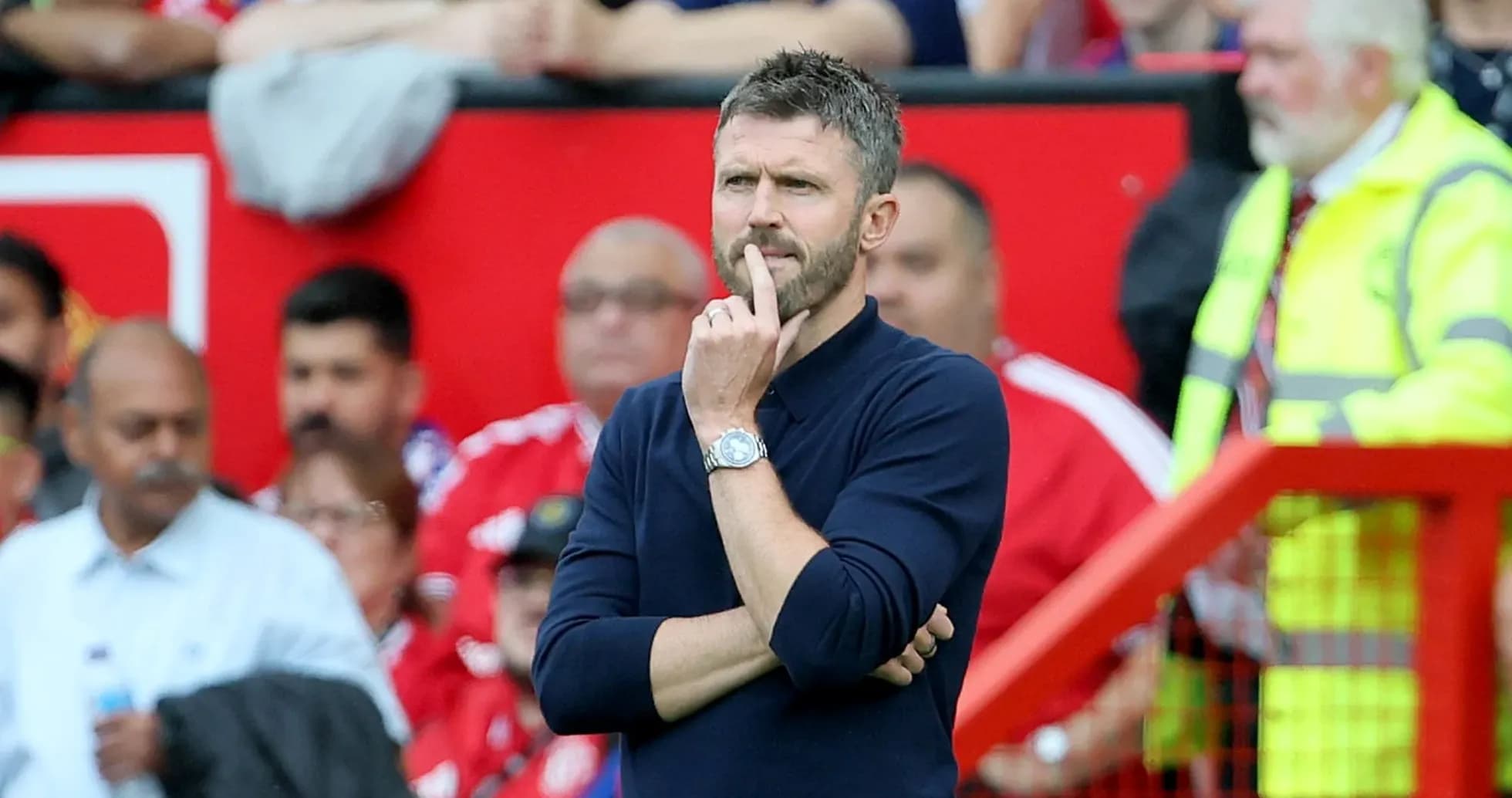
Four days after a bruising 2–0 defeat at Hull City had reopened old doubts about this Manchester United side, Michael Carrick’s team responded with something far more in keeping with the stadium’s history: a chaotic, attacking, occasionally careless, but ultimately emphatic 5–2 win over newly-promoted Ipswich Town.
It did not start that way.
Early shock, familiar fears
When Leif Davis swept Ipswich into a shock lead, the mood turned quickly. The anxiety from Hull was still raw, and United’s brittle recent habit of unravelling under pressure briefly threatened to return. A newly-promoted side, a flat start, a goal down at home – the ingredients were there for another uncomfortable afternoon.
That was the “mini setback” Carrick would later describe. In real time, it felt bigger than that.
The response, though, was ruthless.
Fernandes takes control
Bruno Fernandes grabbed the game and refused to let it drift. His hat-trick was not just about numbers; it was about authority. The captain played with a sharpness and conviction that have not always been present in United’s more disjointed displays.
Once Fernandes dragged United level, the entire tempo changed. Ipswich’s early confidence gave way to retreat. United’s passing grew braver, the runs more daring, the gaps wider. The pressure finally told.
Jacob Greaves’ own goal underlined the shift in power. By then, Ipswich were hanging on, United were swarming, and Old Trafford – edgy an hour earlier – had slipped into that familiar hum of expectation whenever the hosts poured forward.
Fernandes completed his treble to kill off any real doubt. The contest as a spectacle remained open, but the result no longer felt in question.
Bryan Mbeumo’s late strike added gloss to the scoreline, a finish that reflected United’s dominance in the second half. Chuba Akpom’s stoppage-time goal for Ipswich trimmed the margin but changed nothing. It was consolation, not a comeback.
Mainoo’s quiet command
While Fernandes will rightly dominate the headlines, the platform beneath him mattered just as much.
On his first start of the campaign, Kobbie Mainoo ran the midfield with a maturity that belied his age and recent absence. He took the ball in tight spaces, set the rhythm, and gave United a calm centre in a game that could easily have become frantic after the early goal.
Carrick called him “immense” and it was hard to argue. When United chased the game, Mainoo ensured they did it with structure. When they were ahead, he kept them ticking rather than retreating. Performances like this do not always make highlight reels, but they win managers’ trust.
Carrick’s relief and a missed chance
For Carrick, this was less about statement and more about survival. After Hull, he needed a response in attitude as much as in scoreline, and he got it.
“We spoke before about trying to overcome last week, and then we took a mini setback if you like, going a goal behind,” he said afterwards. “But showing stubbornness, belief, confidence, and togetherness the boys showed at that stage... I think that was really pleasing for me.”
Once the game was secure, Carrick turned to his bench. On came Benjamin Sesko, Andrey Santos, and Noussair Mazraoui – senior players topping up minutes, rhythm, and sharpness. From a manager’s perspective, it was logical squad management.
From Wayne Rooney’s perspective, it was a missed opportunity.
Speaking to The United Stand, the club’s record goalscorer could not hide his frustration that teenage winger Shea Lacey never left the bench. With the scoreline comfortable and Ipswich stretched, Rooney felt the conditions were perfect to expose a young talent to first-team football without the usual pressure.
“What I would liked to have seen, which I’m a bit disappointed we didn’t see, was Shea Lacey come on when the game was done,” Rooney said. “For young players when the game is over it’s an opportunity for them to go and get some minutes and go and show what they can do at that level.”
Rooney has lived that story. He drew a clear line back to Marcus Rashford’s breakthrough, when injuries and circumstance thrust a teenager into the spotlight and a brief chance became a career-defining moment.
“I would’ve liked to see Shea Lacey come on just to get a glimpse of what we’ve seen in pre-season,” he added. “It’s little moments like that where you don’t get many times during the season where you’re able to do that. So that was a little bit of a missed opportunity.”
It was a reminder that even on a day of five goals and a captain’s hat-trick, the conversation at United never rests. One eye is always on the result; the other scans the horizon for the next Rashford, the next Mainoo, the next kid who might change everything.
Carrick, for now, will bank the points, the goals, and the repaired mood. The debate over how boldly he should gamble on youth can wait for another day.
The question is whether this performance marks a true turning point, or just a brief release of pressure before the next test arrives.