
Manchester United thought they were finally being decisive. After a decade of circling Mauricio Pochettino, they moved. Two ideas drove it: someone who understood the scale of a club like this, and someone who could offer “something extra”.
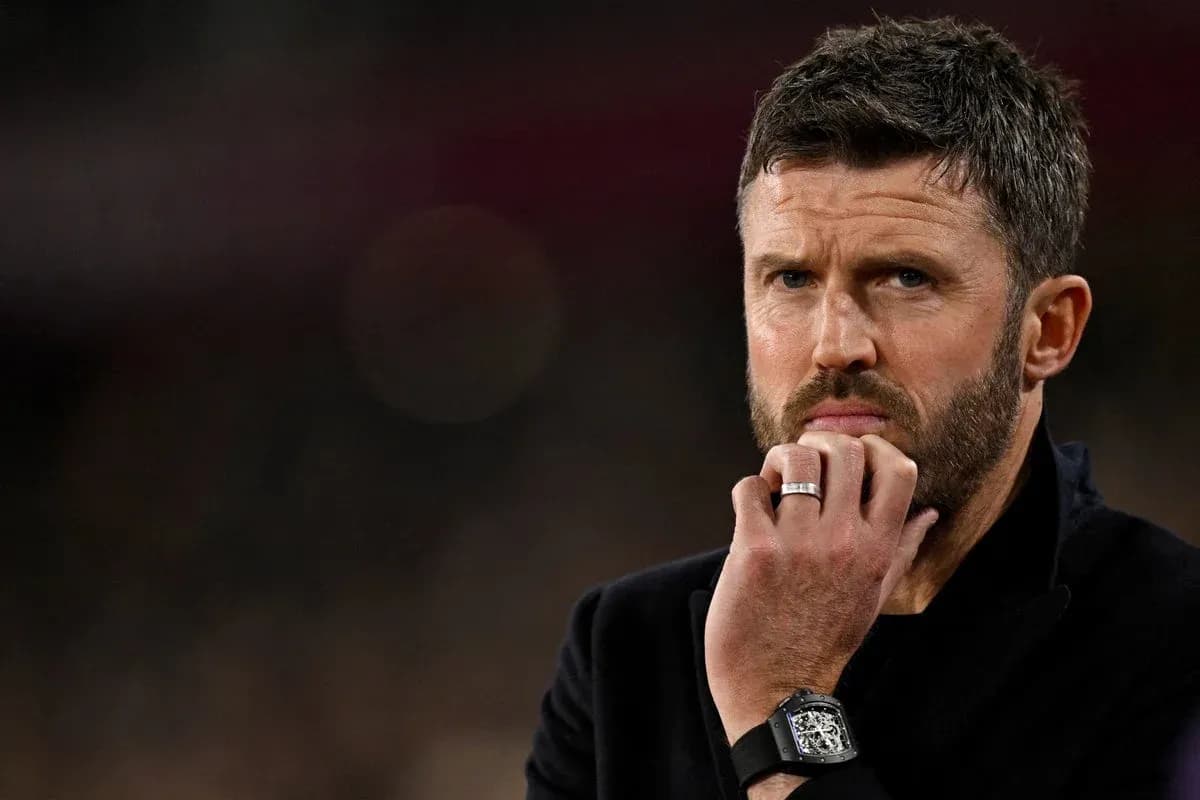
That second demand had always hovered over Michael Carrick.
Last spring, when United seriously weighed giving the former midfielder the job permanently, the internal conversation was clear. Carrick brought calm. He brought the stability everyone craved. He almost certainly brought a return to the Champions League. But did he bring the “x factor” for a genuine title push at a time when the landscape seemed open?
Because it did look open. Pep Guardiola had gone from Manchester City. Xabi Alonso and Andoni Iraola were starting bold new eras at Chelsea and Liverpool. A vacuum at the top. A chance for someone organised, coherent, ready.
United just didn’t expect to be one of the clubs plunged into upheaval themselves.
The speed of the collapse has shaken the people running the place. One source describes the mood bluntly: “they didn’t know which way to turn”. Senior figures believed they had restored order. Then the performances fell off a cliff.
The uncomfortable truth? It was always easy to see this coming.
Carrick’s ceiling – and a squad that couldn’t follow
Even inside the dressing room, there is a feeling that a series of long-standing issues made this downturn almost inevitable.
The first: Carrick’s football.
His breakthrough run last season, the surge that effectively won him the job, was built on meticulous, opponent-specific plans. United were shaped week to week, each game its own project. The clearest example came against Manchester City, when carefully choreographed decoy runs unpicked the champions. Smart, sharp, brilliantly prepared.
That kind of approach wins you big one-off games. It does not, on its own, build a sustainable team.
At some point, you need a broader idea. A way of playing that belongs to you, not to the opposition. Carrick tried to move towards that, tried to make United more proactive, to seize the initiative rather than react to it.
The moment he did, the cracks in the squad widened.
The back line, still built around some of United’s longest-serving players, looked painfully flat. Every attempt to push up or compress space left huge gaps. Opponents didn’t just sense opportunity. They relished it.
“You just didn’t fear them in any way,” says a source at one club who beat United. “You’d play them knowing you could easily get at them.”
Even some of United’s own players feel that vulnerability was magnified by the real core problem: recruitment.
A club without money, and without a plan
Carrick won’t say it publicly. He is too diplomatic for that. But anger over transfers runs deep around the club. He was not backed as many internally expected.
The Glazer era and Sir Jim Ratcliffe’s emerging influence are now biting in full view. People close to negotiations repeat the same line: “United just don’t have the money.”
Every major target this summer told the same story. United were never truly in the race. In the battle for Elliott Anderson, they finished a full £30m below Manchester City’s bid. The midfielder had been open to joining. When a club underbids by that margin, it sends a message: how badly do they really want you? Nottingham Forest never had a decision to make once City went so high.
Even before City’s guilty verdict in the long-running investigation, rival executives suspected that the champions had deliberately driven the price up to distort the market.
The ripple effect hit United again. Morgan Rogers slipped away too, with Chelsea instantly pointing to Anderson’s fee as the new benchmark. United, squeezed and hesitant, turned to compromise options.
Which is why it jarred across the league when they suddenly went to £50m for Andrey Santos.
The signing encapsulates a squad that feels oddly assembled, with lines of the team that don’t quite connect. United argue they are rebuilding “line by line”, a methodical refresh. Rival clubs are baffled.
“They did midfield one year, and did it awfully,” says one experienced figure, “but then you’re leaving a problem area like defence for two seasons. It’s so odd. You’re just building up sections of the pitch instead of the whole thing being integrated as one. That’s how teams are actually built. And that’s also why you’re cycling through different managers and styles.”
That perception has dragged Omar Berrada and Jason Wilcox under harsher scrutiny. There is talk inside the game that United are considering further changes upstairs. The Glazers, widely believed to have stepped back, are said to have been far more involved in recent weeks.
How could they not be, as they watch the value of their most prized asset slide in real time?
Power, politics and the Monaco question
All of this feeds into the significance of this week’s Monaco summit, where United’s next move is being thrashed out. For Berrada and Wilcox, it is more than a strategy meeting. It may be an audition to keep their jobs.
That creates its own tension. Appointing a new permanent manager, then changing the chief executive or sporting director soon after, would be a strange way to run a club. Those positions are supposed to define the football vision and choose the coach, not be shuffled once the ink is dry.
Then again, inconsistency has become a defining feature of United’s recent decision-making.
Ratcliffe is known to admire Wilcox deeply, trusting his football judgement and his ability to handle difficult conversations. Others in the game see it differently. One seasoned executive describes Wilcox as “a lovely guy” but says they do not see the same clear, overarching vision that marks out the best sporting directors.
There is sympathy too. Some insist Wilcox has simply been promoted beyond the job he was initially hired to do. His reputation is stronger in youth development and pathways, a view supported by United’s more encouraging work with academy graduates and younger signings.
The summer of 2025 still earns him credit. Benjamin Sesko, Bryan Mbeumo, Matheus Cunha and Senne Lammens all arrived in what many regard as a rare, coherent window.
The summer of 2026 has undone much of that goodwill. Andrey Santos, Youri Tielemans and an already-injured Carlos Baleba came in, and the team’s intensity seemed to drain almost overnight.
On the pitch, the lack of physical edge has been mirrored by a worrying mental drift. Opponents from Atletico Madrid to Como to Aston Villa have sliced through United with alarming ease. It has left seasoned observers genuinely shocked at how soft this team has become.
Emery in the background, Pochettino in the chair
As those performances unravelled, United’s gaze started to wander. One name kept reappearing: Unai Emery. The Aston Villa manager was “always there in the background”, according to one well-placed source.
Villa sensed it. Their agitation over Emery’s contract situation was not paranoia. They knew United were looking. They also knew how hard it would be to replace him.
United never got close to executing a deal.
Sebastian Hoeness at Stuttgart was floated as another option, but his lack of experience at this level quickly counted against him. The hierarchy understand what the club’s size can do to a coach who is not ready. “Break” was the word used internally.
That argument helped Pochettino.
He has walked into big, volatile institutions before. Paris Saint-Germain. Chelsea. Staff at both clubs still speak well of him, particularly about the environment he built and the way he handled dressing rooms heavy with ego and expectation. Voices in the United States, where he also worked, have been keen to praise his influence on culture.
What United crave now is something else he once delivered: intensity.
A decade ago, his Tottenham side played with a ferocity that rattled the Premier League’s established order. Pressing, running, suffocating opponents. Around the summer of 2016, after that famous meeting with Sir Alex Ferguson, Pochettino was one of three serious contenders to succeed Louis van Gaal. Ryan Giggs and Jose Mourinho were the others. United chose Mourinho.
Back then, the logic was simple. Mourinho was “a winner”. The man to take Van Gaal’s structure and turn it into a title.
That decision, and everything that followed, exposes the danger of chasing labels. Winners. Project managers. Culture builders. Firefighters. United have tried them all.
What they actually need is a coach who fits the reality of the club as it stands, not the idea of what it used to be.
For now, they have decided that man is Mauricio Pochettino. The question is whether the structure above him, and the squad beneath him, will finally allow a Manchester United manager to be more than a short-term solution.





