
The week Manchester United stopped pretending everything was fine did not unfold at Old Trafford. It played out in Como, under Italian skies, where a once-assured side stumbled again and the noise around the club finally spilled into the open.
Another poor start. Another defeat. Another senior player speaking with a candour that would have been unthinkable in calmer times.
Lisandro Martinez had already questioned the club’s direction and ambition seven days earlier. This time it was the captain. Bruno Fernandes stepped in front of the cameras and turned the spotlight on Michael Carrick and his staff, challenging the tactical approach in a way that cut straight through the usual platitudes.
By Friday, the strain had clearly reached the manager. Carrick sat down for his pre‑Bournemouth press conference and delivered an extraordinary five-minute monologue. No clichés, no deflection. Just a pointed appeal that sounded as much like a message to his own dressing room as it did a response to the outside world.
Humility. Humbleness. Words he repeated. Qualities he appeared to feel had gone missing at Carrington.
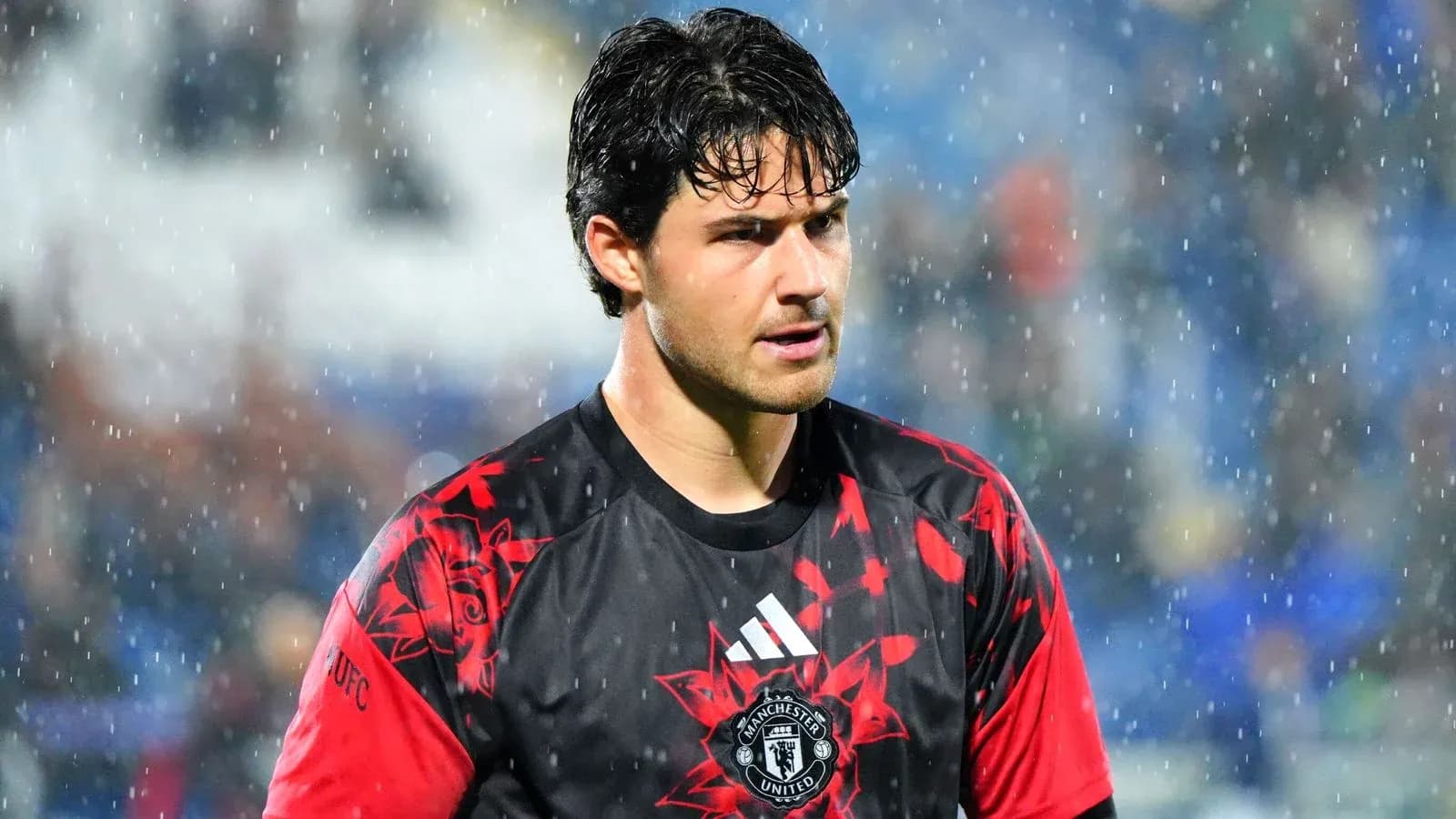
So when United’s No 1, Senne Lammens, sat down to talk, there was only one place to begin.
Is this changing room actually united?
“For me personally, I think it is,” he said. No hesitation, but no attempt to pretend everything is rosy either.
Lammens tried to pull the curtain back on what supporters don’t see. The raw frustration after games. The words said in the heat of the moment. The comments that sound like divides to the outside world but, he insists, are born from a shared desperation to win.
“I get it, I’m very frustrated as well,” he admitted. “We all really want to do better and we all want to win and then we might say sometimes things we don't really mean or fully explain what we mean.”
From the inside, he says, the picture is different. Players, staff, front office – “we’re all together behind the coach”. Everyone knows they have to do better. Everyone knows this isn’t good enough. But he is adamant: “I think we are united and we are trying to get better as a team and together.”
The evidence on the pitch tells a harsher story.
In Como, United conceded inside the opening minutes. Again. It has become a grim ritual of this season. They shipped one even earlier against Atletico Madrid the previous week. They started flat against Fulham. Against Spurs. The pattern is now too familiar to dismiss as coincidence.
One clean sheet all season – and that came against Sabah in the Champions League on September 10. For a club that built eras on defensive authority, the numbers are damning.
“It’s difficult,” Lammens said. “You can try to come up with plans and tactics, but if you get a goal against in the first or second minute, it kind of screws up a little bit your game plan and you're kind of chasing the game from then on.”
He did not dress it up. United are starting games on the back foot, and they know it.
“That’s probably one of the biggest things we need to work on right now,” he added, “to keep ourselves in the game and to try and get that first goal ourselves, instead of being 1-0 down straight away.”
Outside the dressing room, the fixes sound simple. Run more. Concentrate. Start sharper. Inside, Lammens insists the reality is far more complex – and far more painful.
“I get people thinking it's an easy fix, or like, why don't you just try harder or something like that? Trust me, we are trying harder every day and trying to come up with a solution, but sometimes when it's not going your way, everything falls into place for the other team.”
Seven games without a win in all competitions – United’s worst run since 2014-15 – has a way of hardening narratives. About tactics. About mentality. About whether Carrick is losing his grip on a squad that looked so hungry only a few months ago.
Lammens hears all of it.
“You only need one performance to turn it around,” he said. That belief might sound flimsy from the outside. From within the storm, it is what players cling to.
Carrick has usually been quick to shield his players this season, even as performances dipped. After Como, he could not. He admitted his side lacked aggression, intensity, running – the very traits that defined his first five months in charge and underpinned statement wins against Chelsea, Arsenal and Manchester City.
So what changed?
United have clearly tried to evolve their style. Less reactive, more control. Less counter-punching, more possession. On paper, a natural step for a side that punched above its weight last season. On grass, it has often looked like a team caught between two identities.
“Last season I felt like, playing-wise, maybe we played sometimes better this season,” Lammens reflected, “but last season everything just clicked and went the right way for us.”
They struggled at times against the press, he admitted, but they did not concede as many. They leaned into the counter-attacking threat, accepted what they were, and were brutally effective.
This year, opponents have adjusted. United tried to adjust first.
“So that's why we had to evolve this season,” Lammens said. “In preseason, we tried to do some different things to get us in the best position to win games.”
Right now, that evolution looks like a half-finished job. The control they crave with the ball has not been matched by the ferocity they once showed without it.
“I think we need a little bit more like last season, the way we fought together, even when it wasn't going the best and just trying to fight as a team and defend as a team,” he admitted. “That's probably something we need to try to get back to.”
The word he kept circling back to was “fight”.
Supporters at Old Trafford have seen too little of it this season. They measure it not in slogans but in sprints, duels, recoveries, those ugly yards that once felt non-negotiable. So where has it gone?
“I get it, I see people talking about numbers and maybe stats and data,” Lammens said. “I'm not sure about that, because every game is a little bit different.”
He argued United have improved in some of the areas they targeted – particularly on the ball. More composure, more structure, more patterns. But he also acknowledged the risk: that the focus on possession has dulled the edge that made them so hard to play against.
“Maybe the mindset of having the ball and trying to play around has that mindset of when you don't have the ball and try to fight for it the way we did last season,” he said. “We need to get a bit of both.”
That balance – calm with the ball, ruthless without it – is what the best sides take for granted. United are still searching for it.
“It is a fine line, to be honest,” Lammens said. “When you don't have the ball you want that aggressiveness. When you have the ball, you want that calmness, that being able to play from the back and being able to play through the press. I think it's just finding that fine line in ourselves.”
In a week when senior voices have questioned tactics, mentality and direction, Lammens’ willingness to speak so openly felt striking. No shots fired, no blame shifted, but no denial either. Just a young goalkeeper trying to articulate a dressing room under siege, and a team stuck between what it was and what it wants to be.
Carrick will stand on the touchline for what has been called a “pivotal” game against Bournemouth with his job, his ideas and his authority under the microscope. The numbers are brutal. The mood is fragile. The questions are loud.
Inside the dressing room, at least one voice is starting to rise above the noise.
If United are to claw their way out of this slump, they will need more than tactics and tweaks. They will need that fight Lammens keeps talking about – and they will need leaders who are ready to demand it.





