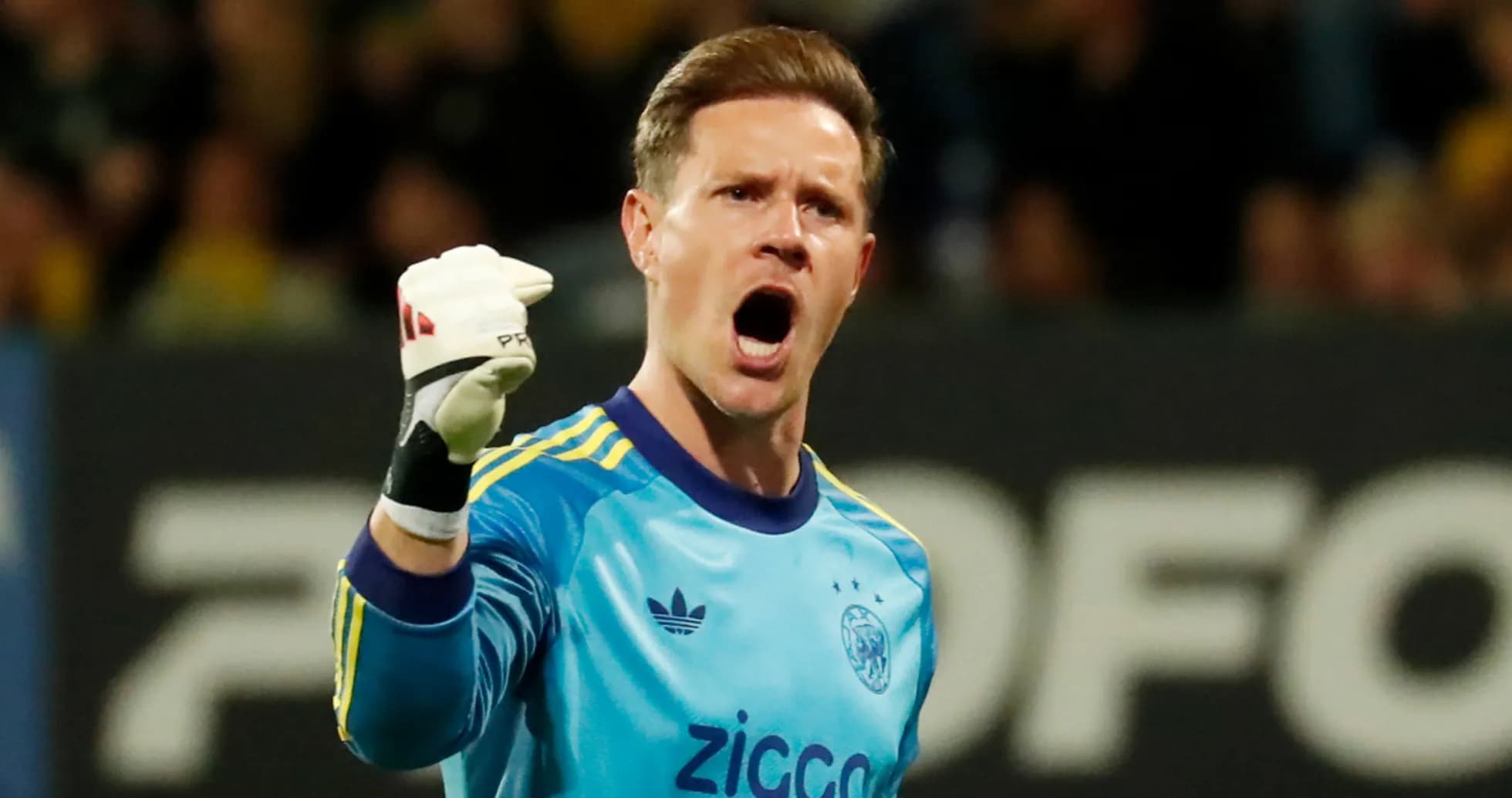
The debate is over. In Germany’s goal, there is no committee, no rotation, no open audition. Jürgen Klopp has handed the gloves to Marc-André ter Stegen.
After years spent in the shadow of Manuel Neuer, the Barcelona goalkeeper – currently sharpening his game on loan at Ajax – has finally been told the job is his. Not for one friendly, not as a stopgap, but as the man at the heart of Klopp’s new Germany.
Klopp draws a line under the Neuer era
Neuer’s decision to retire from international football closed one of the great chapters in the country’s sporting history. A World Cup winner, a revolutionary in his position, and for a long stretch the undisputed best goalkeeper on the planet. That kind of presence does not quietly fade away.
Klopp didn’t pretend otherwise. He recognised the size of the void, but he also made it clear he is not interested in nostalgia between the posts.
“Yes, for the moment, there is one, Marc-André ter Stegen,” he said when asked if he had a first-choice goalkeeper, speaking via Bulinews. No hedging, no caveats. Germany’s new boss wants clarity, and he wants it now.
For ter Stegen, it is the confirmation that has been delayed for almost a decade. Long considered world-class, long tipped as Neuer’s heir, he was repeatedly stalled by ill-timed injuries and the immovable status of the Bayern legend. Now, at 32 and rebuilding rhythm in Amsterdam, he finally steps through a door that had always seemed half-closed.
Building a new spine
Klopp framed the decision as part of a broader philosophy. “A team needs stability and a spine, and then you can add a lot of youth around that. I’ve known him for ages. Manuel Neuer was the best goalkeeper in the world for a long time.
“Nevertheless, everyone knew that Ter Stegen was world-class too. He then suffered an injury at an unfortunate time. At the moment, he is fit and the same goalkeeper he was before. He brings experience with him. He is making a very good impression. Everything depends on performance.”
There it is: stability and standards. Ter Stegen is not being handed a testimonial role; he is being challenged to set the bar. His selection is both a reward and a demand.
Klopp wants his Germany to grow around a hardened core. Ter Stegen in goal, leadership in key positions ahead of him, and then the injection of youth that has long been promised but rarely fully trusted. The message to the dressing room is unmistakable: places are earned, but once earned, they matter.
A 44-man shake-up
Naming ter Stegen as number one is only one part of a sweeping reset. Klopp has gone for scale and experimentation with a huge 44-man group, split across two squads for the upcoming international break. It is not a gentle introduction; it is a stress test of the entire German talent pool.
The UEFA Nations League becomes his laboratory. Four matches, two squads, one overarching idea: find out who can live at this level and who cannot.
Alongside ter Stegen, Augsburg’s Finn Dahmen and Besiktas goalkeeper Alexander Nübel come into the frame for the opening games. Dahmen, in particular, becomes a key thread through the whole experiment, the only goalkeeper named in both squads. He is joined by Freiburg’s Noah Atubolu and Bayern Munich’s Jonas Urbig, underlining how aggressively Klopp is scanning the next generation.
This is not a quiet camp behind closed doors. It is a public audition, with real stakes and real opponents.
Nations League as proving ground
Germany’s schedule is unforgiving: the Netherlands, Greece, Serbia, then a return meeting with Greece in the Nations League. No soft landings, no ceremonial friendlies.
Each match will tug at a different seam of Klopp’s plan. The Dutch will test Germany’s ability to play out from the back under pressure. Serbia will bring physicality and edge. Greece, twice, offers a chance to measure consistency and concentration over a short, intense window.
For ter Stegen, it is the immediate chance to turn Klopp’s faith into something more permanent. A clean, commanding Nations League run and the debate about Germany’s goalkeeping future fades into the background. Any wobble, and the conversation returns with full force, especially with a cluster of ambitious young keepers training in his slipstream.
For the rest of the squad, the stakes are just as sharp. A 44-man list sounds generous, but it is brutally honest: not everyone will survive the cut when the group narrows and tournaments draw near.
Klopp has his spine. Now the question is simple: who will prove sturdy enough to build around it, and who will be left behind as Germany’s new era takes shape?