
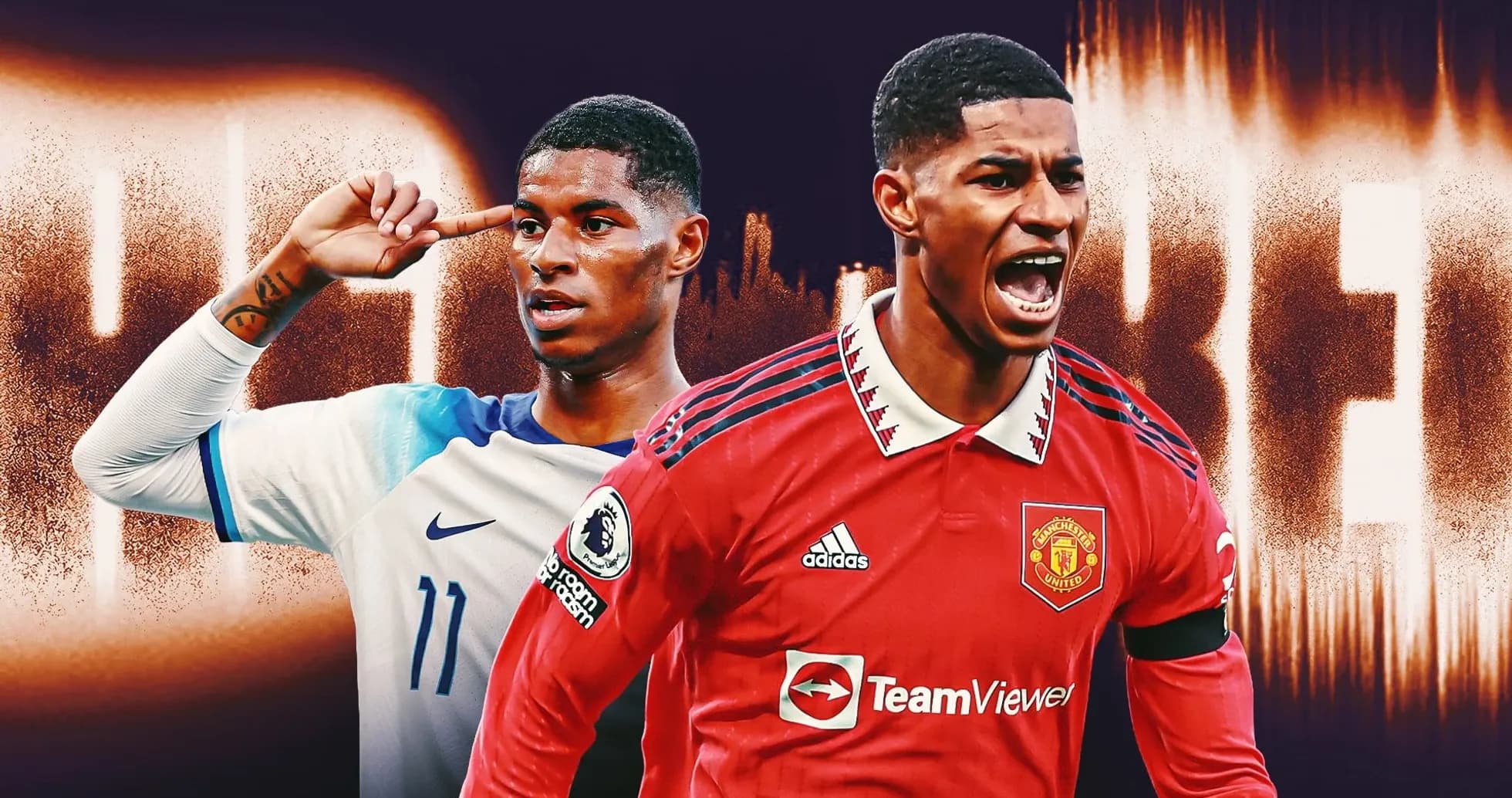
By 2016, Marcus Rashford had every reason to close the door on his past. A local kid turned Manchester United star, adored at Old Trafford, secure, successful. He could have left the hardship where it belonged: behind him.
He chose the opposite. He made it his starting point.
When Britain shut its schools during the coronavirus pandemic in 2020, the country discovered a brutal truth: for many children from low-income families, the classroom wasn’t just about lessons, it was about lunch. Free school meals vanished overnight. The government had no plan to keep that support going through the summer holidays.
Rashford couldn’t live with that. He knew exactly what those meals meant. They had once meant the difference between getting by and going without.
He moved first with his feet, not his voice. Partnering with the food charity FareShare, he helped channel meals to children who suddenly had none. Food parcels, deliveries, practical help. Then he realised the scale of the problem demanded something bigger than quiet generosity.
In June 2020, he went public.
An open letter to the government, written not in political jargon but in lived experience, landed with the weight of his name behind it. His message cut through the noise: this was “not about politics, but about humanity.” A footballer speaking plainly, asking those in power to extend free school meal support through the summer.
The pressure told.
Prime Minister Boris Johnson reversed course. The government announced a summer fund for children in need, with around 1.3 million youngsters expected to benefit. One letter from a 22-year-old forward had forced a change in national policy.
When ministers later refused to stretch that support further, Rashford didn’t retreat. He escalated. A petition bearing his name gathered more than a million signatures. The weight of public backing became impossible to ignore. By November, the government produced an aid package worth £400 million, then just under €450 million.
At an age when most players are still working out their role on the pitch, Rashford had opened a political debate and pushed a government into a second rethink. Footballers had long been associated with charity dinners and hospital visits. He had gone beyond that, converting popularity into pressure, goodwill into leverage.
That success seemed to sharpen his ambition. Emergency help was vital, but it wasn’t enough for him. Rashford wanted to go after the roots of child poverty, not just soften its edges.
Working with companies, supermarket chains and aid organisations, he launched the Child Food Poverty Taskforce, a coalition designed to keep the issue on the agenda and force concrete action. It wasn’t a vanity project; it was an organised campaign aimed squarely at policy.
He targeted the government’s Healthy Start programme, which provides food vouchers for eligible families to buy essentials such as milk, fruit and vegetables. Rashford pushed to expand that support and teamed up with television chef Tom Kerridge to raise awareness of healthy eating, taking the conversation from Westminster to kitchen tables.
His own memories kept driving him. In 2020, he created a book club with Macmillan Children’s Books, determined that children from disadvantaged backgrounds should have access to stories he often had to do without. Books, in his childhood, were a luxury.
“There were times when escaping into the world of books would really have helped me. I want all children to have that escape. Not just those who can afford it,” he said. It was another line drawn from his past to someone else’s future.
Rashford’s activism did not stop at hunger and education. After England’s Euro 2021 final defeat, the country’s penalty heartbreak turned uglier than usual. Rashford, Jadon Sancho and Bukayo Saka, all of whom had missed in the shootout, were subjected to a wave of racist abuse.
Rashford responded with a mix of accountability and defiance. He apologised for his performance, for the missed penalty, for not delivering in the moment. But he refused to blur the line between football criticism and racial hatred.
“I can take criticism of my performance all day long. My penalty was not good enough; it should have gone in. But I will never apologise for who I am or where I come from,” he said.
In modern football, that kind of clarity is rare. Elite players are brands as much as athletes, commercial assets who learn early to weigh every word. Sponsors, social media storms, political fault lines – all of it encourages silence, not confrontation.
Rashford accepted the risk. He used his platform for those without one, proving that a professional footballer can reach beyond the pitch and into the fabric of society.
This is not rebellion for the sake of noise. He is no caricatured maverick, picking fights to stay in the headlines. His defiance is purposeful, anchored in conviction and aimed at specific, tangible goals.
Child poverty in Britain has not disappeared. Aid packages do not dismantle structural inequality overnight. The task is far bigger than one man, no matter how influential.
Yet Rashford has already bent the system more than the system ever expected to bend for a footballer. He has shown that a player can be more than a symbol on a billboard or a name on the back of a shirt. He can be a catalyst.
In football, rebellion doesn’t have to be a two-footed tackle or a red-card gesture to the stands. It can be something quieter, and far more disruptive: refusing to accept that a game loved by millions must stay silent while millions of children go hungry.





