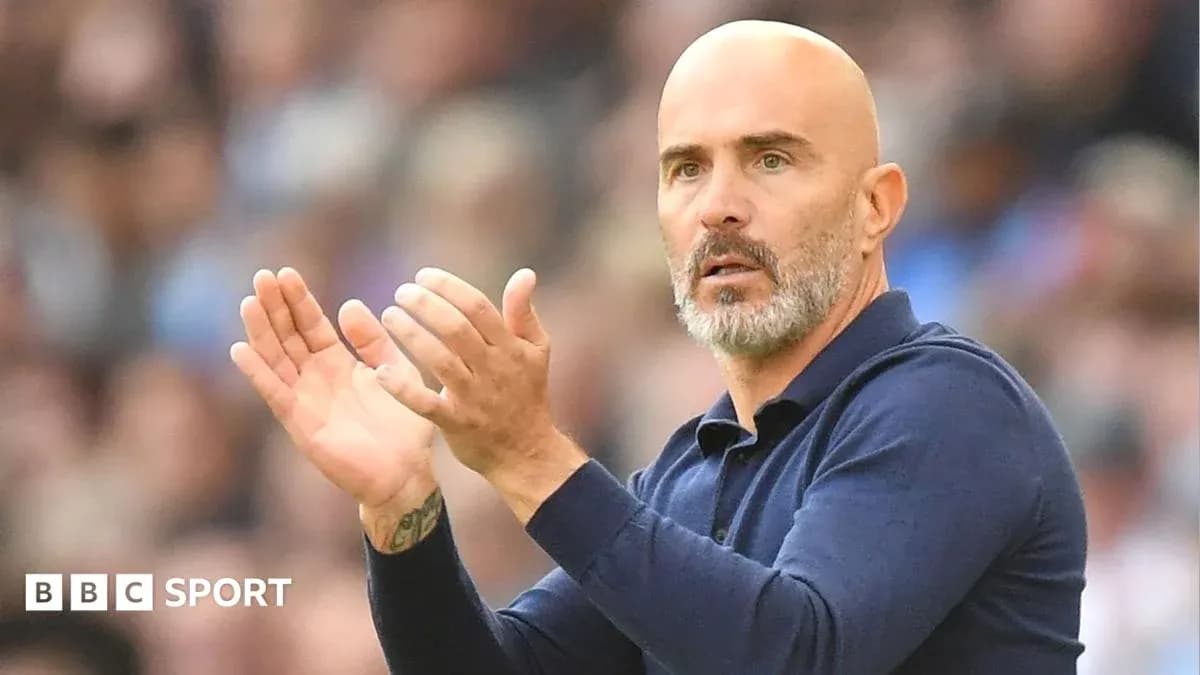
Enzo Maresca is not interested in excuses. Not his, not anyone else’s.
On Sunday he walks into his first Manchester derby as Manchester City manager with the fixture list tilted in his favour: two extra days’ rest, a clean sweep of league wins behind him, and a United side still shaking off the Champions League exertions of midweek. It would be easy to lean on that advantage. He refuses.
“You need to adapt,” he says instead. Again and again.
City wrapped up a controlled 2-0 win away to Porto on Tuesday night. Two days later, Manchester United were still trading tackles in Europe, hammering Sabah 4-0 on Thursday. The gap is stark: 48 fewer hours for Michael Carrick’s players to recover, reset and prepare for the most charged fixture of their domestic calendar.
Maresca’s response? A shrug, backed by memory.
He goes straight back to last September, to a different European week and a different sense of grievance. Back then, Arsenal had the early Tuesday kick-off at Athletic Club. City, under Pep Guardiola, were still wrestling with Napoli in the late Thursday slot at 20:00 BST before heading to Emirates Stadium. The imbalance sparked jokes from Guardiola about taking his squad “hiking in the mountains” to get them ready.
The Italian doesn’t joke. He files it away as evidence.
“The club mentioned to me that it happened exactly the same last year when the club played Napoli and then, after two days, played Arsenal,” Maresca told BBC Sport. “Sometimes it happens in football. I don’t have any doubt that Man United are going to be ready for that. It just matters to adapt.”
That word again.
The calendar has only grown more unforgiving. The revamped Champions League format forces clubs through two extra group-stage fixtures before the end of January, stretching squads and sports science departments to their limits. English sides then pile the Carabao Cup on top.
City host Norwich in the third round next Thursday. United face Brighton at Old Trafford the night before. The treadmill never slows; it just changes speed.
Asked whether it all evens itself out over a season, Maresca barely alters his stance.
“I think that happens and you need to adapt,” he said. “It happened last year with us, this season with them, next season it will happen with a different team.”
No conspiracy, no rant about broadcasters, no thinly veiled swipe at the authorities. Just a manager hammering home the same message: deal with what’s in front of you.
When the conversation turns to Carrick’s mindset, Maresca refuses to speak for his opposite number.
“That’s a question for Michael,” he replied. “The only thing I can say is it happened and you need to adapt.”
If that sounds repetitive, it is deliberate. Maresca is setting the tone for his squad as they head into a derby that arrives early in the season but already feels like a barometer.
City have opened their Premier League campaign with three wins from three, a smooth, confident start that suggests the transition from Guardiola to Maresca has been carefully managed rather than violently ripped up. United, by contrast, have stumbled: four points from their first three games and a sense that they are still trying to locate a clear identity under Carrick.
The table says one thing. Derby day often says another.
“It is very important for different reasons,” Maresca said of Sunday’s clash. “We know how important a derby is, especially here. It is a special game.”
The stakes are obvious. For City, a win would reinforce early control and deepen the impression of continuity after an era-defining predecessor. For United, it would jolt their season into life and challenge the idea that the city has turned decisively sky blue.
Maresca, though, keeps dragging the conversation back to his own dressing room.
“The most important thing we can do is try to be ourselves and then we see the final result.”
No grand promises. No talk of statements or psychological blows. Just a clear idea of what his team must do: play their football, absorb the chaos that always comes with this fixture, and handle whatever the schedule throws at them.
The calendar will keep bending and twisting in the months ahead. The question now is simple: in the first Manchester derby of his reign, can Maresca’s City show they really are built to adapt better than anyone else?