Mark Magsayo draped a towel over his shoulders and walked out with a win that felt nothing like the scorecards.
On paper, it was clear: unanimous decision, 97-93 on all three cards over hometown favorite Andres Cortes on the Garcia vs. Benn undercard in Las Vegas. In the ring, though, it was 10 rounds of chaos, complaints, awkward slips, wiped knockdowns, and a constant tug-of-war between clean work and messy optics.
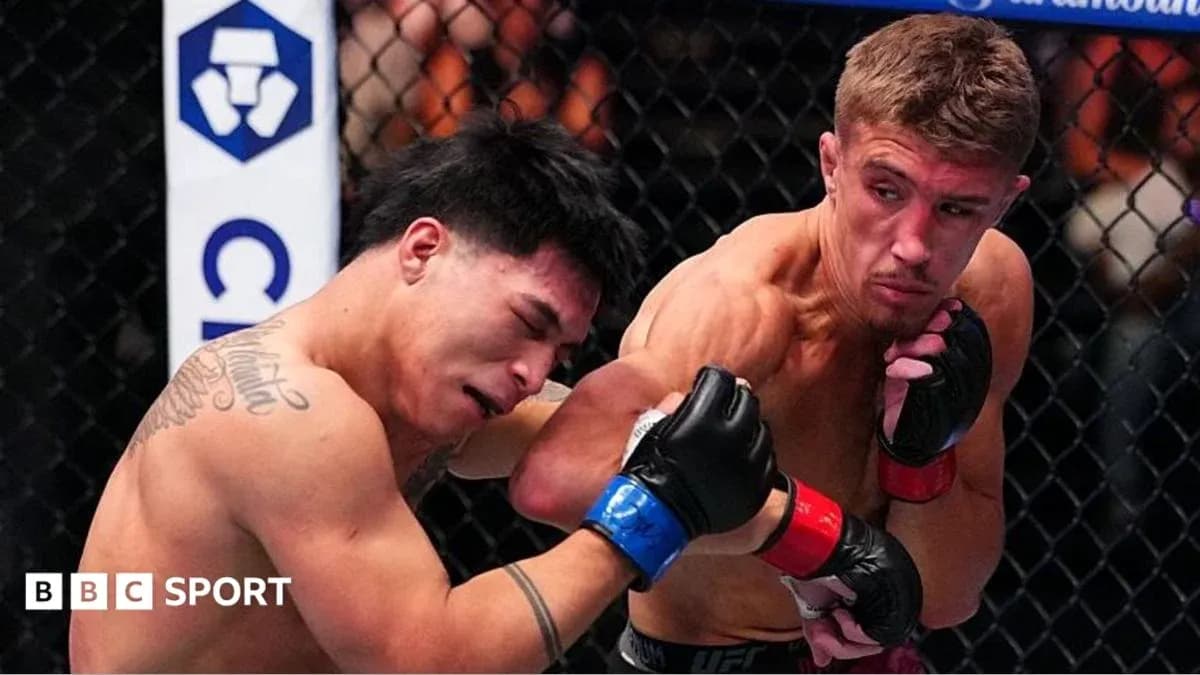
What never changed was the pace. From the opening bell, Cortes marched forward, determined to turn the bout into a phone-booth fight. He started fast, snapping a left hook and jabbing his way in, then pinning Magsayo to the ropes and ripping at the body. The judges liked Magsayo in the end, but early on Cortes looked like the one writing the script.
Magsayo, typically a sharp counterpuncher, needed a round to settle. By the second, he began to find his timing, answering Cortes’ pressure with quick combinations and sharp counters, especially to the body. His hands were faster; his shots cleaner. The problem was everything in between.
Cortes controlled the geography. He cut the ring, dictated where the exchanges happened, and kept that right hand on a string. Whenever he stepped into range, he found a home for it. In the third, that pressure seemed to pay off. A short shot inside sent Magsayo down to a knee, initially ruled a knockdown. The replay told a different story: Magsayo wasn’t hurt, just off-balance as he dipped low and tangled up.
That theme ran through the fight.
Magsayo repeatedly ducked his head into Cortes’ chest, losing his footing and dropping to a knee. The referee, trying to make sense of the mess, initially scored another of those moments as a knockdown in the fourth before that, too, was wiped away. The pattern infuriated Cortes and his corner. Every time he landed something meaningful, Magsayo’s body language muddied the picture—half slip, half squat, all confusion.
While the officials sorted out what counted and what didn’t, Cortes went to work. His right hand became the defining punch of the middle rounds. When Magsayo dipped, it crashed down. When Magsayo tried to reset, it split the guard. Cortes’ volume surged, his jab kept him in command, and he routinely battered Magsayo in close exchanges. By the halfway mark, the Mexican looked like the man in control.
Magsayo, though, never stopped throwing. Even when he was being outworked, he found moments—sharp counters, sneaky uppercuts, clean hooks. He just couldn’t stitch them together consistently until late.
The fight shifted in the eighth and ninth. Magsayo finally began to fight like a man who knew he was behind. He went to the body with intent, then came upstairs with uppercuts that snapped Cortes’ head back. His combinations flowed, his feet looked lighter, and the awkward drops to a knee were suddenly accompanied by real, damaging punches. A left hook in the ninth clearly got Cortes’ attention, and for the first time the pressure fighter looked uncomfortable.
Cortes still kept his shape, still jabbed, still marched forward, but the tide had turned just enough to give Magsayo a foothold.
The 10th was a scramble for control. Cortes landed a right hand, Magsayo answered with a flurry. Cortes dug downstairs, Magsayo complained briefly about a low blow, then went right back to the body himself. The pace dipped in the closing seconds, both men knowing the fight might already be decided on the cards.
When it was over, the official verdict landed with a thud in a building that had largely sided with the local fighter. All three judges went 97-93 for Magsayo, rewarding his cleaner work, late surge, and scoring shots over Cortes’ pressure and volume.
Cortes had been the ring general for long stretches, the aggressor, the man stalking and throwing. Magsayo had been the sharper puncher, the one landing the eye-catching counters and finishing strong. The judges chose precision over persistence.
For Magsayo, it is a significant win, carved out in hostile territory against an unbeaten contender with momentum. The performance was far from perfect—his balance issues, the repeated drops to a knee, and the constant warnings from the referee will all be talking points—but the result stands. In a division stacked with talent, a unanimous decision like this keeps him in the conversation.
For Cortes, the frustration will linger. He pressed, he fought the fight he wanted, and he watched the cards go the other way. The annoyance that flashed across his face during those strange non-knockdowns might just carry into the next stage of his career.
On a night built around big names and bigger stakes, this undercard bout left a different kind of question hanging in the air: in a close, messy fight, what matters more—who controls the ring, or who lands the shots that stick in the judges’ minds?